

Maddy summaryHB 739 allocates $61.3 million in nonrecurring state funds for specific projects in Wilson and Nash counties, primarily benefiting Wilson County entities and two towns. The bill directs funds for water infrastructure in Lucama, sewer projects in Stantonsburg, volunteer fire departments, school construction, a new courthouse, sheriff's training, Narcan in schools/libraries, housing authority projects, a transit program, and a new police building in Sharpsburg. It becomes effective July 1, 2025, with all funding designated for immediate, concrete local needs without new policy requirements.
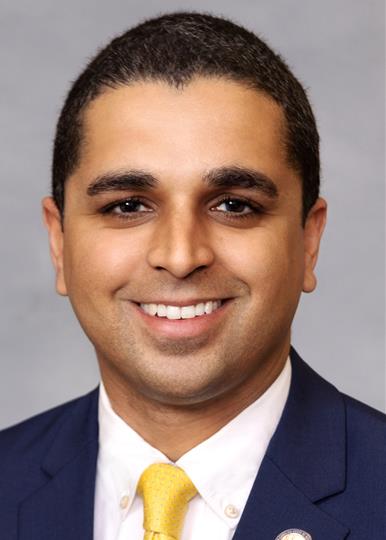
Rep. Dante Pittman
Sponsored bills
Maddy summaryHB 355 directs North Carolina's Legislative Research Commission (LRC) to study challenges facing rural fire departments, focusing on volunteer recruitment, funding, equipment needs, interdepartmental cooperation, firefighter well-being, and public education. The LRC must examine specific issues like financial incentives for volunteers, equitable resource distribution, mutual aid agreements, and community fire safety programs. It requires regional public hearings and a 90-day comment period before submitting interim and final reports to the 2025 and 2027 General Assemblies. This bill does not change current law but sets up a review process to inform future legislative action.
Maddy summaryHB 651 reduces parent cost-sharing for subsidized child care in North Carolina by lowering the copayment rate from 10% to 7% of gross family income. This change directly affects families enrolled in state-subsidized child care programs who pay a portion of their care costs. The bill appropriates $25 million annually from the General Fund for the 2025-2027 fiscal biennium to fund this reduction, effective July 1, 2025. It also specifies adjusted copayment rates for blended-rate and part-time care scenarios.
Maddy summaryHB 628 reenacts North Carolina's state-level child tax credit, which expired, to provide financial support to families with children. It directly affects low- and middle-income North Carolina residents who qualify under federal child tax credit rules, offering up to $250 per child annually based on household income. Key provisions include income-based credit amounts (e.g., $250 for married couples filing jointly with under $40,000 income) that phase out at higher earnings, and the credit is refundable - meaning families may receive cash payments even if they owe no state tax. The bill takes effect for 2025 tax years and mirrors the federal credit structure without creating new policy.
Maddy summaryHB 653 lowers the federal funding threshold that would trigger loss of Medicaid coverage for North Carolina's newly eligible expansion recipients. Currently, coverage would end if federal funding for this group drops below 90% compared to non-expansion recipients; the bill reduces this threshold to a lower percentage. If funding falls below the new threshold, Medicaid coverage for this group must discontinue promptly, with state agencies required to notify lawmakers and CMS. The bill affects only those added to Medicaid through the 2014 expansion, not all Medicaid beneficiaries.
Maddy summaryHB 619, the Health Care Security Act, repeals a law that would have ended Medicaid expansion coverage in North Carolina if federal funding dropped below 90%. This change directly affects the state's Medicaid expansion population, ensuring their coverage remains secure regardless of federal funding fluctuations. The bill removes a specific statutory trigger (G.S. 108A-54.3C) that previously threatened automatic discontinuation of benefits. It does not create new programs or alter eligibility but prevents coverage loss due to federal funding changes. The act becomes effective upon enactment.
Maddy summaryHB 603 creates a $40 million revolving loan fund within North Carolina's Housing Finance Agency to cover preconstruction costs (like land surveys, permits, and site work) for workforce housing projects. It directly affects developers building housing affordable to households earning 60%-120% of local median income, requiring them to contribute 20%-35% in project equity. The fund reserves 80% of loans for high-priority counties (tier 1-2) and 20% for other counties, with each loan capped at $1 million. The program requires annual reporting on loan details and becomes effective July 1, 2025.
Maddy summaryHB 604 creates two grant programs to support economic development: the Rural Community Development Grant Program and the Downtown Revitalization Grant Program. Both programs allocate $40 million each from the state budget for 2025-2026, providing grants to local governments (counties and municipalities) to fund projects that improve community amenities like grocery stores, childcare, parks, or downtown infrastructure. Grants require a 1:1 local match, max $2 million per award, and must align with comprehensive plans for revitalization or community growth. The programs aim to reverse rural depopulation, attract business investment, and enhance downtown livability through targeted, competitive funding.
Maddy summaryHB 617 creates a $20 million grant program for North Carolina small farmers with gross income under $300,000, funding equipment (like harvest machinery), infrastructure (such as fencing), and cold storage. It also lowers the income threshold for farm sales tax exemption from $10,000 to $7,500 annually, expanding eligibility for tax relief. The bill directly affects small farmers meeting these income criteria by providing financial support through grants and reduced tax burdens. Grants require applications and prioritize those facing economic hardship, with funding allocated for specific purposes like equipment and the FarmsSHARE program.
Maddy summaryHB 571 appropriates $500,000 from the state General Fund to the Department of Public Safety for a grant program treating police officers diagnosed with PTSD. It directly affects North Carolina police officers who have received a clinical PTSD diagnosis. The key provision establishes a state-funded grant program to cover treatment costs, with funds allocated for the 2025-2026 fiscal year. The program becomes effective July 1, 2025, and focuses solely on providing financial support for treatment, not on expanding eligibility or altering diagnosis standards.