

Maddy summaryHB 121 provides local boards of education with additional flexibility in adopting their school calendars. It removes the current state-mandated earliest opening date for students (the Monday closest to August 26) and the latest closing date (the Friday closest to June 11). This change allows local boards to determine the specific opening and closing dates for public schools under their authority. The bill directly affects public schools and students in North Carolina and would apply starting with the 2025-2026 school year.
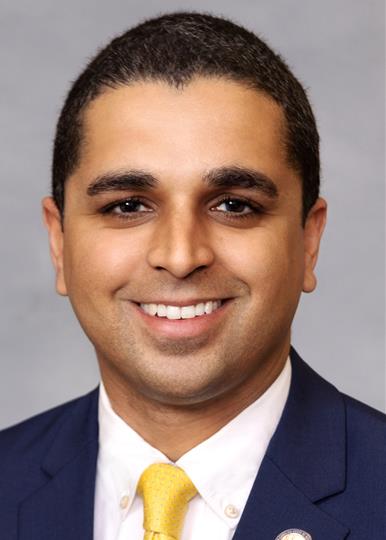
Rep. Dante Pittman
Sponsored bills
Maddy summaryHB 552 establishes the Agricultural Manufacturing Investment Grant Account within North Carolina's One North Carolina Fund, allocating up to $5 million for new economic development incentives. This account provides competitive grants to eligible agricultural manufacturers in the state. The Department of Commerce will administer these grants, prioritizing projects in less developed areas, those using advanced agricultural technologies, or those with significant research and development. To qualify, recipients must commit to investing at least $5 million of private funds, employ a minimum of 25 full-time employees, and meet specific wage requirements. Grants are capped at $100,000 annually per recipient for up to five years.
Maddy summaryHouse Bill 283 establishes the Small Business Investment Grant (SBIG) Program within the One North Carolina Fund, designed to provide financial assistance to eligible small businesses looking to establish or expand facilities in the state. The bill allocates up to $10 million from the Fund to this new account. Through the SBIG Program, competitive grants are offered to businesses meeting specific criteria, such as having 250 or fewer employees or less than $5 million in annual revenue, investing $10-$30 million, and creating new jobs with competitive wages. Grants are capped at $500,000 annually per recipient, up to $2.5 million total, over a maximum of five years. Additionally, the bill renames the "One North Carolina Small Business Account" to the "Small Business Research and Technology Account," which continues to support federal SBIR/STTR grant incentive and matching programs.
Maddy summaryHB 765, titled "Save the American Dream Act," introduces new requirements for fiscal notes concerning housing affordability at both state and local levels. The bill mandates that the state's Fiscal Research Division prepare a five-year fiscal note for any proposed state legislation that could impact the cost of constructing, purchasing, owning, or selling a single-family residence. Similarly, it requires county and city governments to prepare a fiscal note for local ordinances that could affect these same costs. These local notes must be made public at least five days before the ordinance is introduced.
Maddy summaryHB 472, the "Commercial Vehicle and Cargo Protection Act," introduces new regulations for commercial motor vehicles and their cargo. The bill prohibits the immobilization of commercial motor vehicles using devices like boots, making such actions a misdemeanor. It also requires towing companies performing nonconsensual or government-initiated tows to promptly return commercial cargo to its owner or their designee. Furthermore, if a towed trailer contains commercial cargo, the tower must allow it to be exchanged for a different trailer of equal or better condition.
Maddy summaryHB 570, the "Responsible Firefighting Foam Management Act," restricts the use of firefighting foams containing PFAS chemicals for training and testing. It prohibits any person, local government, or state agency from discharging Class B firefighting foam with intentionally added PFAS for training or practice purposes. For testing, these foams are also prohibited unless required by law or an authority, and the testing facility has implemented measures to prevent environmental releases. The bill mandates the use of non-fluorinated alternatives for training and is set to become effective on December 1, 2025.
Maddy summaryHB 250 modifies the annual report filing requirements and fees for certain business entities in North Carolina. It directly affects domestic and foreign corporations and Limited Liability Companies (LLCs) where more than 50% of the ownership is held by one or more deployed members of the U.S. Armed Forces. The bill waives the annual report requirement and associated fees for these businesses while the owner is deployed. Instead, qualifying businesses must file a notice of deployment and can submit their annual report after the deployment ends (90 business days for corporations, April 15 of the following year for LLCs).
Maddy summaryHouse Bill 110 establishes the National Guard Student Loan Repayment Program in North Carolina. This program provides student loan repayment awards to active members of the North Carolina National Guard, incentivizing them to begin or complete a term of service of at least three years. Awards cannot exceed the recipient's total student loan debt or $50,000 for a three-year service term, with potential for additional funds for longer service. Recipients must sign an agreement to repay a portion of the award if they voluntarily terminate their service early. The bill appropriates over $25.5 million to a new fund for the program for the 2025-2026 fiscal year.
Maddy summaryThis bill designates "The Andy Griffith Show" as the official television show of the State of North Carolina. This symbolic act recognizes the cultural impact of the show and its connection to the state.
Maddy summaryHB 985 increases the criminal penalty for assaulting a school employee or volunteer in North Carolina. It reclassifies such assaults from a Class A1 misdemeanor to a Class I felony when the incident occurs while the individual is performing their duties or as a result of their duties. The bill broadly defines "school employee or volunteer" to include staff, independent contractors, and adult volunteers involved in school activities. It also protects school personnel from civil or criminal liability for taking reasonable actions to end student fights. Finally, the bill updates supervisor reporting requirements for assaults and prohibits intimidating employees from reporting these incidents.