

Maddy summaryHB 245 modifies North Carolina's low-income housing tax credit program to prioritize affordable housing development in rural communities and counties with higher poverty rates. It requires the state housing committee to adopt allocation rules that favor projects within 10 miles of amenities (like grocery stores) in towns under 10,000 people, measure distances by straight-line radius (not driving routes), and use poverty levels as a tiebreaker when projects score equally. The bill directs the committee to publish proposed rules for public comment and hold hearings before finalizing annual allocation plans. This policy change redirects existing housing tax credits toward qualifying rural and high-poverty areas without creating new funding. The bill takes effect October 1, 2025, for future allocation plans.
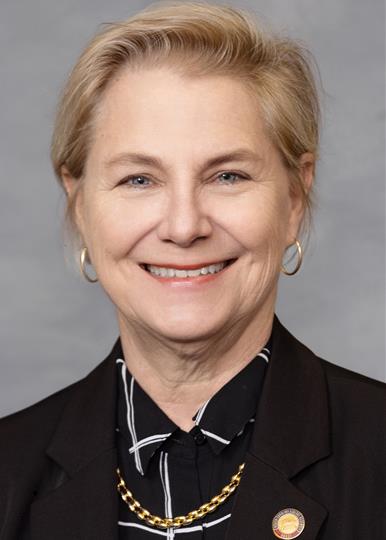
Rep. Deb Butler
Sponsored bills
Maddy summaryHB 248 exempts owner-occupied single-family homes in North Carolina from live/work building code requirements when used for permitted home-based businesses. It defines "home business use" as owner-operated activities incidental to residential living (e.g., consulting, crafts), requiring the owner to reside there, comply with local zoning, and not lease the business space. The bill prevents local governments from reclassifying these homes as commercial or mixed-use solely due to the home business, ensuring they remain subject only to standard single-family dwelling building codes. It does not override private HOA restrictions or exempt businesses from other state/federal licenses, safety rules, or local zoning prohibitions.
Maddy summaryHB 249 allocates $10,112 to North Carolina State University for a Wake County pilot program to increase diversity in pickleball, specifically targeting underrepresented communities of color. The program requires focus groups with people of color, branded marketing materials, two 4-week sessions at Raleigh recreation centers (Method Road and Chavis) in fall 2025 and spring 2026, and a post-program toolkit for wider community use. It directly affects residents in Wake County by creating accessible pickleball opportunities through public recreation facilities. The bill focuses on concrete steps to address current underrepresentation in the sport, leveraging its low-cost, inclusive nature. Funds are restricted to these specific activities and do not revert.
Maddy summaryHB 256 repeals North Carolina's current ban on public employee collective bargaining, allowing state and local government workers (like teachers, police, and administrative staff) to negotiate wages and working conditions with their employers. The bill removes existing legal restrictions (Article 12 of Chapter 95) and explicitly states that public employees' bargaining rights apply to all state and local government employers. It does not create new benefits or funding but aligns public sector bargaining rights with those already available to private sector employees. The bill’s key provision is the repeal of the prohibition, enabling public employees to collectively bargain under existing state law.
Maddy summaryHB 48 raises North Carolina's maximum weekly unemployment benefit from $350 to $400 for claimants filing on or after March 2, 2025, directly affecting unemployed workers. It also creates a 2025 tax credit for employers, allowing them to offset unemployment insurance taxes paid on 2024 fourth-quarter wages against their 2025 tax liability. The credit applies only to contributions remitted by January 31, 2025, and must be claimed via a specific report. The bill ratifies a governor's temporary disaster-related unemployment expansion but focuses on permanent changes to benefit levels and employer tax treatment.
Maddy summaryHB 209 authorizes Durham Public Schools and Durham County to create affordable rental housing for teachers, police officers, first responders, and other Durham County employees. The bill allows these entities to partner using their existing land to build housing, with at least 75% of units reserved specifically for Durham Public Schools teachers. Rent will be set at reasonable, below-market rates, and all housing must comply with standard building and safety codes. The bill is currently pending in committee and does not change existing zoning or safety regulations for the housing units.
Maddy summaryThis bill expands privacy protections for minors participating in certain local government or Partnership for Children-funded programs by restricting public access to their personal details. It prevents disclosure of identifying information like names, addresses, birth dates, parent/guardian details, and email addresses in public records, though county/town of residence remains public (with other details redacted). The law applies specifically to programs in Chatham County, Durham County, and several towns including Apex, Cary, Raleigh, and others. Scholarship names are explicitly excluded from these protections, and the bill clarifies the information is not confidential but simply not subject to public disclosure under this rule.
Maddy summaryHJR 157 is a procedural resolution inviting Governor Josh Stein to address a joint session of the North Carolina General Assembly on March 12, 2025. It directs a committee of five House members and five Senate members to extend the invitation and specifies that the governor's cabinet, Council of State members, and state judges may attend. This resolution does not create new policy or affect any laws; it solely schedules a ceremonial address. The invitation is effective upon ratification, as noted in the resolution's text.
Maddy summaryHB 130 establishes a $475 million program to provide financial assistance to North Carolina farmers who suffered crop losses from natural disasters in 2024. It directly affects farmers in counties designated by the USDA as disaster areas, requiring verified losses of eligible agricultural commodities (like crops, livestock, or specialty plants) planted but not harvested by January 1, 2024. The program uses county and state yield/price averages to calculate payments, mandates submission of USDA Form 578 or equivalent documentation within 30 days, and allocates funds from state reserves (Stabilization, IT, and Economic Development) to cover verified losses. Farmers must provide documentation for verification, and the Department of Agriculture may audit claims to ensure proper use of funds, with refunds required for inaccurate information.
Maddy summaryHB 203, the Home Warranty Act, regulates home service agreements (commonly called home warranties) sold to North Carolina consumers. It requires companies to clearly list covered items, detail exclusions in bold, provide cancellation rights with pro-rata refunds, and maintain an updated vendor list. The bill mandates repairs for critical systems (like heating or bathroom fixtures) within five business days or cover out-of-network service. It does not apply to manufacturer warranties, appliance dealers selling their own agreements, or builder warranties. This directly affects home warranty companies and consumers purchasing these agreements.