

Maddy summaryHB 420 allocates $4.3 million annually to fund teacher recruitment programs like "Grow-Your-Own" and "2+2" pathways in high-need schools, targeting efforts to recruit and prepare new educators. It requires the State Board of Education to develop a teacher licensure and compensation reform plan by March 2026, including pathways for new teachers and retention strategies. The bill also funds a study to expand educator preparation programs to graduate 5,000 in-state teachers annually, with a focus on increasing diversity among educators. These provisions directly affect public schools, teacher preparation programs, and prospective teachers through new funding streams and policy requirements.
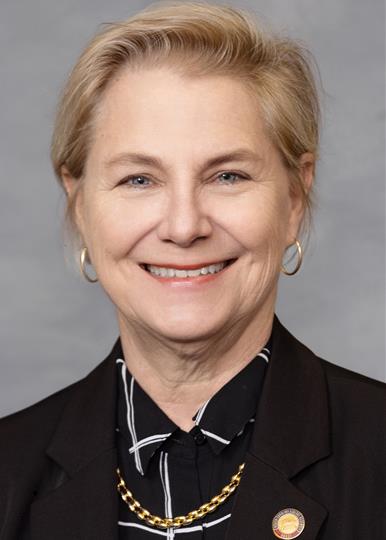
Rep. Deb Butler
Sponsored bills
Maddy summaryHB 391 appropriates $2.178 million for the 2025-2026 fiscal year and $4.542 million for 2026-2027 to hire 50 additional Adult Protective Services (APS) workers statewide. The funds, distributed based on need factors like case volume and senior population, directly support county social services departments overwhelmed by rising elder abuse reports. Counties must use the funds solely for APS worker salaries and benefits, not to replace existing funding. This addresses a critical staffing gap identified by counties, where federal funds are depleted early and reports of elder abuse have increased significantly.
Maddy summaryHB 401 allows North Carolina lottery winners who claim prizes of $50 million or more to keep their personal details (like name and address) confidential for 90 days after claiming the prize. This directly affects only winners of such large jackpots, not smaller prize winners. The bill requires the lottery commission to treat these winners' identifying information as confidential, except when disclosure is legally required - for example, to notify tax authorities (North Carolina Department of Revenue, IRS, or the winner’s state of residence), comply with debt collection laws, or follow court orders. The law does not change tax obligations or eligibility rules for winning the lottery.
Maddy summaryHB 403, the "Workers' Rights Act," fundamentally changes employment protections for all North Carolina workers. It abolishes at-will employment (meaning employers can only terminate workers for "just cause"), mandates paid 15-minute breaks for all employees working over 6 hours and a 60-minute paid meal break for longer shifts, and eliminates the subminimum wage for tipped workers by requiring employers to count tips only up to federal limits. The bill also prohibits employers from retaliating against workers who discuss wages or file complaints, and repeals the ban on public employee collective bargaining while creating an Ombuds Office to handle state employee workplace issues. These provisions directly affect every worker in North Carolina and state employees.
Maddy summaryHB 404, the Fair and Affordable Housing Act, requires the Legislative Research Commission to study affordable housing availability across North Carolina - including rural and urban areas - and report findings to the 2026 General Assembly. The bill prohibits housing discrimination based on "source of income" (such as government housing vouchers, disability benefits, or rental assistance), making it illegal for landlords to refuse tenants using these payments. It also appropriates $45 million from the General Fund to the Housing Trust Fund for affordable housing development and bans credit reporting agencies from listing eviction lawsuits that don’t result in a landlord judgment. These changes directly affect renters (especially those using government assistance), landlords, housing providers, and credit agencies in North Carolina.
Maddy summaryHB 407 creates a new special license plate for Sigma Gamma Rho Sorority in North Carolina, featuring the sorority's symbol and the phrase "Greater Service, Greater Progress." It sets a $20 additional fee for this plate (same as other Divine Nine sororities/fraternities), with half the fee going to the Special Registration Plate Account and half to the Collegiate and Cultural Attraction Plate Account. Proceeds from the plate sales will fund the Sigma Gamma Rho Sorority National Education Fund. This bill directly affects vehicle owners who choose this plate, adding it to North Carolina's list of special registration options.
Maddy summaryHB 137, the "Gabe Torres Act," expands death benefits under North Carolina's Public Safety Employees' Death Benefits Act to include public safety workers (like police, fire, and emergency personnel) who are killed while traveling to or from work. The bill amends the law to define "official duties" to explicitly cover commuting between home and work, as well as travel for training or responding to emergencies. It also appropriates $300,000 in recurring funds for these expanded benefits, effective July 1, 2025. This change directly affects eligible families of covered public safety employees who die during work-related travel, ensuring they qualify for death benefits previously limited to on-duty incidents.
Maddy summaryHB 242 adds freestanding psychiatric hospitals (licensed, Medicare-certified facilities primarily providing psychiatric care that are not state-owned) to North Carolina’s Medicaid Healthcare Access and Stabilization Program (HASP). This expands the existing program - which currently reimburses acute care hospitals - to include these psychiatric hospitals, providing them with increased Medicaid reimbursements. The funding will come from a new quarterly assessment levied on the psychiatric hospitals themselves, calculated as a percentage of their hospital costs. The bill does not change patient eligibility but alters how these specific hospitals receive Medicaid payments through the HASP program.
Maddy summaryHB 353, the Fair Minimum Wage Act, raises North Carolina's state minimum wage in staged increases, starting at $10 per hour on January 1, 2026, and reaching $18 per hour by January 1, 2030. After 2030, the wage will automatically adjust annually based on inflation using the Consumer Price Index. The bill directly affects hourly workers and employers across North Carolina, requiring higher pay for all covered employees. It also adds provisions allowing workers to recover unpaid wages plus interest, attorney fees, and court costs if employers fail to pay correctly.
Maddy summaryHB 339, the Economic Security Act, raises North Carolina's minimum wage to $22 per hour effective January 2026, with annual inflation adjustments based on the Consumer Price Index. It mandates equal pay for equal work, requires paid sick leave and family medical leave for all employees, and strengthens workplace safety protections. The bill also restores inflation-adjusted unemployment benefits, ends wage theft, removes criminal history questions from job applications ("banning the box"), and expands tax credits for childcare and low-income workers. Additionally, it creates a presumption that essential workers infected with COVID-19 contracted it on the job and appropriates funds for cost-of-living adjustments for public retirees.