

Maddy summaryHB 486 appropriates $1 million from North Carolina's General Fund to Blue Star Families, Inc., a nonprofit organization, for specific military family support programs. The funds will directly support military spouses through career development (via a Fayetteville chapter), strengthen military families, and provide caregiver services for veterans and military personnel. The allocation is structured as $400,000 for career programs, $300,000 for family strengthening, and $300,000 for caregiver services, all for the 2025-2026 fiscal year. The bill becomes effective July 1, 2025, and focuses solely on funding existing nonprofit services without altering laws or creating new requirements.
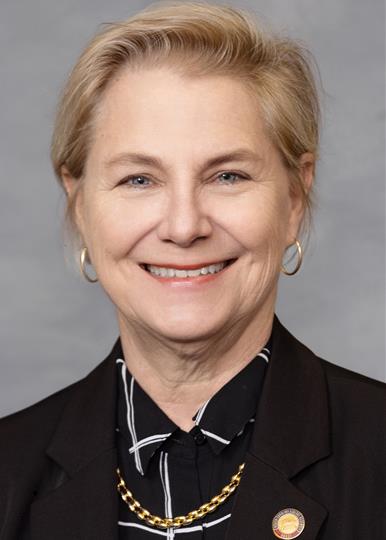
Rep. Deb Butler
Sponsored bills
Maddy summaryHB 495, the "Accessing Midwives Act," establishes a licensing system for Certified Professional Midwives (CPMs) in North Carolina. It requires CPMs to obtain a state license to practice midwifery care - covering pregnancy, birth, and postpartum support - while exempting existing Certified Nurse-Midwives (CNMs), physicians, and emergency care. The bill creates the North Carolina Council of Midwives to set standards and oversee licensing, with members including CPMs, physicians, and community representatives. This directly affects CPMs seeking legal practice and aims to standardize midwifery care under state regulation.
Maddy summaryHB 493 creates confidential reporting and resolution procedures for workplace harassment in North Carolina's General Assembly, affecting all legislators, staff (including part-time/temporary employees), volunteers, and pages. It requires mandatory annual training on preventing harassment and discrimination, establishes clear consequences for violations, and mandates a confidential investigation process handled by an independent third party. The bill appropriates $250,000 to fund training materials, infrastructure, and the independent investigator for the 2025-2027 fiscal years. These changes apply to all workplace interactions, including legislative events and business-related activities, with specific disciplinary actions ranging from warnings to expulsion for legislators.
Maddy summaryHB 484 authorizes North Carolina's African American Heritage Commission to study creating monuments and markers honoring the state's civil rights history, including sites related to the Student Nonviolent Coordinating Committee, sit-ins, and desegregation efforts. The bill directly affects the Commission, which must hold public hearings and report findings by May 2026, and North Carolinians by commemorating local contributions to the civil rights movement. Key provisions include appropriating $500,000 for the Commission to place markers along the state's Civil Rights Trail and conducting feasibility studies on permanent monuments. The bill becomes effective July 1, 2025, with funding allocated for the 2025-2026 fiscal year.
Maddy summaryHB 492 repeals Session Law 2023-106, commonly known as the "Parents' Bill of Rights," which previously established specific parental rights and access requirements in North Carolina schools. The bill removes these provisions, meaning schools are no longer required to comply with the specific rules outlined in the repealed law. The remaining sections of the bill make minor technical adjustments to other education statutes to align with the repeal, such as clarifying exemptions for schools for the deaf and blind, charter schools, and regional schools. This change directly affects school districts and educational institutions that were subject to the repealed law's requirements.
Maddy summaryHB 467 reenacts North Carolina's low-income housing tax credit program, allowing developers to claim tax credits for constructing or rehabilitating affordable housing. It specifies credit percentages (30%, 20%, or 10%) based on the income level of households (50% or less of area median income for 30% credit, 40% for 10% in high-income areas) and the location's income designation (low, moderate, or high-income county/city). Developers can receive credits either as a direct tax refund or a loan from the Housing Finance Agency, with affordability requirements applying for the full credit compliance period. This directly affects developers building qualifying low-income housing projects across North Carolina.
Maddy summaryHB 474, titled "Right to Use Contraception," declares that North Carolina recognizes the right to use contraception to prevent pregnancy as a fundamental liberty. It directly affects all residents who use contraception by stating the state has "no legitimate governmental interest in limiting the freedom to use contraception." The bill amends state law to add a new Article 44, explicitly prohibiting state restrictions on contraceptive access for pregnancy prevention. This is a declarative policy change, not a funding or program measure, and would become effective upon enactment.
Maddy summaryHB 473 protects patients' and healthcare providers' rights to access and provide assisted reproductive technology (ART), including in vitro fertilization (IVF), by prohibiting state interference. It defines ART broadly and explicitly states that fertilized eggs or embryos outside the uterus are not considered "human beings" under North Carolina law. The bill also appropriates $500,000 annually (starting July 2025) from the state General Fund to increase Medicaid maternal support services (the Baby Love Program), matching $913,000 in federal funds for the 2025-2027 biennium. This legislation directly affects patients seeking ART, healthcare providers offering these services, and Medicaid beneficiaries receiving maternal support.
Maddy summaryHB 47, the Disaster Recovery Act of 2025 - Part I, allocates $524 million from the Helene Fund to support recovery efforts in North Carolina counties impacted by Hurricane Helene. The bill directs funds to specific programs including home reconstruction ($120 million), agricultural crop loss assistance ($200 million), road and bridge repairs ($100 million), small business infrastructure grants ($55 million), debris removal ($20 million), fire department equipment ($10 million), and tourism promotion ($4 million). These resources directly assist residents, farmers, local governments, and businesses in designated hurricane-affected counties by addressing immediate rebuilding needs and supporting economic recovery. The bill requires programs to align with federal disaster recovery guidelines to maximize potential federal reimbursement, with reporting requirements for certain initiatives.
Maddy summaryHB 458 requires migrant housing operators in North Carolina to request preoccupancy inspections 45 days before housing is occupied, ensuring compliance with safety and health standards like clean water, structural safety, and pest control. It directly affects housing operators (who own or manage migrant housing) and state agencies like the Department of Labor and local health departments. Key provisions include mandatory inspections before occupancy, a two-year perfect-compliance option for operators to self-inspect, and strict timelines for correcting deficiencies. The bill focuses on concrete enforcement mechanisms rather than policy outcomes, updating existing regulations to strengthen housing oversight for agricultural workers.