

Maddy summaryThis bill prohibits federal or state troops from being stationed at North Carolina voting locations within 17 days of an election, unless they are needed to repel an armed enemy. It also restricts the release of voters' personal data, such as social security numbers and email addresses, to federal agencies unless a judge issues a court order or arrest warrant. While the law allows standard law enforcement to remain for emergencies or specific requests, it creates a legal path for voters to seek court injunctions if these rules are violated. The legislation applies to all elections held on or after it becomes effective and includes penalties for those who breach these protections.
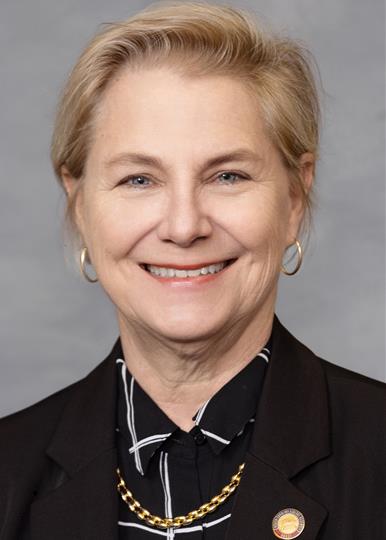
Rep. Deb Butler
Sponsored bills
Maddy summaryHB 1193, known as the Mike Clampitt Bone Marrow Donation Act, designates November as Marrow Donation Awareness Month in North Carolina. The bill requires the Department of Health and Human Services and the Department of Motor Vehicles to promote bone marrow donation by posting public service announcements online and displaying them at driver license offices. Additionally, the legislation appropriates $100,000 to fund a state-wide public awareness campaign for this initiative, with the law taking effect on July 1, 2026.
Maddy summaryHB 1166 reorganizes the North Carolina Advisory Council on Rare Diseases by moving it from the University of North Carolina at Chapel Hill to the Department of Health and Human Services. The bill establishes a 19-member council with diverse representation, including physicians, researchers, patients, caregivers, and industry representatives, who will advise state officials on research, diagnosis, treatment, and education for rare diseases. It also provides funding for the council's operating expenses and sets rules for membership terms, meetings, and the selection of a chair.
Maddy summaryThis bill creates a pilot program to train new individuals with no prior experience as lead teachers in North Carolina's licensed child care centers. Funded by state money and requiring a local match, the program offers free, intensive training courses through community colleges in selected counties, with graduates receiving a state credential and potential stipends for completing the course and working for a year. The initiative aims to expand the child care workforce by establishing academies across the state, starting in Johnston and Wayne counties, and includes requirements for local partnerships to select additional sites. Additionally, the bill directs the North Carolina Partnership for Children to study the feasibility of liability insurance for providers and update bidding rules for child care grants.
Maddy summaryThis North Carolina bill allows taxpayers to deduct up to $5,000 of unreimbursed costs for prescribed medications and pharmacy fees from their state income tax. The deduction applies to expenses not covered by tax-advantaged accounts like Flexible Spending or Health Savings Accounts and prevents double-dipping if a federal deduction is already claimed for the same year. Effective for tax years starting on or after January 1, 2026, the measure directly affects individuals paying out-of-pocket for prescription drugs who itemize their state taxes.
Maddy summaryThis bill proposes amending the North Carolina Constitution to ban corporations from spending money to influence election outcomes. It directly affects business entities by stating that only human beings can exercise political spending power within the state. The measure includes specific exceptions for political committees and news organizations owned by parties or candidates, while threatening to revoke corporate legal protections like limited liability for any violations. Because the bill requires voter approval, it will be placed on the November 2026 ballot for a public referendum rather than becoming law immediately.
Maddy summaryHB 1208, known as the Community Safety Risk Protection Act, requires individuals in North Carolina to surrender firearms, ammunition, and related permits to law enforcement when a civil no-contact order is issued against them. This measure applies to people who have threatened violence, made threats of suicide, or caused serious injury to a victim, and it mandates that these items be stored by the sheriff until the legal order expires or is denied. The bill also outlines a process for individuals to request the return of their surrendered items after the protective order is no longer in effect, provided they are not legally prohibited from owning a firearm.
Maddy summaryHB 1197 updates the North Carolina Teaching Fellows Program by increasing forgivable loan amounts for future students and establishing stricter criteria for selecting partner teacher training institutions. Under the new rules, eligible students can receive up to $10,000 per academic year, while the program will only partner with schools that meet specific performance standards, such as high licensure pass rates and alignment with the Science of Reading. Additionally, the bill mandates a study by the Friday Institute to investigate why some participants choose to repay their loans in cash rather than fulfilling their service obligations. These changes are set to take effect for the 2026-2027 academic year, with previous program revisions applied retroactively to current participants.
Maddy summaryHB 1184, known as the Voucher School Transparency Act, requires nonpublic schools in North Carolina that receive Opportunity Scholarship funds to submit detailed annual reports to the State Board of Education. These schools must provide financial documentation, standardized test scores for students in grades three and higher, and specific data on graduation rates, teacher licensure, and student demographics. The bill also mandates that schools with at least 70 scholarship recipients or $100,000 in funding undergo annual financial audits, while smaller schools are audited every three years. Additionally, the legislation requires these institutions to conduct criminal background checks for staff, maintain physical facilities within the state, and share safety plans with local law enforcement.
Maddy summaryThis North Carolina bill prohibits cities, counties, and local or state law enforcement agencies from entering contracts to detain noncitizens in locked immigration facilities for civil immigration cases. It also bans these agencies from maintaining facilities specifically designed to house individuals awaiting removal proceedings under federal authority. To support oversight, the Department of Public Safety must collect and report annual data on detainees, including demographics, legal status, and release or deportation details. The law includes funding for administrative costs and is set to take effect on December 1, 2026.