

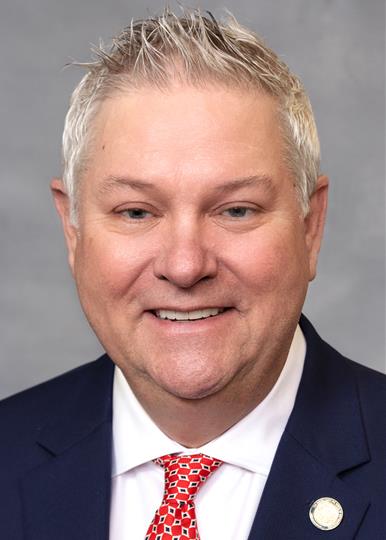
Photo of Chris Humphrey
R North Carolina House · District 12 On the 2026 ballot

Rep. Chris Humphrey

Compare
Total votes
2,410
all sessions
Attendance
92%
195 missed
Near the chamber average
With party
99%
of cast votes
Near the chamber average
Bipartisan score
1%
crosses aisle rarely
Near the chamber average
Sponsored
327
bills & resolutions
Near the chamber average
Committees
9
assignments
327 bills and resolutions

Sponsored bills

Total
327
Primary
31
Co-sponsor
296
This page
327
matching current filters
Co-sponsor HB 796
In committee · North Carolina House · Co-sponsor
The Student Mental Health Line Awareness Act.

Maddy summaryHB 796, the Student Mental Health Line Awareness Act, requires all North Carolina public schools serving grades 6-12 to print three specific suicide prevention contact numbers on new student identification cards. The mandated information includes the 988 Lifeline (call/text), Crisis Text Line (text HOME to 741741), and the NC Statewide Warmline (1-855-733-7762), displayed prominently on the ID. Schools must verify these numbers are current annually and use updated contact information. The bill applies to local school boards, charter schools, regional schools, and laboratory schools, but explicitly states it does not require issuing student IDs. It takes effect for the 2025-2026 school year.

In committee Apr 8, 2025 1 co-sponsor
Co-sponsor HB 774
In committee · North Carolina House · Co-sponsor
School Breakfast for All.

Maddy summaryHB 774 ("School Breakfast for All") mandates that all North Carolina public schools (pre-K through 12) provide free breakfast to every student, eliminating costs for families. It establishes a Farm-to-Table Initiative requiring schools to partner with local farmers for fresh, locally sourced ingredients in breakfast meals. The bill allocates $39 million in recurring state funds for the 2025-2026 fiscal year to cover program costs, while requiring annual reports on participation rates, costs, and impacts on student health and academic performance. This directly affects all public school students, school districts, and North Carolina agricultural producers.

In committee Apr 7, 2025 1 co-sponsor
Co-sponsor HB 753
In committee · North Carolina House · Co-sponsor
Law Enforcement Officers Return to Work.

Maddy summaryHB 753 allows eligible North Carolina law enforcement officers aged 59.5 or older to continue receiving retirement benefits while remaining actively employed. Retired officers who separated from service for at least six months may return to duty and retain their retirement benefits. The bill requires employers to cover both employee and employer retirement contributions during this period and clarifies that beneficiaries remain eligible for death benefits under specific conditions. It directly affects current and retired state/local law enforcement officers meeting age and service criteria.

In committee Apr 7, 2025 1 co-sponsor
Co-sponsor HB 780
In committee · North Carolina House · Co-sponsor
All Pro Dads and Responsible Fatherhood NC.

Maddy summaryHB 780 appropriates $2 million to expand the All Pro Dad program in North Carolina through Family First, Inc., funding school-based chapters, father-child engagement events, and parenting resources. It also creates the "Responsible Fatherhood NC" program under the Department of Health and Human Services, requiring a nonprofit manager to run a statewide media campaign, provide father-focused resources, and promote existing fatherhood initiatives. The bill directs grants to community organizations addressing fathers' needs - such as employment, child support, and parenting skills - with priority given to areas facing high unemployment, incarceration, or single-parent households. The program directly supports North Carolina fathers and their children, aiming to improve family well-being through increased paternal involvement.

In committee Apr 7, 2025 1 co-sponsor
Co-sponsor HB 302
Passed · North Carolina House · Co-sponsor
Pitt County Board of Education Election Partisan.

Maddy summaryHB 302 changes Pitt County's school board elections from nonpartisan to partisan, requiring candidates to run under political party affiliations. It affects Pitt County residents who vote in school board elections and candidates seeking those seats, as members will now be elected in partisan races during even-numbered years. The bill mandates single-member districts where only local voters can choose their district's representative, with vacancies filled by appointed members from the same district. This change applies to elections starting after December 1, 2026, while current members elected in 2022/2024 retain their terms.

Passed Apr 3, 2025 1 co-sponsor
Co-sponsor HB 15
Passed · North Carolina House · Co-sponsor
Support Private Property Rights.

Maddy summaryHB 15 clarifies that including property in a non-financially constrained comprehensive transportation plan does not require disclosure as a "material fact" in real estate transactions. It removes the obligation for sellers, agents, or buyers to disclose this detail when selling, leasing, or exchanging property, covering transactions listed under North Carolina law (G.S. 47E-1). The bill also prohibits knowingly making false statements about such property inclusions. It directly affects real estate transactions involving properties near planned transportation projects, changing disclosure requirements effective October 1, 2025.

Passed Apr 3, 2025 1 co-sponsor
Co-sponsor HB 382
Passed · North Carolina House · Co-sponsor
Elk Permit Auction/Raffle.

Maddy summaryHB 382 allows North Carolina's Wildlife Resources Commission to issue elk hunting permits through a raffle and an auction for the 2026 season. Residents can enter a $20-per-ticket raffle (max 30 tickets for $500), while a nonprofit focused on elk conservation must conduct an auction where the nonprofit keeps ≤25% of proceeds, with all other funds going to elk conservation. Permits are nontransferable, and the Commission must reserve 50% of raffle permits for North Carolina residents in future seasons. All revenue supplements existing elk management funding, and the Commission must report annually on program effectiveness to legislative committees.

Passed Apr 3, 2025 1 co-sponsor
Primary HB 716
In committee · North Carolina House · Lead sponsor
Bail Bond Omnibus.

Maddy summaryHB 716 modifies North Carolina's bail bond laws to clarify when a bail bond forfeiture can be overturned. It directly affects defendants, bail bondsmen (sureties), and courts by adding specific requirements for setting aside forfeitures related to defendant incarceration. The key provision requires that if a defendant is held in any U.S. jail or prison during a failure to appear, the jail must notify the local district attorney in writing (via hand delivery, electronic filing, or certified mail) and provide proof the defendant remained incarcerated for 10 days after notification. This replaces vague prior language with clear, documented procedures for bondsmen to avoid liability when defendants are incarcerated. The bill does not change bail amounts or eligibility but streamlines how forfeitures are resolved in cases of incarceration.

In committee Apr 3, 2025 0 co-sponsors
Primary HB 718
In committee · North Carolina House · Lead sponsor
Bail Bondsmen Revisions.

Maddy summaryHB 718 revises North Carolina's bail bondsman regulations. It requires new licensees (defined as those licensed for less than 24 months) to work under direct supervision of an experienced bondsman for their first two years, with supervisors needing five years of experience and a $200 fee. Out-of-state sureties can no longer arrest defendants directly in North Carolina but must partner with a local bondsman to surrender defendants. The bill also clarifies licensing definitions and adds requirements for supervisors to report monthly to the Department of Insurance. These changes primarily affect new bail bondsmen and out-of-state companies operating in North Carolina.

In committee Apr 3, 2025 0 co-sponsors
Primary HB 719
In committee · North Carolina House · Lead sponsor
Continuing Care Retirement Communities Act.

Maddy summaryHB 719 creates a new regulatory framework for continuing care retirement communities (CCRCs) in North Carolina. It requires all CCRC providers - both for-profit and nonprofit - to obtain a license from the North Carolina Department of Insurance and undergo annual financial reviews to ensure they can meet long-term care obligations. Key provisions include mandating that entrance fees and deposits be held in escrow, requiring actuarial opinions to verify financial stability, and establishing minimum debt service coverage ratios to prevent provider insolvency. The law directly affects CCRC residents (who pay entrance fees) and providers (who must now comply with these financial safeguards), aiming to protect residents’ savings if a provider faces financial trouble.

In committee Apr 3, 2025 0 co-sponsors
Showing 71 to 80 of 327 bills
Previous 1 … 7 8 9 … 33 Next