

Maddy summaryHB 218 requires the North Carolina Division of Motor Vehicles (DMV) to include a request for emergency contact information on applications for drivers' licenses, learners' permits, and identification cards. This applies to both new applications and renewal applications. Providing this emergency contact information will be optional for the applicant. The act is set to become effective on October 1, 2026.
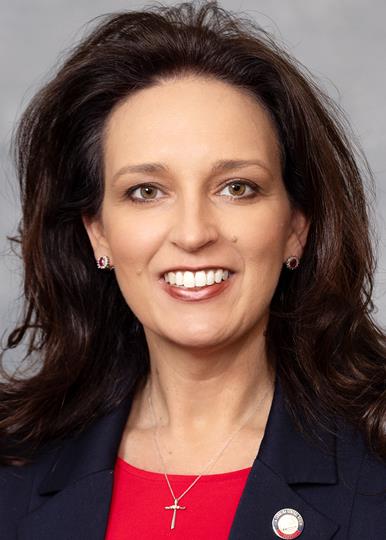
Rep. Jennifer Balkcom
Sponsored bills
Maddy summaryHB 640 requires North Carolina's Department of Health and Human Services to regularly verify eligibility for public assistance programs like Medicaid, SNAP (food stamps), and Temporary Assistance for Needy Families. It mandates monthly or quarterly data sharing with state agencies (e.g., Vital Records, Labor, Lottery Commission) and federal databases (e.g., Social Security, National Directory of New Hires) to check income, employment, residency, and other factors affecting benefits. The bill also requires the department to publicly post nonconfidential, aggregated data on fraud investigations and improper payments quarterly. This directly affects individuals enrolled in health and housing assistance programs by strengthening how their eligibility is reviewed.
Maddy summaryHB 939 allows North Carolina public school districts to hire or accept volunteer chaplains, with specific requirements for their employment. School districts must adopt a policy covering certified training (via organizations like the National School Chaplain Association), services provided, continuing education, and discipline procedures. The bill mandates criminal background checks for chaplains before service, reviewed by the Superintendent of Public Instruction, and shields chaplains from civil liability for normal duties (except gross negligence). It explicitly states that hiring chaplains does not endorse any religion. The law takes effect for the 2025-2026 school year.
Maddy summaryHB 919 prohibits banks and other financial institutions from denying services or discriminating based on protected characteristics like political views, religious beliefs (unless for religious purposes), or social credit scores tied to lawful activities (e.g., firearm ownership, energy use, or environmental compliance). It bans using subjective criteria without full disclosure to customers and requires annual compliance reports under penalty of perjury. Financial institutions must also avoid discriminatory pricing based on environmental, social, or governance factors unless justified by actuarial standards. Individuals harmed by violations can pursue legal action for damages or injunctions.
Maddy summaryHB 895 creates North Carolina's Emergency Citizen Pilot Training Program, which establishes certification standards for volunteer pilots to assist in disaster response. The program, administered by the Division of Emergency Management, will train pilots on safe emergency operations (including flight paths, communication, and coordination with state/federal teams), require a $500 fee per participant, and maintain a registry of certified pilots who complete continuing training to maintain active status. It directly affects volunteer pilots who qualify, granting them certification to participate in disaster efforts and providing new leave rights from civilian jobs during emergencies. The bill also expands the definition of "emergency management worker" to include certified pilots and requires the program to be operational by January 1, 2027.
Maddy summaryHB 961, the "Hate Crimes Prevention Act," increases sentencing for felony convictions where the victim was targeted due to their race, ethnicity, religion, nationality, country of origin, or gender. If proven, the offender faces a sentence one felony class higher than the original charge (e.g., Class C felony becomes Class B). The bill requires the indictment to allege the bias motivation, and the state must prove it beyond a reasonable doubt during the same trial. It takes effect December 1, 2025, applying to offenses committed after that date.
Maddy summaryHB 1000 establishes legal restrictions on gender transition care for minors in North Carolina while creating pathways for detransition. It prohibits medical professionals from performing surgical gender transitions, prescribing puberty blockers or cross-sex hormones, or conducting detransition procedures on minors without parental consent (with detransition procedures specifically permitted under parental consent). The bill imposes penalties including license revocation for violations and mandates civil liability for medical providers who provide transition care to minors, requiring them to cover harms like physical, psychological, or emotional injuries. It also requires gender clinics to report detailed statistics on transition procedures to the state health department. This bill directly affects minors seeking gender-affirming care, their parents/guardians, and medical providers operating gender clinics in North Carolina.
Maddy summaryHB 53 would increase property damage thresholds for classifying at-fault car accidents under North Carolina's Safe Driver Incentive Plan. It raises the "major" accident threshold from $3,850 to $5,975, the "intermediate" range from $2,300-$3,850 to $3,570-$5,975, and sets a new "minor" threshold at $3,570 or less. This change would reduce surcharges for drivers involved in property damage accidents below these higher thresholds. The bill would take effect October 1, 2025, if passed.
Maddy summaryHB 883 establishes a grant program for North Carolina school districts to cover extraordinary costs for students with disabilities, particularly for placements outside regular schools (like private special education programs or homebound settings). School districts can apply for 75% reimbursement of eligible costs - such as specialized staff salaries, materials, or private school tuition - provided these costs exceed four times the state average per-pupil expenditure for disabilities. The bill requires annual IEP reviews, mandates that districts maintain legal responsibility for students in private placements, and directs the Department of Public Instruction to report on placements and costs by March 2026. It appropriates $1 million for the 2025-2026 fiscal year to fund this program.
Maddy summaryHB 791, the Women's Safety and Protection Act, defines "biological sex" (based on physical characteristics at birth) and "gender" in North Carolina law and mandates that single/multiple occupancy restrooms, changing facilities, and sleeping quarters in state-funded facilities (including public schools, prisons, domestic violence centers, and juvenile facilities) be designated for use by one biological sex at a time. The bill requires facilities to have policies ensuring only one biological sex uses these spaces simultaneously, with exceptions for family use, maintenance, medical emergencies, or safety threats. It specifically prohibits students from sharing sleeping quarters with individuals of another biological sex in public schools unless family members or with parental permission. The law applies to all covered facilities receiving state funds, including public schools and domestic violence centers, and subjects its provisions to "intermediate scrutiny" under constitutional review.