

Maddy summaryHB 278, "Protect Military Votes," removes a photo ID requirement for military personnel and their families voting by mail from overseas. It directly affects North Carolina voters serving in the military abroad who cast ballots using the military-overseas ballot process. The bill amends election law to permanently codify that these voters no longer need to submit a photo ID copy or affidavit when mailing their ballots, which was previously allowed under a temporary rule. This change ensures military voters face no additional documentation barriers when voting by mail.
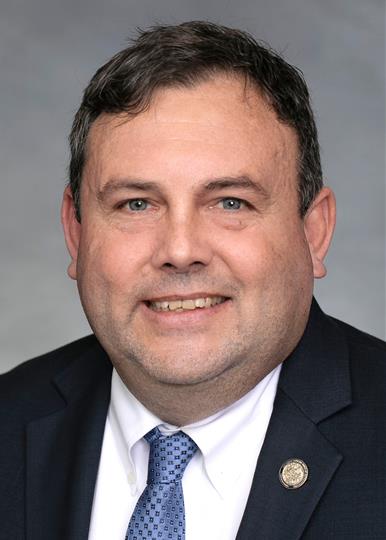
Rep. Eric Ager
Sponsored bills
Maddy summaryHB 29 would allow tribal enrollment cards issued by State or federally recognized North Carolina tribes to be used as valid ID for purchasing alcohol and tobacco. It amends existing state laws to explicitly include these cards alongside driver's licenses, passports, and military IDs when verifying a customer's age at point-of-sale. Businesses selling alcohol or tobacco would be permitted to accept tribal cards as proof of age under the same rules as other official identification. The policy change would take effect on December 1, 2025, if the bill is enacted.
Maddy summaryHB 103 exempts members of North Carolina-recognized tribes from needing hunting, trapping, or fishing licenses when hunting or fishing on tribal land (requiring ID verification) or off tribal land (requiring ID plus compliance with reporting, hunter education, and federal stamp rules). It directly affects tribal members recognized under Chapter 71A of North Carolina law, both on tribal property and in state waters/lands outside tribal areas. The bill amends licensing rules to remove fee requirements while maintaining other regulatory obligations like wildlife reporting and federal stamp purchases. It becomes effective October 1, 2025.
Maddy summaryHB 253 restores Henderson County's authority to implement down-zoning (reducing development density or permitted land uses) with a key exception: it requires written consent from all affected property owners unless the down-zoning serves farmland preservation in agricultural districts or floodplain mitigation in FEMA-designated flood areas. The bill directly affects Henderson County property owners and local government officials, limiting down-zoning actions without consent except for these two specific purposes. It applies only to Henderson County, including its municipalities, and takes effect retroactively to December 11, 2024, to revert zoning changes made after that date under previous law. The bill defines "down-zoning" as decreasing density, reducing permitted uses, or creating nonconformities on land.
Maddy summaryHB 245 modifies North Carolina's low-income housing tax credit program to prioritize affordable housing development in rural communities and counties with higher poverty rates. It requires the state housing committee to adopt allocation rules that favor projects within 10 miles of amenities (like grocery stores) in towns under 10,000 people, measure distances by straight-line radius (not driving routes), and use poverty levels as a tiebreaker when projects score equally. The bill directs the committee to publish proposed rules for public comment and hold hearings before finalizing annual allocation plans. This policy change redirects existing housing tax credits toward qualifying rural and high-poverty areas without creating new funding. The bill takes effect October 1, 2025, for future allocation plans.
Maddy summaryHB 248 exempts owner-occupied single-family homes in North Carolina from live/work building code requirements when used for permitted home-based businesses. It defines "home business use" as owner-operated activities incidental to residential living (e.g., consulting, crafts), requiring the owner to reside there, comply with local zoning, and not lease the business space. The bill prevents local governments from reclassifying these homes as commercial or mixed-use solely due to the home business, ensuring they remain subject only to standard single-family dwelling building codes. It does not override private HOA restrictions or exempt businesses from other state/federal licenses, safety rules, or local zoning prohibitions.
Maddy summaryHB 249 allocates $10,112 to North Carolina State University for a Wake County pilot program to increase diversity in pickleball, specifically targeting underrepresented communities of color. The program requires focus groups with people of color, branded marketing materials, two 4-week sessions at Raleigh recreation centers (Method Road and Chavis) in fall 2025 and spring 2026, and a post-program toolkit for wider community use. It directly affects residents in Wake County by creating accessible pickleball opportunities through public recreation facilities. The bill focuses on concrete steps to address current underrepresentation in the sport, leveraging its low-cost, inclusive nature. Funds are restricted to these specific activities and do not revert.
Maddy summaryHB 256 repeals North Carolina's current ban on public employee collective bargaining, allowing state and local government workers (like teachers, police, and administrative staff) to negotiate wages and working conditions with their employers. The bill removes existing legal restrictions (Article 12 of Chapter 95) and explicitly states that public employees' bargaining rights apply to all state and local government employers. It does not create new benefits or funding but aligns public sector bargaining rights with those already available to private sector employees. The bill’s key provision is the repeal of the prohibition, enabling public employees to collectively bargain under existing state law.
Maddy summaryHB 216 creates a Continuous Alcohol Monitoring Fund funded by a 5-cent charge on each bottle of alcohol sold in North Carolina. This fund provides court-ordered continuous alcohol monitoring as a sentencing option for individuals unable to pay for the service themselves. The bill amends tax and sentencing laws to direct proceeds from the alcohol tax to the fund, which the court can use to cover monitoring costs for qualifying defendants. It directly affects low-income individuals convicted of alcohol-related offenses who would otherwise face barriers to this monitoring requirement.
Maddy summaryHB 238 appropriates $300,000 from the General Fund to reimburse Buncombe County for costs incurred while conducting a required study on merging the Buncombe County and Asheville school districts. The bill directly affects Buncombe County, which conducted the study mandated by S.L. 2023-128. The funds are designated as nonrecurring for the 2025-2026 fiscal year and become effective July 1, 2025. This is a straightforward reimbursement measure with no new policy requirements beyond the specified funding.