

Maddy summaryHB 365, the Workforce Education Act, revises North Carolina's community college funding model to base allocations on student enrollment in workforce-focused programs like career training and continuing education, starting in 2025-2026. It creates an Enrollment Increase Reserve (funded with $6 million initially) to provide additional support to colleges experiencing enrollment growth exceeding 5% or 325 students, preventing funds from reverting to the general budget. The bill also expands funding for cooperative high schools in underserved areas, with tiered payments based on county development status (e.g., $740,000 for first high schools in "Tier One" regions). These changes directly affect community colleges, public school students accessing career programs, and participating high schools seeking to expand workforce education opportunities.
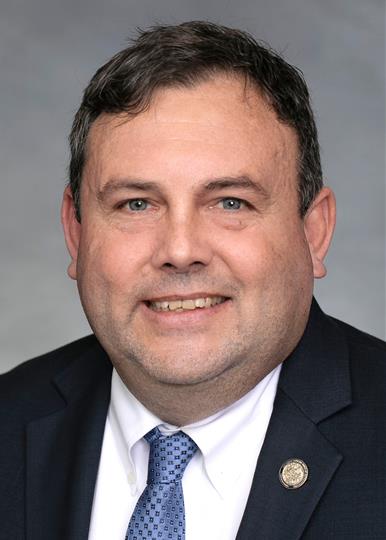
Rep. Eric Ager
Sponsored bills
Maddy summaryHB 360, the Homeowner Protection Act, targets fraud involving residential property documents. It increases penalties for forging deeds, leases, or wills related to homes (making it a Class D felony instead of Class H) and creates an expedited court process for victims. Homeowners affected by fraudulent property records can file a "memorandum of possible fraud" to trigger a court hearing, where judges can void the false documents and clear title clouds. The law also requires recording offices to flag fraudulent instruments and prohibits fees for these protective filings. The bill is currently pending in the House Judiciary Committee.
Maddy summaryHB 242 adds freestanding psychiatric hospitals (licensed, Medicare-certified facilities primarily providing psychiatric care that are not state-owned) to North Carolina’s Medicaid Healthcare Access and Stabilization Program (HASP). This expands the existing program - which currently reimburses acute care hospitals - to include these psychiatric hospitals, providing them with increased Medicaid reimbursements. The funding will come from a new quarterly assessment levied on the psychiatric hospitals themselves, calculated as a percentage of their hospital costs. The bill does not change patient eligibility but alters how these specific hospitals receive Medicaid payments through the HASP program.
Maddy summaryHB 353, the Fair Minimum Wage Act, raises North Carolina's state minimum wage in staged increases, starting at $10 per hour on January 1, 2026, and reaching $18 per hour by January 1, 2030. After 2030, the wage will automatically adjust annually based on inflation using the Consumer Price Index. The bill directly affects hourly workers and employers across North Carolina, requiring higher pay for all covered employees. It also adds provisions allowing workers to recover unpaid wages plus interest, attorney fees, and court costs if employers fail to pay correctly.
Maddy summaryHB 351 establishes North Carolina's Recovery-Friendly Workplace Program, which helps employers support employees in addiction recovery. Employers (both public and private) can become "participants" or earn "certified" status by completing training, adopting inclusive policies (like flexible leave and confidential treatment access), and implementing evidence-based practices. The program, funded with $300,000 from the Opioid Settlement Fund, provides employers with advisors, model policies, and annual reviews to maintain certification. It directly affects all North Carolina employers covered by workers' compensation and their employees seeking recovery support. The program becomes effective July 1, 2025.
Maddy summaryHB 350 requires North Carolina firearm owners to report lost or stolen firearms to local law enforcement or the State Bureau of Investigation within 24 hours of discovery. Owners must provide specific details like the firearm’s make, model, serial number, and circumstances of the loss or theft. Law enforcement must then enter key details into the National Crime Information Center database. Violations are punishable as a Class 3 misdemeanor for a first offense, escalating to a Class I felony for repeat violations. The law takes effect December 1, 2025.
Maddy summaryHB 340 requires North Carolina's State Board of Education to develop or purchase a screening assessment to identify academically or intellectually gifted students in all sixth-grade classrooms across public middle schools. The bill directly affects all sixth graders in North Carolina public middle schools by mandating universal screening for gifted identification. Key provisions include appropriating $7 million in recurring state funds for the 2025-2026 fiscal year to cover assessment costs and requiring the screening to be administered to every sixth grader. The law becomes effective July 1, 2025, with the Department of Public Instruction responsible for implementing the screening process.
Maddy summaryHB 341 increases property tax relief for disabled veterans in North Carolina by expanding the homestead exclusion on their primary residence. The bill sets exclusion amounts based on disability rating: $100,000 for 70%+ disability, $75,000 for 50-69%, $50,000 for 30-49%, and $25,000 for 10-29%. Surviving spouses qualify for the greater of the veteran’s exclusion amount or $45,000, provided the veteran’s death resulted from a service-connected condition. This policy directly affects qualifying disabled veterans and their surviving spouses who own and occupy their primary residence, effective for taxes due in 2025.
Maddy summaryHB 344, the Litter Reduction Act of 2025, requires a deposit on most beverage containers (like soda, water, and alcohol in glass, plastic, or metal) sold in North Carolina, with refunds available at certified redemption centers. It directly affects beverage distributors, retailers (excluding small businesses selling under 250,000 containers yearly), and consumers who purchase these products. The bill establishes a system where consumers pay a deposit at purchase and can return empty containers to redemption centers for a refund, aiming to reduce roadside litter from beverage containers. Key provisions include defining "beverage container," requiring redemption centers to accept containers, and setting recycling standards to avoid downcycling or waste-to-energy processing.
Maddy summaryHB 343 appropriates $380,000 for 2025-26 and $397,000 for 2026-27 to create four full-time ombudsman positions within North Carolina’s Long-Term Care Ombudsman Program. This directly affects residents of nursing homes, adult care homes, and family care homes by enhancing advocacy for their rights and care quality. The bill’s key provision funds staff to move the state’s program toward national standards for resolving facility issues without formal complaints. It becomes effective July 1, 2025, with no advocacy language - only a concrete funding mechanism for expanded protections.