

Maddy summaryHB 413 would legalize recreational marijuana for adults 21 and older in North Carolina, allowing possession of up to 2 ounces, 15 grams of concentrate, or products with 2,000mg THC. It establishes new regulations for cannabis businesses (like retail stores and cultivation facilities), requires lab testing and responsible packaging, and mandates that businesses prioritize diversity and community investment. Crucially, it creates two funds to reinvest tax revenue: the Community Reinvestment and Repair Fund for historically impacted communities, and the Cannabis Enterprise Opportunity Fund to support minority-owned businesses. The bill directly affects consumers aged 21+, cannabis businesses, and communities disproportionately affected by past cannabis enforcement.
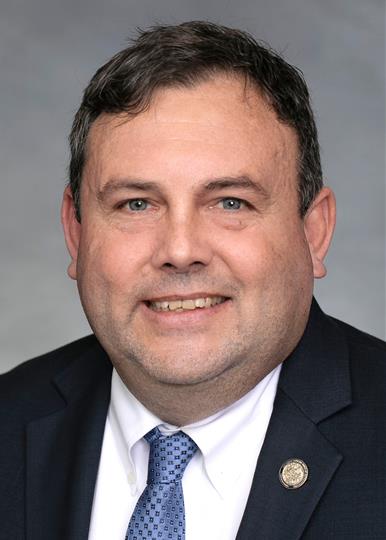
Rep. Eric Ager
Sponsored bills
Maddy summaryHB 422, the "Beyond The Choice Act," eliminates a 12-month residency wait period for eligible veterans and their dependents at North Carolina public colleges and universities. It allows veterans who served 90+ days of active duty, their dependents, or other individuals covered under federal law (38 U.S.C. § 3679) to pay in-state tuition rates immediately upon admission, without needing to establish residency first. This change applies to all qualifying students enrolling in the 2025-2026 academic year and beyond. The bill directly benefits veterans and their families by reducing financial barriers to higher education in North Carolina.
Maddy summaryHB 420 allocates $4.3 million annually to fund teacher recruitment programs like "Grow-Your-Own" and "2+2" pathways in high-need schools, targeting efforts to recruit and prepare new educators. It requires the State Board of Education to develop a teacher licensure and compensation reform plan by March 2026, including pathways for new teachers and retention strategies. The bill also funds a study to expand educator preparation programs to graduate 5,000 in-state teachers annually, with a focus on increasing diversity among educators. These provisions directly affect public schools, teacher preparation programs, and prospective teachers through new funding streams and policy requirements.
Maddy summaryHB 401 allows North Carolina lottery winners who claim prizes of $50 million or more to keep their personal details (like name and address) confidential for 90 days after claiming the prize. This directly affects only winners of such large jackpots, not smaller prize winners. The bill requires the lottery commission to treat these winners' identifying information as confidential, except when disclosure is legally required - for example, to notify tax authorities (North Carolina Department of Revenue, IRS, or the winner’s state of residence), comply with debt collection laws, or follow court orders. The law does not change tax obligations or eligibility rules for winning the lottery.
Maddy summaryHB 404, the Fair and Affordable Housing Act, requires the Legislative Research Commission to study affordable housing availability across North Carolina - including rural and urban areas - and report findings to the 2026 General Assembly. The bill prohibits housing discrimination based on "source of income" (such as government housing vouchers, disability benefits, or rental assistance), making it illegal for landlords to refuse tenants using these payments. It also appropriates $45 million from the General Fund to the Housing Trust Fund for affordable housing development and bans credit reporting agencies from listing eviction lawsuits that don’t result in a landlord judgment. These changes directly affect renters (especially those using government assistance), landlords, housing providers, and credit agencies in North Carolina.
Maddy summaryHB 137, the "Gabe Torres Act," expands death benefits under North Carolina's Public Safety Employees' Death Benefits Act to include public safety workers (like police, fire, and emergency personnel) who are killed while traveling to or from work. The bill amends the law to define "official duties" to explicitly cover commuting between home and work, as well as travel for training or responding to emergencies. It also appropriates $300,000 in recurring funds for these expanded benefits, effective July 1, 2025. This change directly affects eligible families of covered public safety employees who die during work-related travel, ensuring they qualify for death benefits previously limited to on-duty incidents.
Maddy summaryHB 276 expands the definition of "killed in the line of duty" for firefighters to include deaths caused by specific cancers that previously qualified them for benefits under North Carolina's Firefighters' Cancer Insurance Program. The bill adds seven specific cancers (like mesothelioma and testicular cancer) to the list and includes any cancer diagnosis that already provided benefits under the existing program. It also formally links the Firefighters' Health Benefits Pilot Program to the Cancer Insurance Program, ensuring consistent coverage, and appropriates $2 million annually for related death benefits starting July 1, 2025. This change directly affects firefighters diagnosed with covered cancers and their families, who will now qualify for death benefits under the Public Safety Employees' Death Benefits Act.
Maddy summaryHB 374 allocates $3.95 million to fund a financial assistance program for small local governments through the North Carolina Association of Regional Councils of Governments (NCARCOG). It directs NCARCOG to hire 32 additional finance professionals to help small towns and public authorities with financial compliance, prioritizing those with limited resources on the State Treasurer’s assistance list. The bill also provides $3.9 million for NCARCOG to develop a disaster response plan, including training for local financial administration, assistance with federal disaster funds, and infrastructure repair support. These funds, effective July 1, 2025, aim to improve financial management and disaster resilience for smaller communities across North Carolina.
Maddy summaryHB 367 requires North Carolina's State Crime Laboratory to provide sexual assault victims with updates on the status of their examination kits. Victims will be notified if their kit cannot be tested, if testing is declined for reasons other than untestability, or if the kit is scheduled for destruction. The law mandates that the lab develop procedures for these notifications but specifies victims must provide and maintain current contact information. This law takes effect October 1, 2025, applying to all kits submitted before, on, or after that date.
Maddy summaryHB 361 allocates $1.8 million for training county register of deeds employees, $500,000 for a public awareness campaign about real property fraud, and $30 million in grants to county offices for technology upgrades. The grants will fund digitizing records, purchasing scanning equipment, upgrading software, enhancing digital security, and improving network systems to prevent deed and title fraud. An additional $1 million is reserved for county offices without existing fraud detection systems. The bill becomes effective July 1, 2025, directly affecting county register of deeds offices and the public through reduced fraud risks.