

Maddy summaryHB 863 appropriates $582 million in state funds to address unmet recovery needs in Western North Carolina following Hurricane Helene. It directly affects residents and businesses in the impacted area by funding affordable housing repairs, disaster-related home improvements, business grants, park restoration, flood protection, and emergency services. Key provisions include $105 million for local housing grants (covering repairs, homelessness assistance, and mortgage help), $75 million for stream restoration and food banks, and a $75,000 business grant program for eligible companies with sales tax declines. The funds are distributed across state agencies like Housing Finance, Agriculture, and Public Safety to support physical recovery and economic stabilization.
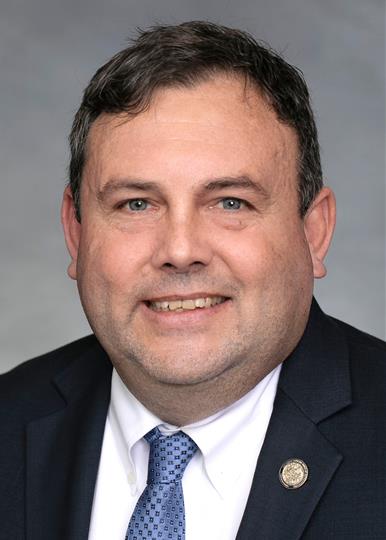
Rep. Eric Ager
Sponsored bills
Maddy summaryHB 266 designates June 12th of each year as Women Veterans Day in North Carolina. The bill directly affects North Carolinians by establishing an annual state observance to recognize women veterans' service. It adds this date to North Carolina's official calendar through a simple statutory change in Chapter 103 of the General Statutes, requiring no new funding or administrative implementation. The bill creates a ceremonial recognition without altering existing veteran benefits or programs.
Maddy summaryThis bill requires North Carolina state agencies and local governments to only purchase U.S. and North Carolina flags made entirely in the United States using domestically grown or produced materials. It prohibits using public funds for any U.S. or state flags not 100% manufactured in America from domestic materials. The rule applies to all new flag purchases starting October 1, 2025. It directly affects all government offices responsible for buying flags with public money.
Maddy summaryHB 160 requires North Carolina's University of North Carolina School of Medicine Area Health Education Centers (NC AHEC) to create and share evidence-based information about sudden unexpected death in epilepsy (SUDEP) with all healthcare practitioners in the state. This includes current risk factors, conditions, and contact details for epilepsy support organizations, available on NC AHEC's website. Healthcare providers treating epilepsy patients will directly receive this standardized resource, which must be compiled by consulting medical boards and professional societies. NC AHEC must report the completed resource to the legislature by September 1, 2025.
Maddy summaryHB 828 prohibits proposition wagers (bets on specific in-game actions like player stats or minor occurrences that don’t affect the final outcome) on college and amateur sports, effective July 1, 2025. It also bans in-person sports betting at venues hosting college events during the eight hours before and during those events. The bill defines "proposition wager" specifically to exclude such bets, while allowing other forms of legal sports wagering. It directly affects sports facilities hosting college games, bettors placing these specific wagers, and operators managing wagering platforms. The law does not restrict betting on professional sports or the final outcome of college games.
Maddy summaryHB 826, titled "No Retaliation Against Mandatory Reporters," protects employees required by North Carolina law to report suspected abuse, neglect, fraud, or other threats to vulnerable populations (such as child welfare workers, healthcare providers, and sex offender compliance reporters). The bill prohibits employers from taking retaliatory actions like firing, demoting, or reducing pay against these employees for making good-faith reports. Key provisions require employers to inform workers of their rights, provide annual training on reporting duties, and establish a rebuttable presumption of retaliation if adverse actions occur within 60 days of a report. Enforcement is handled by the North Carolina Commissioner of Labor, who can order reinstatement, back pay, or fines up to $5,000 per violation.
Maddy summaryHB 471, the Food Labeling Transparency Act, requires manufacturers of cell-cultured and insect-based food products to clearly label items that use meat or poultry terms (like "beef," "chicken," or "burger") with qualifying terms such as "cell-cultured," "insect-based," or "lab-grown" in prominent, close proximity to the product name. This applies to products that mimic traditional meat or poultry but are made without animal slaughter, directly affecting manufacturers of these alternative protein products. The law mandates this labeling to prevent consumer confusion by ensuring the product’s origin is transparent, with enforcement starting October 1, 2025. It does not restrict the sale of these products but requires specific labeling to distinguish them from conventional meat.
Maddy summaryHB 335 expands eligibility for emergency judges in North Carolina by allowing retired judges who previously served in both Superior Court and District Court to qualify for emergency judge roles on either court. Currently, retired judges could only serve as emergency judges on the specific court they retired from, but this bill removes that restriction for judges with dual court experience. The change directly affects retired judges who held positions in both court systems before retiring, making them eligible to be assigned to emergency duties in either court. This adjustment streamlines the pool of available judges for temporary court needs without altering compensation or other existing rules.
Maddy summaryHB 807 raises teacher salaries for the 2025-2026 school year with new pay scales based on experience and adds supplements for certified teachers, school nurses, counselors, and specialists. It allocates $89.4 million annually and $109.2 million as a one-time fund to provide weighted, per-child funding for children with disabilities based on the cost of services provided. The bill also mandates free breakfast and lunch for all public school students, funded through state appropriations tied to school food authority evaluations, and includes funding for a one-to-one device refresh in public schools.
Maddy summaryHB 790 prohibits the sale of tobacco, vape, and alternative nicotine products within 1,000 feet of any public or nonpublic school building. It directly affects vape and tobacco shops located near schools, banning sales in those zones while excluding home schools and colleges. The law includes an exception for incidental sales tied to a business's primary operations but classifies violations as Class 2 misdemeanors. The bill takes effect December 1, 2025, and applies to offenses occurring on or after that date.