

Maddy summaryHB 960 would temporarily increase North Carolina's unemployment insurance weekly benefits to $600 during declared disasters, directly affecting unemployed workers in areas impacted by disaster declarations under state emergency management law. It requires the state to set aside specific funds in the unemployment insurance fund for these enhanced benefits and mandates certification that sufficient funds are available before implementation. The benefit increase applies only for the duration of an official disaster declaration and ends when the declaration expires. The bill takes effect July 1, 2025.
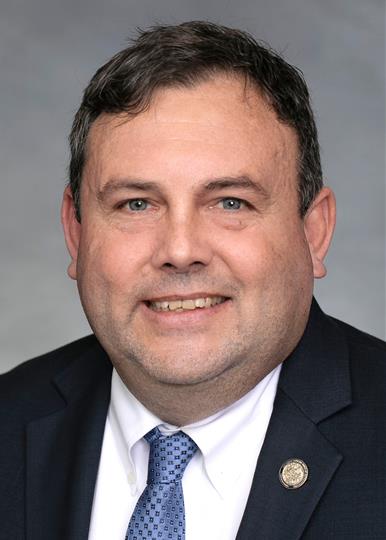
Rep. Eric Ager
Sponsored bills
Maddy summaryHB 989 creates a statewide grant program to improve school safety in North Carolina public schools. It provides funding for three specific purposes: (1) crisis services for students (like therapy and family support), (2) evidence-based training for staff on trauma response and suicide prevention, and (3) safety equipment purchases (such as bullet-resistant glass, alarms, and security systems). Grants must supplement, not replace, existing school safety funding, and charter schools can now receive equipment grants. The program limits annual spending to $350,000 per grant category and prioritizes equipment like exterior door locks and active shooter alarms.
Maddy summaryHB 1002, the Rate Payer Protection Act, prohibits North Carolina utilities from passing grid and energy costs specifically tied to large data centers (100+ megawatt demand) to electricity ratepayers. Instead, it creates a 14-member Special Commission to plan data center infrastructure, reviewing grid capacity, recommending locations based on factors like fiber and water access, and advising on energy expansion needs. The Commission must report findings to state leaders by June 2027 and expires on that date. This directly affects ratepayers (who avoid these costs) and utilities (which must exclude data center-related expenses from rate calculations).
Maddy summaryHB 970 (Preventing Algorithmic Rent Fixing) prohibits landlords and third-party service providers in North Carolina from using algorithms that coordinate rent pricing based on nonpublic competitor data. It bans real estate lessors from paying for or exchanging value for "coordinating functions" (like algorithms analyzing competitors' rent data) and prevents service providers from facilitating non-competition agreements among landlords. The law classifies violations as unfair trade practices under Chapter 75, allowing affected parties to sue and blocking pre-dispute arbitration agreements for such cases. It applies to residential rentals (apartments, houses, etc.) and takes effect October 1, 2025.
Maddy summaryHB 1004 proposes to allocate $16 million (one-time) and $8 million annually to establish up to eight Artificial Intelligence Hubs at UNC campuses, including at least one HBCU or UNC Pembroke, requiring institutions to match 10% with non-state funds. It also appropriates $70 million for Technology Hubs at all UNC campuses to drive innovation, workforce development, and entrepreneurship, plus $30 million for research grants focused on AI applications in education, healthcare, ethics, and infrastructure. The bill directly affects UNC system campuses, researchers, and students through funding for hubs, infrastructure, and project grants. It requires reporting on hub activities and becomes effective July 1, 2025, pending legislative approval.
Maddy summaryHB 842 clarifies that North Carolina public schools may conduct vision, hearing, dental, and developmental screenings for students without requiring parental consent, but must notify parents at the start of each school year about all screenings offered and provide results for their child. This bill directly affects parents of students in public schools across North Carolina, particularly for kindergarten through third grade as noted in the bill text. Key provisions require schools to provide written notice of screenings and results to parents (instead of seeking consent for each screening), while maintaining existing requirements for other health services that do require consent. The law updates school health screening procedures under North Carolina General Statutes § 115C-76.46.
Maddy summaryHB 882 requires packaging producers in North Carolina to reduce non-reusable packaging by 10% within two years and 40% by eight years, while ensuring 50% of packaging is recycled within five years and 90% by twelve years. It directly affects manufacturers and sellers of packaged goods sold in the state, mandating they join producer responsibility organizations to meet these targets. The bill also bans intentionally added PFAS (forever chemicals) in covered products and requires packaging to include a minimum amount of postconsumer recycled content. These requirements apply to all packaging used for products sold, offered for sale, or distributed in North Carolina, excluding medical packaging and long-term storage materials. The law aims to reduce plastic waste and toxic chemicals in the state's waste stream through measurable, time-bound producer obligations.
Maddy summaryHB 881 bans the manufacture, use, and distribution of PFAS (per- and poly-fluoroalkyl substances) in North Carolina, directly affecting businesses that currently use these chemicals in products like firefighting foam, non-stick coatings, or food packaging. The law requires companies discharging wastewater to disclose PFAS and 1,4-dioxane levels and remove them if feasible, while public water systems must notify customers about PFAS detected in drinking water by June 2025. It establishes civil penalties of up to $25,000 for violations, with stricter fines for repeat offenses. The bill focuses on preventing contamination and protecting public health through these concrete regulatory changes.
Maddy summaryHB 871, the North Carolina Microplastics Study Act, directs the North Carolina Collaboratory at UNC Chapel Hill to study the impacts of microplastics (tiny plastic particles 1 nanometer to 5 millimeters in size) in the state’s waters. The bill requires the Collaboratory to identify microplastics, research their ecological and health effects, develop standardized testing methods, and create a risk assessment framework by collaborating with state agencies like the Department of Environmental Quality. The study must produce a comprehensive report with recommendations for reducing plastic pollution, including potential policy changes, by July 2026. The $150,000 allocated funds the research, public engagement, and report development, but the bill itself does not impose new regulations or directly affect businesses or residents.
Maddy summaryHB 874, the North Carolina Healthy Schools Act, prohibits public schools from serving or selling ultra-processed foods containing specific synthetic additives (like artificial dyes and preservatives such as Yellow Dye 5 or Potassium Bromate) during the school day. It directly affects all North Carolina public schools, including district, regional, and charter schools, requiring them to certify compliance with the ban through the Department of Public Instruction. Schools must submit certification forms, and the Department will publish a list of compliant schools online. The ban takes effect for the 2025-2026 school year, though parents may still provide such foods for their children.