

Maddy summaryHouse Bill 213, titled "Post NC Veterans' Benefits," requires employers in North Carolina to display a notice about veterans' benefits. This bill mandates that employers with five or more persons working in a room post this information in a conspicuous place. The Commissioner of Labor will provide a digital or printed form of this notice. The poster must include details on services such as benefits and claims, employment and training, housing assistance, and how to request military records, with the Department of Labor consulting the Department of Military and Veterans Affairs to create it.
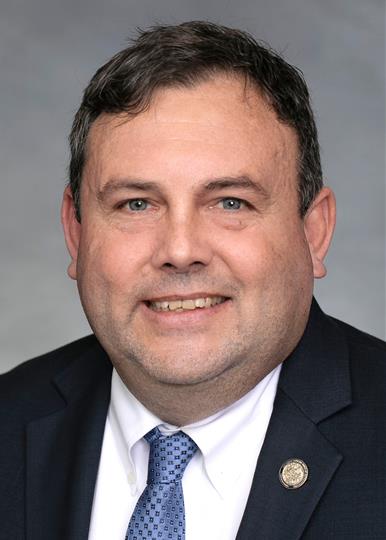
Rep. Eric Ager
Sponsored bills
Maddy summaryHouse Bill 272, known as "The Sergeant Mickey Hutchens Act," allows certain law enforcement, probation/parole, and correctional officers in North Carolina to purchase additional retirement service credit. Officers who hold an advanced law enforcement or corrections certificate and have at least five years of membership service can buy up to four years of creditable service. This purchase applies to members of the Teachers' and State Employees' Retirement System or the Local Governmental Employees' Retirement System. To do so, they must pay a lump sum covering the full cost of the increased retirement system liability and an administrative fee, with the option for their employer to contribute to this cost.
Maddy summaryHouse Bill 670 establishes the Career and College Pathways Innovation Challenge Grant Program, providing competitive grants to North Carolina community colleges. These grants support local and regional partnerships that aim to increase postsecondary enrollment and completion for students and adults, align educational offerings with workforce needs, and reduce educational opportunity gaps. The State Board of Community Colleges administers the program, awarding funds for initiatives like work-based learning and financial support beyond tuition. For the 2025-2026 and 2026-2027 fiscal years, $2 million is specifically allocated to community colleges in counties affected by Hurricane Helene. The bill appropriates $5 million in recurring funds for the program, effective July 1, 2025.
Maddy summaryHB 833, "The FRESH Act," directs the Department of Agriculture and Consumer Services to expand its existing Home Processor Program. This expansion will allow individuals participating in the program to produce and sell refrigerated or frozen food items, as well as bakery products containing cream or cream cheese fillings, including cheesecakes. The Department is authorized to adopt temporary rules to implement these changes. All activities under the expanded program will remain subject to applicable food safety laws and inspections.
Maddy summaryHB 114 (Employment Preference for Military Personnel) updates North Carolina's state employment policy to expand eligibility for hiring preference. It removes the requirement that military service must have occurred during a "period of war" and now includes active-duty service members, National Guard and Reserve members, and their spouses/dependents in the preference program. The bill ensures state departments, agencies, and institutions must grant hiring preference to qualifying individuals (including active-duty personnel during service) for all employment events like initial hires, promotions, and transfers. This change directly affects military service members, their families, and North Carolina state employers by broadening who qualifies for employment preference without wartime service restrictions.
Maddy summaryHB 707 prohibits North Carolina state agencies and local governments from purchasing small drones (under 55 pounds) made or assembled by foreign vendors linked to China or Russia, or listed on U.S. sanctions lists. The bill directly affects all state and local government entities that buy drone technology, banning the use of state funds for such purchases starting July 1, 2027. Key provisions define "covered foreign entities" as those tied to Chinese/Russian governments, on U.S. sanctions lists, or controlled by those nations. This law aims to restrict drone acquisitions from specific foreign sources without altering existing drone usage policies.
Maddy summaryHB 671 establishes a four-year pilot program (2025-2026 through 2028-2029) that provides grants to North Carolina public high schools (grades 9-12) to form or support competitive speech and debate teams. Schools can receive up to $10,000 per team annually, covering coach stipends (capped at $2,500 for lead coaches and $1,500 for assistants) and competition expenses like travel and league fees. Participating schools must join the Tarheel Forensic League and National Speech and Debate Association, and the program allows students from schools without teams to join the nearest team (with students covering their own transportation). Funded by $500,000 yearly from the General Fund, the Department of Public Instruction will administer the program and report annually on grant usage and student academic outcomes.
Maddy summaryHB 951 requires North Carolina to use state-owned property for childcare, directly affecting state employees, first responders, and community college staff/students. It mandates that new or renovated state buildings costing over $5 million include childcare or adult care centers if serving 250+ people, and creates a $5 million pilot program to establish three state employee childcare centers on unused state property. The bill also allocates $6 million for county grants to fund third-shift childcare for first responders in unused county buildings and requires feasibility studies for childcare at all community colleges and UNC campuses. These provisions include specific funding, reporting deadlines, and requirements for apprenticeship programs linking childcare centers with educational institutions.
Maddy summaryHB 938, the Right to Repair Digital Electronics Act, requires manufacturers of digital electronics sold or used in North Carolina to provide independent repair shops and product owners with free access to diagnostic tools, repair information, and service parts at fair and reasonable prices. It mandates that manufacturers make available the same diagnostic software, firmware updates, and repair documentation they provide to their own authorized repair networks. The law prohibits manufacturers from forcing authorized repair providers to use proprietary formats if standardized alternatives exist, while protecting trade secrets and existing repair agreements. This directly affects independent repair businesses, owners of digital devices (like smartphones and computers), and manufacturers selling such products in the state.
Maddy summaryHB 937 allocates $11 million annually from North Carolina's sports betting tax revenue to provide salary supplements for public school athletic coaches. It requires eligible public school units to ensure each full-time coach receives a combined total of at least $3,000 per year in state and local funds, with schools maintaining prior non-state funding levels for coaches. Schools that replace state funds with local money forfeit future state allocations, and unspent funds flow to the North Carolina YMCA Alliance for youth sports programs. The bill applies to all public school athletic coaches meeting specific eligibility criteria and takes effect for the 2025-2026 school year.