

Maddy summaryHouse Bill 663, known as the Living Donor Protection Act, aims to support individuals who donate organs or bone marrow. The bill prohibits insurance companies from discriminating against individuals solely based on their status as a living organ donor in various insurance policies. It also establishes a state income tax credit of up to $5,000 for unreimbursed expenses, such as lost wages and travel, incurred by living donors. Furthermore, the act provides state employees and state-supported personnel with up to 30 days of paid leave for organ donation and seven days for bone marrow donation.
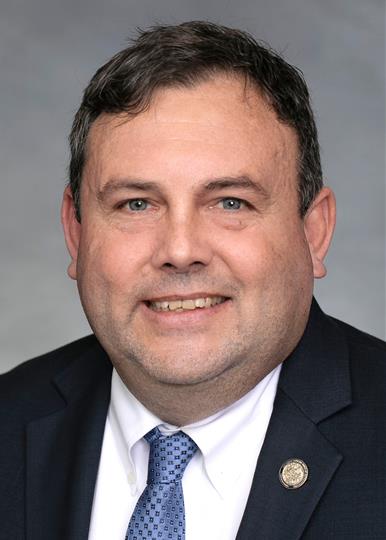
Rep. Eric Ager
Sponsored bills
Maddy summaryHB 462, titled the "Personal Data Privacy/Social Media Safety Act," aims to protect North Carolinians by enacting two main components: the Personal Data Privacy Act and the Social Media Safety Act. The provided text details the "North Carolina Personal Data Privacy Act," which is set to take effect on January 1, 2026. This act establishes definitions for key terms such as "personal data," "biometric data," "precise geolocation data," and "consent," affecting North Carolina residents as "consumers" and entities that process their data as "controllers." It also outlines the framework for consumer rights regarding their personal data.
Maddy summaryHB 767 establishes the Joint Legislative Study Commission on Market Rate Compensation for Teachers. This commission will study public school teacher pay and benefits in North Carolina, comparing them to other states and professions, and analyze teacher attrition rates. Composed of legislators, gubernatorial appointees, and the State Superintendent, the commission will hold public meetings across the state. Its purpose is to gather data and provide legislative recommendations on teacher compensation to the General Assembly by the end of 2026.
Maddy summaryHouse Bill 610 directs the Department of Public Instruction to conduct a study on the feasibility of requiring each local school district to maintain at least one school operating on a year-round calendar for grades kindergarten through 12. The study will examine administrative and operational costs, transportation challenges, and potential barriers to establishing these schools. It will also assess anticipated student enrollment if year-round options were more accessible. The Department can work with a third-party for this research and must report its findings and any recommendations to the Joint Legislative Education Oversight Committee by January 15, 2027.
Maddy summaryHouse Bill 592, known as the Toxic-Free Medical Devices Act of 2025, aims to prohibit the use of a chemical called DEHP in certain medical devices within North Carolina. Specifically, it bans the manufacturing, selling, and distributing of intravenous solution containers and intravenous tubing that are intentionally made with DEHP. The prohibition for IV solution containers takes effect on January 1, 2030, and for IV tubing on January 1, 2035. The bill also prevents replacing DEHP with other similar chemicals in these devices and sets limits for unintentionally present DEHP, while exempting certain blood-related products. Violations of these provisions could lead to administrative penalties.
Maddy summaryThis bill designates "The Andy Griffith Show" as the official television show of the State of North Carolina. This symbolic act recognizes the cultural impact of the show and its connection to the state.
Maddy summaryHouse Bill 635 requires certain large group health benefit plans to provide coverage for fertility diagnostic care, treatment, and preservation services. This bill directly affects individuals covered by these plans, aiming to increase their access to fertility-related medical care. Key provisions include mandatory coverage for at least three in vitro fertilization (IVF) cycles per insured, provided procedures follow American Society of Reproductive Medicine guidelines and are performed at licensed facilities. However, the requirements do not apply to plans offered by religious institutions or self-insured group health plans, and explicitly exclude experimental procedures or nonmedical costs for donor gametes or surrogacy.
Maddy summaryHB 824 aims to expand access to treatment for opioid use disorder and overdose for individuals covered by health benefit plans. It requires health insurers to cover specific healthcare services provided by pharmacists, such as testing and medication administration, if those services are within a pharmacist's scope of practice. The bill also mandates coverage for all FDA-approved prescription drugs for opioid disorder and overdose, prohibiting prior authorization for these medications. Additionally, it updates state laws to ensure mental health benefits in health plans are no less favorable than physical health benefits, aligning with federal requirements.
Maddy summaryHB 634 updates North Carolina laws to enhance parity in health insurance coverage for mental health and addiction recovery. It requires all health benefit plans to provide benefits for mental health conditions that are no less favorable than those for physical illnesses, including applying the same financial limits. A key provision mandates that medical necessity determinations for substance use disorders must rely solely on the most recent American Society of Addiction Medicine criteria. The bill also requires the State Health Plan for Teachers and State Employees to comply with these new utilization review standards and updates terminology from "chemical dependency" to "substance use disorder" in relevant statutes.
Maddy summaryHB 69, the Military and Veterans Educational Promise Act, provides two key benefits for military-affiliated individuals and veterans at North Carolina's University of North Carolina (UNC) schools. First, it requires UNC institutions to allow eligible military members (including reservists) and their spouses to defer admission for up to five years (for active duty) or two years (for reserve service) upon enrollment notice. Second, it establishes in-state tuition rates for honorably discharged veterans who served at least 90 days in the military, graduated from a North Carolina high school after 2004, had a North Carolina duty station, or received a Purple Heart. The bill applies to all UNC institutions beginning in the 2025-2026 academic year.