

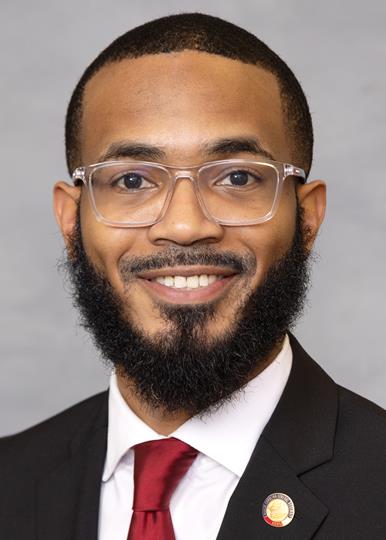
Photo of Jordan Lopez
D North Carolina House · District 112 On the 2026 ballot

Rep. Jordan Lopez

Compare
Total votes
481
all sessions
Attendance
97%
16 missed
Near the chamber average
With party
94%
of cast votes
Lower than 82% of chamber peers
Bipartisan score
3%
crosses aisle rarely
Higher than 81% of chamber peers
Sponsored
264
bills & resolutions
Higher than 82% of chamber peers
Committees
3
assignments
264 bills and resolutions

Sponsored bills

Total
264
Primary
20
Co-sponsor
244
This page
264
matching current filters
Co-sponsor HB 371
In committee · North Carolina House · Co-sponsor
DMV Materials in Additional Languages.

Maddy summaryHB 371 requires North Carolina's Division of Motor Vehicles to provide driver's license handbooks and written tests in Khmer and any language spoken by at least 2% of the state's population. This directly affects applicants who speak these languages by offering materials in their preferred language during the licensing process. The key provision mandates the DMV to add these language options to its standard services, moving beyond English-only requirements. The law takes effect on January 1, 2026.

In committee Mar 12, 2025 1 co-sponsor
Co-sponsor HB 242
In committee · North Carolina House · Co-sponsor
Add Psychiatric Hospitals to Medicaid Healthcare Access and Stabilization Program (HASP).

Maddy summaryHB 242 adds freestanding psychiatric hospitals (licensed, Medicare-certified facilities primarily providing psychiatric care that are not state-owned) to North Carolina’s Medicaid Healthcare Access and Stabilization Program (HASP). This expands the existing program - which currently reimburses acute care hospitals - to include these psychiatric hospitals, providing them with increased Medicaid reimbursements. The funding will come from a new quarterly assessment levied on the psychiatric hospitals themselves, calculated as a percentage of their hospital costs. The bill does not change patient eligibility but alters how these specific hospitals receive Medicaid payments through the HASP program.

In committee Mar 11, 2025 1 co-sponsor
Co-sponsor HB 353
In committee · North Carolina House · Co-sponsor
Fair Minimum Wage Act.

Maddy summaryHB 353, the Fair Minimum Wage Act, raises North Carolina's state minimum wage in staged increases, starting at $10 per hour on January 1, 2026, and reaching $18 per hour by January 1, 2030. After 2030, the wage will automatically adjust annually based on inflation using the Consumer Price Index. The bill directly affects hourly workers and employers across North Carolina, requiring higher pay for all covered employees. It also adds provisions allowing workers to recover unpaid wages plus interest, attorney fees, and court costs if employers fail to pay correctly.

In committee Mar 11, 2025 1 co-sponsor
Primary HB 350
In committee · North Carolina House · Lead sponsor
Report Lost/Stolen Firearm Within 24 Hours.

Maddy summaryHB 350 requires North Carolina firearm owners to report lost or stolen firearms to local law enforcement or the State Bureau of Investigation within 24 hours of discovery. Owners must provide specific details like the firearm’s make, model, serial number, and circumstances of the loss or theft. Law enforcement must then enter key details into the National Crime Information Center database. Violations are punishable as a Class 3 misdemeanor for a first offense, escalating to a Class I felony for repeat violations. The law takes effect December 1, 2025.

In committee Mar 11, 2025 0 co-sponsors
Co-sponsor HB 343
In committee · North Carolina House · Co-sponsor
Advocacy for Long-Term Care Residents Act.

Maddy summaryHB 343 appropriates $380,000 for 2025-26 and $397,000 for 2026-27 to create four full-time ombudsman positions within North Carolina’s Long-Term Care Ombudsman Program. This directly affects residents of nursing homes, adult care homes, and family care homes by enhancing advocacy for their rights and care quality. The bill’s key provision funds staff to move the state’s program toward national standards for resolving facility issues without formal complaints. It becomes effective July 1, 2025, with no advocacy language - only a concrete funding mechanism for expanded protections.

In committee Mar 11, 2025 1 co-sponsor
Co-sponsor HB 322
In committee · North Carolina House · Co-sponsor
Make General Assembly Records Public.

Maddy summaryHB 322 modifies North Carolina's public records law to require the General Assembly to follow the same record retention and disposal rules as other state agencies. It mandates that legislative records must be preserved for at least 10 years after a legislator leaves office (or until they have no further official use, whichever is longer) and requires the Legislative Services Officer to work with the Department of Natural and Cultural Resources to create an inventory of these records. The bill repeals previous exemptions that allowed the General Assembly to unilaterally control its own records and ensures these records are subject to public access standards. This directly affects North Carolina legislators, their offices, and the Department of Natural and Cultural Resources, which will oversee record preservation and public access.

In committee Mar 10, 2025 1 co-sponsor
Co-sponsor HB 325
In committee · North Carolina House · Co-sponsor
Legislative Building Field Trip Pilot Program.

Maddy summaryHB 325 establishes a two-year pilot program (2025-2026 and 2026-2027) to fund public school field trips to North Carolina's Legislative Building. It provides up to $2,000 per school for transportation costs (bus rental, fuel, driver pay) to participating schools, prioritizing those in counties designated as "Tier 1" under state law. The program is funded with $1.5 million annually from the General Fund, requiring schools to submit budget applications by October 1 and reporting usage to the legislature by February 15 each year. The bill directly affects public school units statewide, with priority given to schools in designated underserved counties.

In committee Mar 10, 2025 1 co-sponsor
Primary HB 316
In committee · North Carolina House · Lead sponsor
Child Care Act.

Maddy summaryHB 316 reenacts North Carolina's Child Tax Credit to help families cover child care costs, with reimbursement percentages based on income and child age (e.g., 7-13% for dependents aged 6-12). It allocates $200 million annually to expand the NC Pre-K program, adding 32,000 slots for 4-year-olds, and $35 million to increase subsidized child care funding. The bill also requires public schools to provide free lunches at no cost to students through state funding tied to school nutrition evaluations. Additionally, it mandates a report on creating a high school child care apprenticeship program. The bill directly affects families with children, public schools, and child care providers across North Carolina.

In committee Mar 10, 2025 0 co-sponsors
Co-sponsor HB 280
In committee · North Carolina House · Co-sponsor
Support for the Senior Tar Heel Legislature.

Maddy summaryHB 280 allocates $30,000 in one-time state funds to support the North Carolina Senior Tar Heel Legislature, a program for older residents to engage with state policy. The funding, from the General Fund for the 2025-2026 fiscal year, covers operational costs for this existing program established under state law. It directly affects the Senior Tar Heel Legislature by providing financial resources for its activities. The bill becomes effective July 1, 2025, and does not create new policy but enables the program's continued operation.

In committee Mar 5, 2025 1 co-sponsor
Co-sponsor HB 269
In committee · North Carolina House · Co-sponsor
Workforce Freedom and Protection Act.

Maddy summaryHB 269, the "Workforce Freedom and Protection Act," bans non-compete agreements for most North Carolina workers earning under $75,000 annually, prohibiting employers from restricting job mobility after termination or requiring such agreements as a condition of employment. It also directs the Legislative Research Commission to study occupational licensing requirements in key industries like construction, cosmetology, and healthcare to identify unnecessary barriers that may raise costs for consumers or limit job access. The study will evaluate licensing rules based on public safety justification, economic impact, and comparison to national standards, with recommendations for potential reforms. The bill does not immediately change existing licensing but sets a process for reviewing requirements that may disproportionately affect low- and moderate-income workers. The non-compete ban takes effect July 1, 2025.

In committee Mar 5, 2025 1 co-sponsor
Showing 221 to 230 of 264 bills
Previous 1 … 22 23 24 … 27 Next