

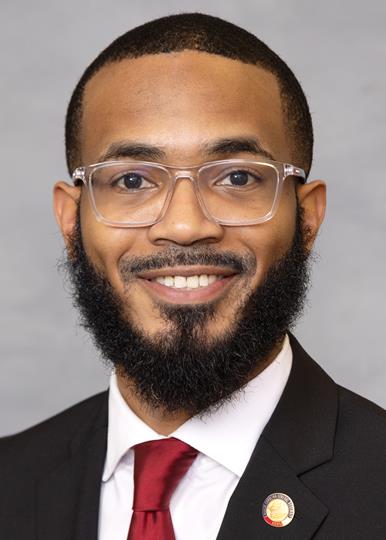
Photo of Jordan Lopez
D North Carolina House · District 112 On the 2026 ballot

Rep. Jordan Lopez

Compare
Total votes
481
all sessions
Attendance
97%
16 missed
Near the chamber average
With party
94%
of cast votes
Lower than 82% of chamber peers
Bipartisan score
3%
crosses aisle rarely
Higher than 81% of chamber peers
Sponsored
264
bills & resolutions
Higher than 82% of chamber peers
Committees
3
assignments
264 bills and resolutions

Sponsored bills

Total
264
Primary
20
Co-sponsor
244
This page
264
matching current filters
Primary HB 970
In committee · North Carolina House · Lead sponsor
Preventing Algorithmic Rent Fixing.

Maddy summaryHB 970 (Preventing Algorithmic Rent Fixing) prohibits landlords and third-party service providers in North Carolina from using algorithms that coordinate rent pricing based on nonpublic competitor data. It bans real estate lessors from paying for or exchanging value for "coordinating functions" (like algorithms analyzing competitors' rent data) and prevents service providers from facilitating non-competition agreements among landlords. The law classifies violations as unfair trade practices under Chapter 75, allowing affected parties to sue and blocking pre-dispute arbitration agreements for such cases. It applies to residential rentals (apartments, houses, etc.) and takes effect October 1, 2025.

In committee Apr 14, 2025 0 co-sponsors
Co-sponsor HB 998
In committee · North Carolina House · Co-sponsor
Charlotte Mecklenburg Library/Funds.

Maddy summaryHB 998 appropriates $5 million from North Carolina's General Fund to the Charlotte Mecklenburg Library Foundation for constructing a new main library. The funds are a one-time allocation for the 2025-2026 fiscal year, specifically designated for the library's new building project. This bill directly affects the Charlotte Mecklenburg Library Foundation as the recipient of the grant. It becomes effective July 1, 2025, and contains no policy changes beyond the funding authorization.

In committee Apr 14, 2025 1 co-sponsor
Co-sponsor HB 990
In committee · North Carolina House · Co-sponsor
Notice Requirements for Landlord Fees.

Maddy summaryHB 990 requires North Carolina landlords to provide written notice to tenants before charging certain late fees. Landlords must deliver this notice (via hand, mail, or agreed electronic means) detailing the fee amount, the specific past-due payment, and the date the fee was assessed - before collecting it. The bill applies to late fees for rent payments that are five or more days overdue, capping fees at $15 or 5% of monthly rent (or $4 or 5% weekly). This law takes effect October 1, 2025, directly affecting residential landlords and tenants in the state.

In committee Apr 14, 2025 1 co-sponsor
Co-sponsor HB 842
In committee · North Carolina House · Co-sponsor
Vision, Hearing, Dental Screenings Opt-Out.

Maddy summaryHB 842 clarifies that North Carolina public schools may conduct vision, hearing, dental, and developmental screenings for students without requiring parental consent, but must notify parents at the start of each school year about all screenings offered and provide results for their child. This bill directly affects parents of students in public schools across North Carolina, particularly for kindergarten through third grade as noted in the bill text. Key provisions require schools to provide written notice of screenings and results to parents (instead of seeking consent for each screening), while maintaining existing requirements for other health services that do require consent. The law updates school health screening procedures under North Carolina General Statutes § 115C-76.46.

In committee Apr 10, 2025 1 co-sponsor
Co-sponsor HB 879
In committee · North Carolina House · Co-sponsor
Air Conditioning for Rental Properties.

Maddy summaryHB 879 requires landlords in North Carolina to provide and maintain operable air conditioning in residential rental units that supply AC. It directly affects landlords (who must ensure systems work at the start of each tenancy) and tenants (who gain a right to functional cooling during warm weather). The bill amends landlord obligations to explicitly mandate that air conditioning must cool premises to a reasonable indoor temperature, with repairs required upon written tenant notice (except emergencies). This applies to all new rental agreements and renewals entered into after the law takes effect. The legislation focuses on ensuring basic comfort and safety by making AC a standard maintenance requirement, not a discretionary amenity.

In committee Apr 10, 2025 1 co-sponsor
Co-sponsor HB 858
In committee · North Carolina House · Co-sponsor
North Mecklenburg Public Safety/Funds.

Maddy summaryHB 858 appropriates $74.12 million in one-time state funds for public safety improvements in three North Mecklenburg towns. Davidson receives $20.44 million for a new fire station, emergency vehicles, and police equipment; Cornelius gets $6 million for a public safety facility, updated radios, and pedestrian safety; and Huntersville receives $47.68 million for new firetrucks, breathing apparatus, and construction of a fire station and police facility. The funds must be used strictly for the specified projects outlined in the bill. The bill becomes effective July 1, 2025.

In committee Apr 10, 2025 1 co-sponsor
Co-sponsor HB 882
In committee · North Carolina House · Co-sponsor
Break Free From Plastic and Forever Chemicals.

Maddy summaryHB 882 requires packaging producers in North Carolina to reduce non-reusable packaging by 10% within two years and 40% by eight years, while ensuring 50% of packaging is recycled within five years and 90% by twelve years. It directly affects manufacturers and sellers of packaged goods sold in the state, mandating they join producer responsibility organizations to meet these targets. The bill also bans intentionally added PFAS (forever chemicals) in covered products and requires packaging to include a minimum amount of postconsumer recycled content. These requirements apply to all packaging used for products sold, offered for sale, or distributed in North Carolina, excluding medical packaging and long-term storage materials. The law aims to reduce plastic waste and toxic chemicals in the state's waste stream through measurable, time-bound producer obligations.

In committee Apr 10, 2025 1 co-sponsor
Co-sponsor HB 881
In committee · North Carolina House · Co-sponsor
Per-fluoroalkyl and Poly-fluoroalkyl Substances Free NC.

Maddy summaryHB 881 bans the manufacture, use, and distribution of PFAS (per- and poly-fluoroalkyl substances) in North Carolina, directly affecting businesses that currently use these chemicals in products like firefighting foam, non-stick coatings, or food packaging. The law requires companies discharging wastewater to disclose PFAS and 1,4-dioxane levels and remove them if feasible, while public water systems must notify customers about PFAS detected in drinking water by June 2025. It establishes civil penalties of up to $25,000 for violations, with stricter fines for repeat offenses. The bill focuses on preventing contamination and protecting public health through these concrete regulatory changes.

In committee Apr 10, 2025 1 co-sponsor
Co-sponsor HB 871
In committee · North Carolina House · Co-sponsor
North Carolina Microplastics Study Act.

Maddy summaryHB 871, the North Carolina Microplastics Study Act, directs the North Carolina Collaboratory at UNC Chapel Hill to study the impacts of microplastics (tiny plastic particles 1 nanometer to 5 millimeters in size) in the state’s waters. The bill requires the Collaboratory to identify microplastics, research their ecological and health effects, develop standardized testing methods, and create a risk assessment framework by collaborating with state agencies like the Department of Environmental Quality. The study must produce a comprehensive report with recommendations for reducing plastic pollution, including potential policy changes, by July 2026. The $150,000 allocated funds the research, public engagement, and report development, but the bill itself does not impose new regulations or directly affect businesses or residents.

In committee Apr 10, 2025 1 co-sponsor
Co-sponsor HB 861
In committee · North Carolina House · Co-sponsor
Taxpayer Accountability/Pregnancy Centers.

Maddy summaryHB 861 requires pregnancy centers in North Carolina receiving state funds through the Carolina Pregnancy Care Fellowship (CPCF) to participate in a competitive grant process. It mandates detailed applications covering staff credentials, services offered (including medical testing and ultrasounds), equipment use, and advertising practices, along with annual reporting on client demographics (by age, race, income), services provided, and fund expenditures. The bill sets strict limits on administrative spending (10-15% of funds) and requires all grant funds to be used for nonsectarian purposes only. This directly affects nonprofit pregnancy centers receiving state funding under CPCF, requiring them to disclose operational details and report service outcomes to state agencies.

In committee Apr 10, 2025 1 co-sponsor
Showing 141 to 150 of 264 bills
Previous 1 … 14 15 16 … 27 Next