

Maddy summaryHB 462, titled the "Personal Data Privacy/Social Media Safety Act," aims to protect North Carolinians by enacting two main components: the Personal Data Privacy Act and the Social Media Safety Act. The provided text details the "North Carolina Personal Data Privacy Act," which is set to take effect on January 1, 2026. This act establishes definitions for key terms such as "personal data," "biometric data," "precise geolocation data," and "consent," affecting North Carolina residents as "consumers" and entities that process their data as "controllers." It also outlines the framework for consumer rights regarding their personal data.
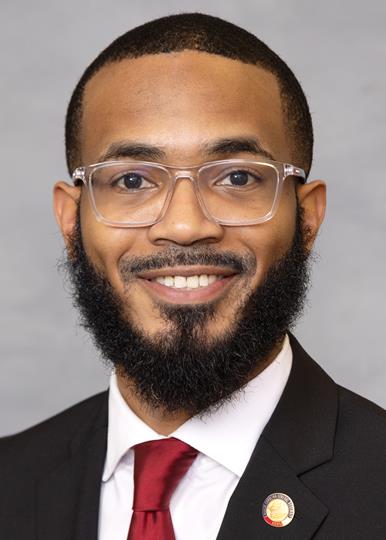
Rep. Jordan Lopez
Sponsored bills
Maddy summaryHB 824 aims to expand access to treatment for opioid use disorder and overdose for individuals covered by health benefit plans. It requires health insurers to cover specific healthcare services provided by pharmacists, such as testing and medication administration, if those services are within a pharmacist's scope of practice. The bill also mandates coverage for all FDA-approved prescription drugs for opioid disorder and overdose, prohibiting prior authorization for these medications. Additionally, it updates state laws to ensure mental health benefits in health plans are no less favorable than physical health benefits, aligning with federal requirements.
Maddy summaryHB 69, the Military and Veterans Educational Promise Act, provides two key benefits for military-affiliated individuals and veterans at North Carolina's University of North Carolina (UNC) schools. First, it requires UNC institutions to allow eligible military members (including reservists) and their spouses to defer admission for up to five years (for active duty) or two years (for reserve service) upon enrollment notice. Second, it establishes in-state tuition rates for honorably discharged veterans who served at least 90 days in the military, graduated from a North Carolina high school after 2004, had a North Carolina duty station, or received a Purple Heart. The bill applies to all UNC institutions beginning in the 2025-2026 academic year.
Maddy summaryHouse Bill 670 establishes the Career and College Pathways Innovation Challenge Grant Program, providing competitive grants to North Carolina community colleges. These grants support local and regional partnerships that aim to increase postsecondary enrollment and completion for students and adults, align educational offerings with workforce needs, and reduce educational opportunity gaps. The State Board of Community Colleges administers the program, awarding funds for initiatives like work-based learning and financial support beyond tuition. For the 2025-2026 and 2026-2027 fiscal years, $2 million is specifically allocated to community colleges in counties affected by Hurricane Helene. The bill appropriates $5 million in recurring funds for the program, effective July 1, 2025.
Maddy summaryHB 944 appropriates $1.5 million from the state General Fund to the Department of Health and Human Services for a directed grant to Care Ring, Inc., a nonprofit community health clinic in Mecklenburg County. The funding supports the clinic’s operations to provide primary care services to medically vulnerable residents facing geographic, economic, or other barriers to care. This grant specifically targets patients who would otherwise be unable to access necessary primary care due to these challenges. The bill directs all funds to be used for the clinic’s core operations during the 2025-2026 fiscal year.
Maddy summaryHB 951 requires North Carolina to use state-owned property for childcare, directly affecting state employees, first responders, and community college staff/students. It mandates that new or renovated state buildings costing over $5 million include childcare or adult care centers if serving 250+ people, and creates a $5 million pilot program to establish three state employee childcare centers on unused state property. The bill also allocates $6 million for county grants to fund third-shift childcare for first responders in unused county buildings and requires feasibility studies for childcare at all community colleges and UNC campuses. These provisions include specific funding, reporting deadlines, and requirements for apprenticeship programs linking childcare centers with educational institutions.
Maddy summaryHB 885 revises North Carolina public school discipline policies to limit suspensions, prohibit corporal punishment, and improve parental notification. It defines suspension lengths (short-term up to 20 days, long-term over 43 days), bans corporal punishment entirely, and requires schools to make documented, multi-channel attempts to contact parents within one hour of disciplinary actions. The bill mandates schools to collect and publicly report demographic data (race, gender, disability status, etc.) on all suspensions, expulsions, and disciplinary actions. These changes directly affect all public school students in North Carolina, with specific restrictions on suspending kindergarten through third graders and requiring in-school suspension to not exceed 40 cumulative days per year.
Maddy summaryHB 910 creates a $2 million recurring grant program to increase teacher diversity in North Carolina public schools, primarily benefiting school districts, colleges, and community organizations. The bill funds partnerships that support recruitment, training, and retention of educators of color through specific initiatives like dual enrollment programs, paid clinical experiences, mentorship, and financial aid for aspiring teachers. Grants require evidence-based proposals addressing recruitment or retention gaps and must include long-term sustainability plans. Local school systems and institutions of higher education will administer the program, with annual reporting required to track progress toward diversifying the educator workforce.
Maddy summaryHB 931 limits towing fees to reasonable and clearly disclosed amounts, prohibits charging storage fees when towing companies are closed, and bans towing to locations without 24-hour vehicle recovery access. It requires towing companies to accept debit/credit/cash payments without processing fees exceeding 2% of the total. The Utilities Commission enforces these rules, imposing up to $5,000 penalties per violation for noncompliance. This bill directly affects towing companies and vehicle owners in North Carolina by regulating fee practices and payment options.
Maddy summaryHB 914 allows colleges and religious institutions in qualifying North Carolina cities (population over 50,000 in urban areas) to develop affordable housing on their owned land without needing special zoning approvals or permits. The bill requires 80% of new housing units to be reserved for low-income residents (at or below 80% of median income), with limited exceptions for staff housing. It includes location restrictions, such as avoiding historic districts, heavy industrial areas, and sites where over one-third is currently light industrial. This policy change streamlines development by treating such housing as a "use by right" under existing zoning.