

Maddy summaryThis North Carolina bill requires all private employers with 25 or more employees to use the federal E-Verify system to check the work authorization of every new hire. It mandates that state and local government agencies also comply with these verification rules and allows employers to avoid penalties if they can prove they acted in good faith and did not knowingly accept fraudulent documents. The legislation establishes a 30-day grace period for employers to fix minor compliance errors and increases fines for repeat offenders while protecting workers who report suspected violations from retaliation. Additionally, it grants the state labor commissioner the authority to conduct random or risk-based audits of employers and provides funding to support enforcement efforts.
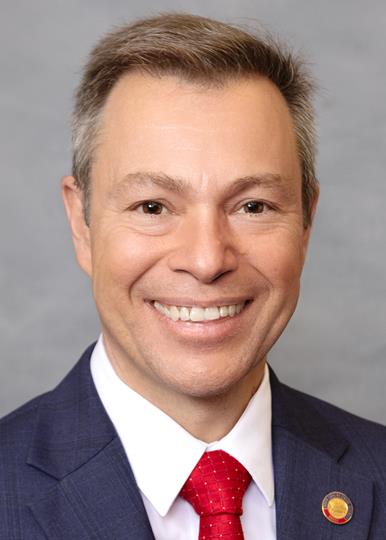
Rep. Paul Scott
Sponsored bills
Maddy summaryHB 87 (Educational Choice for Children Act) allows North Carolina to participate in a federal tax credit program that encourages donations to private scholarship organizations. The bill requires the State Education Assistance Authority to maintain and publish an annual list of qualifying scholarship groups operating in North Carolina, enabling donors to claim federal tax credits for contributions. These scholarships can cover elementary and secondary school costs, including homeschooling expenses, as permitted under federal law. The law becomes effective after 2026, with the Authority needing to establish necessary rules by July 2026 to comply with federal requirements.
Maddy summaryThis bill proposes a constitutional amendment that would require the North Carolina legislature to establish a statewide limit on how much local property tax levies can increase each year. The measure also mandates that any local government wanting to raise property taxes beyond this limit must first obtain approval from a majority of voters in that specific area. Because this change alters the state constitution, it will not take effect immediately but will instead be placed on the November 3, 2026, ballot for voters to decide whether to adopt. If approved by the public, the amendment would legally bind the General Assembly to create the specific tax increase caps mentioned in the text.
Maddy summaryThis bill, known as the Mike Clampitt 1st Responder Tax Fairness Act, aims to expand tax exemptions for volunteer fire departments and rescue squads in North Carolina. Specifically, it allows these independent groups, which have two or fewer paid employees and are already exempt from state income tax, to avoid paying a highway use tax on specific emergency vehicles like fire trucks, forest firefighting units, and other emergency service vehicles. The change applies to vehicles when a certificate of title is issued on or after July 1, 2026, ensuring these organizations can acquire necessary equipment without incurring this particular tax. By broadening the existing exemption, the legislation directly benefits volunteer responders who operate outside of local government units.
Maddy summaryThis bill allocates $6 million in state funds to expand two food assistance programs in North Carolina for the 2026-2027 fiscal year. The first $4 million supports FarmSHARE, which provides grants to buy locally grown food and distribute it for free to food-insecure individuals and households. The second $2 million funds the Double Up Food Bucks Program, allowing people receiving nutrition assistance to use their benefits to purchase fresh fruits and vegetables at farmers markets and other local retailers. Both programs require the state department to submit annual reports detailing participation numbers, distribution metrics, and financial data to legislative oversight committees. The legislation takes effect on July 1, 2026.
Maddy summaryHouse Bill 390, titled "Alleviate the Dangers of Surgical Smoke," establishes new standards for surgical smoke evacuation in North Carolina. This bill requires all licensed hospitals and ambulatory surgical facilities to adopt and implement policies mandating the use of a smoke evacuation/filtering system during surgical procedures likely to generate surgical smoke. A smoke evacuation/filtering system is defined as equipment that captures, filters, and eliminates surgical smoke at its origin. The Department of Health and Human Services is authorized to take adverse action against facilities that violate these new requirements. This act is scheduled to become effective on January 1, 2026.
Maddy summaryHB 434, titled "Lower Healthcare Costs," is a procedural bill focused on updating definitions related to health insurance utilization review in North Carolina. It rewrites statutory definitions (e.g., "medical necessity," "clinical peer," "closely related service") within existing insurance regulations but does not introduce new cost-saving mechanisms or policy changes. The bill directly affects insurers, healthcare providers, and covered individuals by standardizing terminology used in prior authorization processes. As a definition-only update, it has no concrete policy impact on healthcare costs or patient access, and the title does not align with its actual scope.
Maddy summaryHB 491 prepares North Carolina's Medicaid program to implement work requirements if authorized by the federal Centers for Medicare and Medicaid Services (CMS). It requires the state's Division of Health Benefits to negotiate with CMS, notify oversight committees within 30 days of starting talks, and submit detailed reports after CMS approves any work requirements plan. The bill does not enact work requirements itself but establishes procedures for future implementation, including timelines for reporting funding needs. This would directly affect current Medicaid recipients if CMS approves work requirements, though the bill is procedural and conditional on federal approval. The legislation is currently in committee review and has not yet become law.
Maddy summaryHB 118 modifies North Carolina's property tax exemption for disabled veterans, replacing a flat $45,000 exclusion with a percentage-based system tied to the veteran's VA disability rating. It directly affects veterans with a 50% or higher service-connected disability rating (or surviving spouses under specific conditions), allowing them to exclude a portion of their home's appraised value from property taxes - equal to their disability percentage. For example, a veteran with a 70% disability rating would exclude 70% of their home's value from taxes. The bill takes effect for taxes due in 2025 and prohibits combining this relief with other property tax exemptions.
Maddy summaryThis bill revises North Carolina's burglary and breaking-and-entering laws to increase penalties when a firearm or deadly weapon is used. It raises the felony classification by one level for offenses like burglary (first/second degree), breaking out of a dwelling at night, or entering a building with intent to commit a felony or terrorize occupants, if a weapon was present during the crime. The law directly affects individuals convicted of these specific offenses when a firearm was involved, not the general public. It does not change sentencing for weapon-free offenses or address police pay, despite the title "Back the Blue Pay Act" suggesting otherwise. The changes take effect December 1, 2025.