

Maddy summaryHB 52, the "Protect Those Who Serve and Protect Act of 2025," increases penalties for assaults against public safety personnel and their animals. It creates a new Class I felony offense for throwing, spraying, or projecting substances (like water) at public safety officers or law enforcement/search and rescue animals while they are on duty or due to their role. The bill also prohibits intentionally pointing laser devices at these protected individuals or animals during duty. These changes update existing assault laws to explicitly cover a wider range of emergency workers (including firefighters, medical staff, National Guard members, and school employees) and add specific protections for animals used in public safety.
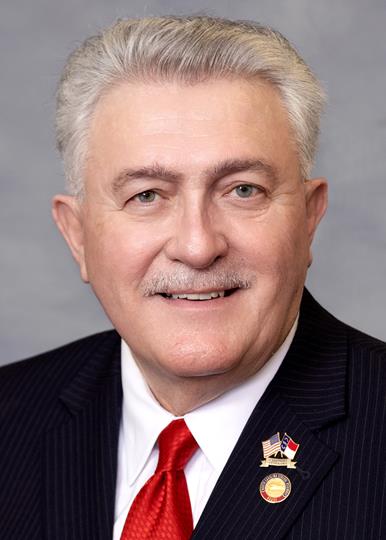
Rep. Donnie Loftis
Sponsored bills
Maddy summaryHB 362 prohibits the intentional release of substances or technologies within North Carolina aimed at altering weather, temperature, or sunlight - including stratospheric aerosol injection (SAI), cloud seeding, and electromagnetic emissions. It defines "atmospheric modification" broadly to cover activities affecting climate, agriculture, health, or security, while explicitly excluding licensed pesticide applications by aircraft. The law makes it illegal to intentionally inject or disperse materials for such purposes and directs the Environmental Management Commission to create implementing rules. This bill directly affects entities or individuals conducting weather-altering experiments or technologies within the state. The measure is currently in committee referral after passing its first reading in the North Carolina House.
Maddy summaryHB 11 would allow North Carolina taxpayers to deduct overtime pay, up to $2,500 in bonus pay (defined as cash awards for workplace dedication), and reported tips from their taxable income. It applies to individuals and married couples filing jointly, with each spouse eligible for separate deductions. The bill specifically defines "bonus pay" to exclude tips and requires taxpayers to provide documentation to claim the deduction. This policy change would take effect for tax returns filed in 2025.
Maddy summaryHB 242 adds freestanding psychiatric hospitals (licensed, Medicare-certified facilities primarily providing psychiatric care that are not state-owned) to North Carolina’s Medicaid Healthcare Access and Stabilization Program (HASP). This expands the existing program - which currently reimburses acute care hospitals - to include these psychiatric hospitals, providing them with increased Medicaid reimbursements. The funding will come from a new quarterly assessment levied on the psychiatric hospitals themselves, calculated as a percentage of their hospital costs. The bill does not change patient eligibility but alters how these specific hospitals receive Medicaid payments through the HASP program.
Maddy summaryHB 319 appropriates $500,000 from the state General Fund to Hispanic Grassroots, a nonprofit organization serving North Carolina's Hispanic community. The funds will support its existing education outreach programs, including scholarship assistance for private school choices, small business development, healthcare education, and civics classes to help residents navigate government services. This one-time grant, effective July 1, 2025, directly benefits Hispanic Grassroots' current services for Hispanic residents across the state. The bill does not create new programs but provides targeted funding for established community initiatives.
Maddy summaryHB 49, the Filial Debt Fairness Act, clarifies North Carolina's filial responsibility law by explicitly stating that adult children are **not liable for debts their parents incurred** (such as medical bills or loans). The bill amends Section 14-326.1 to clarify that while adult children may still face misdemeanor charges for failing to support a sick or unable-to-work parent (without reasonable cause), they cannot be held responsible for their parents' pre-existing debts. This directly affects adult children who might otherwise be sued for their parents' financial obligations. The law aims to prevent unintended liability for parents' debts while maintaining the existing requirement for children to support parents in need.
Maddy summaryHB 289 adds one new seat to North Carolina's Criminal Justice Education and Training Standards Commission, specifically allowing the North Carolina Police Benevolent Association (PBA) to select a full-time sworn law enforcement officer to serve on the Commission. This amendment increases the Commission's membership from 35 to 36 members by adding the PBA representative to the existing list of appointed positions. The initial appointee selected by the PBA would serve a three-year term beginning July 1, 2025, with subsequent appointees serving three-year terms as determined by the PBA. The bill does not change training standards or requirements, only the composition of the Commission that oversees them.
Maddy summaryHB 292 allows Gaston County Schools to set an earlier student school start date (as early as August 19, instead of the standard August 26) if they demonstrate "good cause," defined as experiencing eight days of school closures per year on average over four of the last ten years due to weather, power failures, or emergencies. The bill modifies the state's standard school calendar requirements specifically for Gaston County, exempting it from the usual opening and closing date rules. It also confirms that schools already operating under a modified calendar (like those designated in 2003-2004) remain exempt. This change applies only to Gaston County Schools starting with the 2025-2026 school year.
Maddy summaryHB 280 allocates $30,000 in one-time state funds to support the North Carolina Senior Tar Heel Legislature, a program for older residents to engage with state policy. The funding, from the General Fund for the 2025-2026 fiscal year, covers operational costs for this existing program established under state law. It directly affects the Senior Tar Heel Legislature by providing financial resources for its activities. The bill becomes effective July 1, 2025, and does not create new policy but enables the program's continued operation.
Maddy summaryHB 274 appropriates $5 million from the General Fund for the 2025-2026 fiscal year to Crossnore Communities for Children, a nonprofit organization, to fund foster care services across North Carolina. The bill directs funds toward specific programs including family reunification, youth independent living, trauma resilience initiatives, and community engagement, all delivered from Crossnore's locations in Winston-Salem, Crossnore, and Hendersonville. These services are designed to support children in foster care and their families statewide. The appropriation is nonrecurring and becomes effective July 1, 2025.