

Maddy summaryHB 774 ("School Breakfast for All") mandates that all North Carolina public schools (pre-K through 12) provide free breakfast to every student, eliminating costs for families. It establishes a Farm-to-Table Initiative requiring schools to partner with local farmers for fresh, locally sourced ingredients in breakfast meals. The bill allocates $39 million in recurring state funds for the 2025-2026 fiscal year to cover program costs, while requiring annual reports on participation rates, costs, and impacts on student health and academic performance. This directly affects all public school students, school districts, and North Carolina agricultural producers.
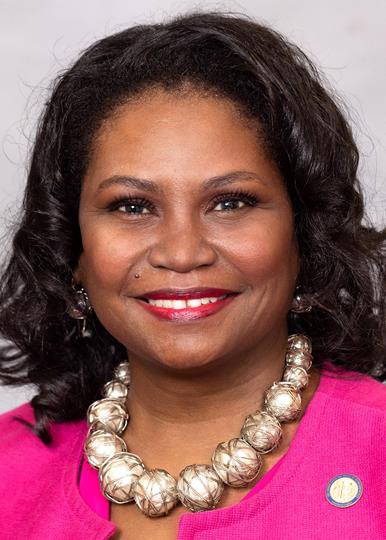
Rep. Aisha Dew
Sponsored bills
Maddy summaryHB 785 requires North Carolina's Department of Public Instruction to study how local school districts can better use existing education funding by combining or transferring budget categories (like classroom materials or staff costs). The study will identify where more flexibility could help schools meet student and staff needs, with a report due to lawmakers by April 2026. The state will provide $50,000 in one-time funding for this research during the 2025-2026 fiscal year. This bill does not change current funding rules but sets up a review process to potentially recommend future adjustments.
Maddy summaryHB 766 appropriates $1.87 million to fund expanded Teen Mental Health First Aid (tMHFA) training for North Carolina high school students in grades 9-12 (ages 14-18). The bill directly affects students by providing evidence-based training to help them recognize, understand, and respond to peers' mental health and substance use challenges. Key provisions include funding for the Department of Health and Human Services to scale up tMHFA programs statewide, building on a pilot that trained 1,519 teens and showed a 50% increase in teens' willingness to seek adult support. The training focuses on connecting peers to trusted adults during crises, addressing high rates of unmet mental health needs among teens (64% don’t seek help, per the bill’s rationale).
Maddy summaryHB 755 provides a sales tax exemption for qualifying North Carolina nonprofits, including hospitals, federally tax-exempt community organizations, volunteer fire departments, and university-affiliated groups. To qualify, nonprofits must obtain a state sales tax exemption number, with annual limits of $31.7 million for state tax and $13.3 million for local tax. The exemption covers most goods and services purchased for nonprofit activities but excludes electricity, telecommunications, alcohol, and certain other items. Real property contractors must provide documentation to retailers when buying materials for nonprofit projects to ensure proper tax treatment.
Maddy summaryHB 779 designates the first Sunday of June each year as "Children's Day" in North Carolina by adding a new section (§103-19) to state law. This symbolic bill does not create new programs, funding, or requirements - it only officially names an existing date for recognition. It directly affects the state's statutory calendar and public observance, with no specific groups or policies altered. The bill’s language emphasizes community awareness of children’s well-being but does not implement concrete policy changes. (Procedural bill; summary adheres to 1-2 sentence guideline.)
Maddy summaryHB 689 allows North Carolina high school graduates who attended NC public or nonpublic schools for four consecutive years before graduation to pay in-state tuition at state colleges and universities, provided they hold a NC driver's license, have a Social Security number, and enroll immediately after high school. It directly affects qualifying NC high school graduates who would otherwise pay out-of-state tuition rates. Key provisions include requiring proof of NC residency through driver's license and school attendance records each semester, with all application information kept confidential. The bill takes effect for the 2025-2026 academic year and does not change residency status for other purposes.
Maddy summaryHB 713 mandates that all North Carolina public schools provide free breakfast and lunch to every student, eliminating meal fees for all. This affects every student enrolled in public schools, including those in charter schools and regional school units, starting with the 2025-2026 school year. The bill appropriates $144 million from the state General Fund to cover costs, with funds allocated based on school size, student eligibility for free/reduced meals, and nutritional quality standards. Schools must comply with federal nutrition guidelines while using state funds to supplement, not replace, existing meal program funding.
Maddy summaryHB 714 creates a state-run universal healthcare benefit plan administered by North Carolina's Commissioner of Insurance. It requires the plan to offer sliding-scale premiums based on household income, covering residents whose incomes exceed Medicaid eligibility but who cannot afford private insurance. The bill mandates the Commissioner to develop the plan by January 1, 2026, with a report to the legislature detailing implementation steps. It also appropriates $100,000 for initial planning in the 2025-2026 fiscal year and ensures coverage meets or exceeds federal Affordable Care Act standards.
Maddy summaryHB 725, the "MOMnibus 3.0," establishes a state grant program to address preventable maternal health disparities affecting Black birthing people in North Carolina. The bill directs the Department of Health and Human Services to award competitive grants ($10,000-$50,000 per recipient) to community-based organizations focused on improving maternal health outcomes for Black women. Key provisions require grantees to address social barriers (like housing, transportation, and nutrition), provide culturally respectful care training for health workers, and offer services including mental health support, doula care, and evidence-based education. The program specifically prioritizes Black-led organizations serving communities with high maternal health disparities, aiming to reduce preventable deaths and complications through targeted community support.
Maddy summaryHB 730 requires North Carolina state agencies to provide information about services in the five most common non-English languages spoken by residents, as determined by the latest U.S. Census data. It directs agencies to submit English materials to the Department of Administration for translation into those languages, with specific guidance for "Chinese" (using Mandarin unless Cantonese is requested). The bill allocates nearly $5.5 million in recurring funds for translation services and mandates that translated materials be published alongside English versions starting January 1, 2027. This directly affects state agencies responsible for public services and aims to improve access for non-English-speaking residents.