

Maddy summaryHB 438 requires North Carolina employers to provide employees working six-hour shifts or longer with at least one 20-minute paid rest break, scheduled near the middle of the workday. The bill directly affects workers in North Carolina covered by the Wage and Hour Act, mandating employers offer this break (though employees may decline it). Employers who fail to comply face civil penalties of up to $100 for a first violation and $500 for subsequent violations, with penalties adjusted for business size and violation severity. The law takes effect upon enactment and applies to all employment in North Carolina on or after that date.
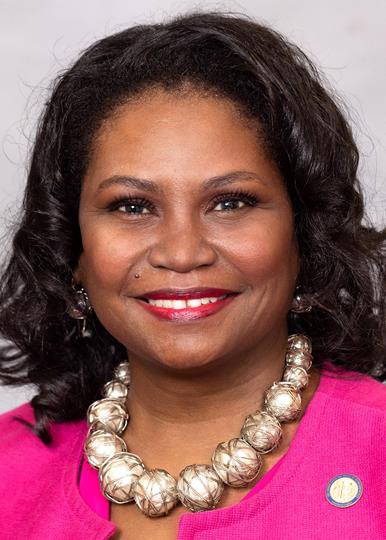
Rep. Aisha Dew
Sponsored bills
Maddy summaryHB 418 mandates that all North Carolina public schools provide required arts education for K-5 students beginning in the 2026-2027 school year. It requires at least one 30-minute session per week in music, dance, or theatre arts (taught by a licensed instructor) and one session per week in visual arts (also taught by a licensed instructor), with classes kept at appropriate sizes. The bill directly affects every K-5 public school student and their educators across North Carolina, ensuring consistent arts instruction aligned with state curriculum standards. It does not alter funding or create new programs but sets specific instructional requirements for elementary schools.
Maddy summaryHB 416 appropriates $30,000 from the state General Fund for the 2025-2026 fiscal year to provide a directed grant to the Boys & Girls Clubs of Durham and Orange Counties. The funds will support a six-part youth development program focusing on teen recruitment, emotional safety, leadership, trauma-informed practices, cultural inclusion, and college/career readiness for area youth. This bill directly affects the Boys & Girls Clubs in those counties and the young people they serve, becoming effective July 1, 2025.
Maddy summaryHB 413 would legalize recreational marijuana for adults 21 and older in North Carolina, allowing possession of up to 2 ounces, 15 grams of concentrate, or products with 2,000mg THC. It establishes new regulations for cannabis businesses (like retail stores and cultivation facilities), requires lab testing and responsible packaging, and mandates that businesses prioritize diversity and community investment. Crucially, it creates two funds to reinvest tax revenue: the Community Reinvestment and Repair Fund for historically impacted communities, and the Cannabis Enterprise Opportunity Fund to support minority-owned businesses. The bill directly affects consumers aged 21+, cannabis businesses, and communities disproportionately affected by past cannabis enforcement.
Maddy summaryHB 420 allocates $4.3 million annually to fund teacher recruitment programs like "Grow-Your-Own" and "2+2" pathways in high-need schools, targeting efforts to recruit and prepare new educators. It requires the State Board of Education to develop a teacher licensure and compensation reform plan by March 2026, including pathways for new teachers and retention strategies. The bill also funds a study to expand educator preparation programs to graduate 5,000 in-state teachers annually, with a focus on increasing diversity among educators. These provisions directly affect public schools, teacher preparation programs, and prospective teachers through new funding streams and policy requirements.
Maddy summaryHB 276 expands the definition of "killed in the line of duty" for firefighters to include deaths caused by specific cancers that previously qualified them for benefits under North Carolina's Firefighters' Cancer Insurance Program. The bill adds seven specific cancers (like mesothelioma and testicular cancer) to the list and includes any cancer diagnosis that already provided benefits under the existing program. It also formally links the Firefighters' Health Benefits Pilot Program to the Cancer Insurance Program, ensuring consistent coverage, and appropriates $2 million annually for related death benefits starting July 1, 2025. This change directly affects firefighters diagnosed with covered cancers and their families, who will now qualify for death benefits under the Public Safety Employees' Death Benefits Act.
Maddy summaryHB 374 allocates $3.95 million to fund a financial assistance program for small local governments through the North Carolina Association of Regional Councils of Governments (NCARCOG). It directs NCARCOG to hire 32 additional finance professionals to help small towns and public authorities with financial compliance, prioritizing those with limited resources on the State Treasurer’s assistance list. The bill also provides $3.9 million for NCARCOG to develop a disaster response plan, including training for local financial administration, assistance with federal disaster funds, and infrastructure repair support. These funds, effective July 1, 2025, aim to improve financial management and disaster resilience for smaller communities across North Carolina.
Maddy summaryHB 353, the Fair Minimum Wage Act, raises North Carolina's state minimum wage in staged increases, starting at $10 per hour on January 1, 2026, and reaching $18 per hour by January 1, 2030. After 2030, the wage will automatically adjust annually based on inflation using the Consumer Price Index. The bill directly affects hourly workers and employers across North Carolina, requiring higher pay for all covered employees. It also adds provisions allowing workers to recover unpaid wages plus interest, attorney fees, and court costs if employers fail to pay correctly.
Maddy summaryHB 339, the Economic Security Act, raises North Carolina's minimum wage to $22 per hour effective January 2026, with annual inflation adjustments based on the Consumer Price Index. It mandates equal pay for equal work, requires paid sick leave and family medical leave for all employees, and strengthens workplace safety protections. The bill also restores inflation-adjusted unemployment benefits, ends wage theft, removes criminal history questions from job applications ("banning the box"), and expands tax credits for childcare and low-income workers. Additionally, it creates a presumption that essential workers infected with COVID-19 contracted it on the job and appropriates funds for cost-of-living adjustments for public retirees.
Maddy summaryHB 340 requires North Carolina's State Board of Education to develop or purchase a screening assessment to identify academically or intellectually gifted students in all sixth-grade classrooms across public middle schools. The bill directly affects all sixth graders in North Carolina public middle schools by mandating universal screening for gifted identification. Key provisions include appropriating $7 million in recurring state funds for the 2025-2026 fiscal year to cover assessment costs and requiring the screening to be administered to every sixth grader. The law becomes effective July 1, 2025, with the Department of Public Instruction responsible for implementing the screening process.