

Maddy summaryHouse Bill 946 establishes a new class of teaching license in North Carolina specifically for educators in Montessori schools. This "Montessori license" allows individuals to teach only in schools that primarily use Montessori instruction. To qualify, applicants must hold a bachelor's degree, possess a valid credential from a recognized Montessori organization, and complete any required state examinations. This license does not permit the holder to teach in public schools that are not Montessori schools unless they also hold a separate public school teaching license.
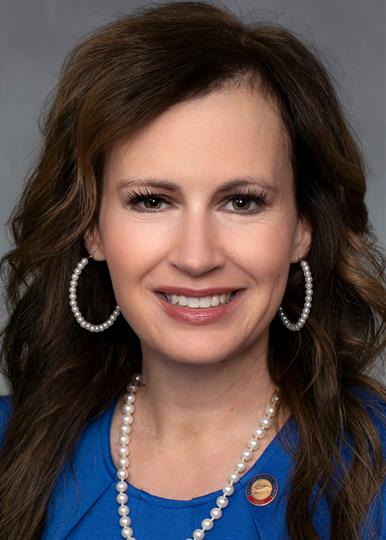
Rep. Tricia Cotham
Sponsored bills
Maddy summaryHouse Bill 635 requires certain large group health benefit plans to provide coverage for fertility diagnostic care, treatment, and preservation services. This bill directly affects individuals covered by these plans, aiming to increase their access to fertility-related medical care. Key provisions include mandatory coverage for at least three in vitro fertilization (IVF) cycles per insured, provided procedures follow American Society of Reproductive Medicine guidelines and are performed at licensed facilities. However, the requirements do not apply to plans offered by religious institutions or self-insured group health plans, and explicitly exclude experimental procedures or nonmedical costs for donor gametes or surrogacy.
Maddy summaryHB 985 increases the criminal penalty for assaulting a school employee or volunteer in North Carolina. It reclassifies such assaults from a Class A1 misdemeanor to a Class I felony when the incident occurs while the individual is performing their duties or as a result of their duties. The bill broadly defines "school employee or volunteer" to include staff, independent contractors, and adult volunteers involved in school activities. It also protects school personnel from civil or criminal liability for taking reasonable actions to end student fights. Finally, the bill updates supervisor reporting requirements for assaults and prohibits intimidating employees from reporting these incidents.
Maddy summaryHB 573 proposes to eliminate the standardized testing requirement for individuals applying for a teacher license in North Carolina. The bill repeals existing laws that mandate these examinations and prohibits the State Board of Education from adopting any future rules or policies requiring them. This change directly affects all applicants seeking a teacher license, including those pursuing a limited license.
Maddy summaryHB 69, the Military and Veterans Educational Promise Act, provides two key benefits for military-affiliated individuals and veterans at North Carolina's University of North Carolina (UNC) schools. First, it requires UNC institutions to allow eligible military members (including reservists) and their spouses to defer admission for up to five years (for active duty) or two years (for reserve service) upon enrollment notice. Second, it establishes in-state tuition rates for honorably discharged veterans who served at least 90 days in the military, graduated from a North Carolina high school after 2004, had a North Carolina duty station, or received a Purple Heart. The bill applies to all UNC institutions beginning in the 2025-2026 academic year.
Maddy summaryHB 671 establishes a four-year pilot program (2025-2026 through 2028-2029) that provides grants to North Carolina public high schools (grades 9-12) to form or support competitive speech and debate teams. Schools can receive up to $10,000 per team annually, covering coach stipends (capped at $2,500 for lead coaches and $1,500 for assistants) and competition expenses like travel and league fees. Participating schools must join the Tarheel Forensic League and National Speech and Debate Association, and the program allows students from schools without teams to join the nearest team (with students covering their own transportation). Funded by $500,000 yearly from the General Fund, the Department of Public Instruction will administer the program and report annually on grant usage and student academic outcomes.
Maddy summaryHB 944 appropriates $1.5 million from the state General Fund to the Department of Health and Human Services for a directed grant to Care Ring, Inc., a nonprofit community health clinic in Mecklenburg County. The funding supports the clinic’s operations to provide primary care services to medically vulnerable residents facing geographic, economic, or other barriers to care. This grant specifically targets patients who would otherwise be unable to access necessary primary care due to these challenges. The bill directs all funds to be used for the clinic’s core operations during the 2025-2026 fiscal year.
Maddy summaryHB 945 requires North Carolina public schools to specify whether incidents of sexual assault, harassment, or other violence occurred on school buses when submitting reports to the State Board of Education. It increases reporting frequency from annual to biannual (at the end of each school quarter) and establishes a Class I felony penalty for school employees or board members who fail to report such incidents. The bill directly affects local school boards, administrators, and staff who must comply with these reporting requirements. The State Board will compile and publish these reports, excluding sensitive minor identifiers, starting with the 2025-2026 school year. This law aims to improve tracking of violence on school buses through standardized reporting and enforcement.
Maddy summaryHB 947 ("Every Child Reads") requires North Carolina public schools to screen all students in kindergarten through third grade, sixth grade, and ninth grade for dyslexia using state-approved tools. It mandates teacher training on dyslexia identification and evidence-based reading interventions, and requires literacy instruction in middle schools to align with the Science of Reading. The bill also creates Individual Reading Plans (IRPs) for kindergarten through third graders struggling with reading, based on assessment data, and transfers the NC Pre-K program to the Department of Public Instruction. These provisions directly affect students with dyslexia, K-3 teachers, and school districts implementing literacy programs.
Maddy summaryThis bill requires public schools and charter schools in North Carolina to allow students from nonpublic schools to enroll part-time for access to specific courses, programs, or services. The law mandates that local school boards create policies for this enrollment and make them available on their websites, while charter schools must also post relevant information online. Schools will receive state funding for part-time students, with full per-pupil funding for those attending one-third or more of instructional time and half funding for those attending less. The legislation also clarifies that part-time nonpublic school students will not count toward a charter school's enrollment growth metrics.