

Maddy summaryHB 612, the "Fostering Care in NC Act," updates North Carolina's laws governing child abuse, neglect, and dependency cases. It expands the definition of "abused juveniles" to include specific offenses like sexual crimes, human trafficking, and certain violent acts, affecting how cases are classified. The bill requires county social services directors to use either a family-centered assessment or a formal investigation when reviewing reports, and to collect military affiliation details of the juvenile's caregiver. It also clarifies that court jurisdiction over juveniles continues until age 18, emancipation, or death. These changes standardize responses to child welfare reports and improve information gathering for safety decisions.
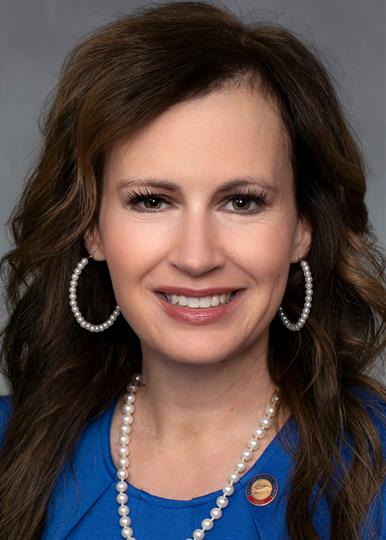
Rep. Tricia Cotham
Sponsored bills
Maddy summaryHB 251 prohibits North Carolina state agencies from denying disaster recovery assistance (like grants) based on a person's political affiliation or political speech. It applies to all applicants for state disaster aid, including U.S. citizens, nationals, and qualified aliens, and sets penalties of a Class I felony for violations. The bill also defines "temporary housing" (such as trailers or tents) and adds criminal penalties for stealing such housing during declared emergencies. These changes aim to ensure state disaster aid is distributed fairly and protect emergency housing resources.
Maddy summaryHB 59 would increase the income eligibility limit for North Carolina's elderly or disabled property tax homestead exclusion from $25,000 to $48,000 for taxable years beginning July 1, 2026. This change would directly affect homeowners aged 65 or older, or those who are totally and permanently disabled, who meet other criteria (like being a North Carolina resident and owning their home as a permanent residence). The bill modifies the existing rule that currently limits eligibility to those with incomes under $25,000, raising the threshold to $48,000 while maintaining the exclusion amount as the greater of $25,000 or 50% of the home's appraised value. The change aims to expand access to this property tax relief for qualifying low-to-moderate income homeowners. (Note: The bill was withdrawn in June 2025 and has not become law.)
Maddy summaryHB 480 creates a new pathway for doctors, physician assistants, and anesthesiologist assistants to obtain North Carolina medical licenses by transferring licenses from other states ("licensure by endorsement"). To qualify, applicants must have held an active license in another U.S. jurisdiction for at least five years (with two years of practice post-residency for doctors), have a verified full-time job offer in North Carolina, maintain good standing with no recent disciplinary actions, and meet practice hour requirements. The bill increases application fees for endorsement (e.g., $825 for physicians vs. $400 for standard licensure) and requires additional documentation within 180 days to keep the license active. This directly affects out-of-state medical professionals seeking to practice in North Carolina without retaking exams.
Maddy summaryHB 468 regulates kratom products in North Carolina by establishing licensing requirements for businesses, setting age restrictions, and mandating safety measures. It prohibits sales to anyone under 21 (requiring age verification for those under 30), bans unlicensed sales, and requires all kratom products to be sold in child-resistant "exit packages." Businesses must use independent labs accredited under ISO 17025 or DEA standards to test products for safety and compliance. The Alcohol Law Enforcement Division enforces these rules, imposing escalating civil penalties for violations, including license suspensions or revocations for repeated offenses.
Maddy summaryHB 661, the Building Industry Efficiency Act of 2025, modifies North Carolina's construction and street regulations to streamline development. It prohibits inspection departments from charging fees for canceling inspections more than one business day early (Section 1.1), and limits municipalities from imposing stricter street design standards than the North Carolina Department of Transportation (NCDOT) for both public and private streets (Sections 1.2-1.3). For private streets, developers must disclose if engineered designs fall below NCDOT standards and provide disclosures to buyers before sales. Municipalities and counties must accept pedestrian facilities or street improvements into public road systems after project completion, but counties need agreements with NCDOT or municipalities first (Sections 1.4-1.5). The bill takes effect July 1, 2025, directly affecting developers, municipalities, engineers, and property buyers.
Maddy summaryHB 187 updates North Carolina's credit union oversight rules. It requires credit unions to pay semiannual supervision fees (in January and July) and submit annual financial reports to the Credit Union Division. The bill clarifies examination schedules (every 18 months), sets late-report penalties ($75-$750 per day), and specifies how fees and penalties are collected and used. These changes directly affect all North Carolina credit unions operating under Chapter 54 statutes, streamlining their regulatory compliance with the Administrator of Credit Unions. The bill focuses on administrative procedures, not new member benefits or financial programs.
Maddy summaryHB 50 creates two new options for retired state and local law enforcement officers with at least 30 years of service or 55 years old with 5+ years of service. It allows officers retiring before age 62 to choose between two calculation methods for an annual separation allowance: either 0.85% of their most recent base pay for each year of service, or a fixed amount based on pay at 30 years of service. The allowance stops when officers turn 62 or pass away. This directly affects qualifying law enforcement officers who retire under North Carolina's state retirement system.
Maddy summaryHB 485 requires North Carolina's Medicaid agency to request federal approval to extend Medicaid coverage for personal care services to adults living in licensed adult care homes who earn more than the current State-County Special Assistance income limit but stay below 180-200% of the federal poverty level. The bill specifically targets individuals who would qualify for lower-income Medicaid assistance if not for their higher earnings. Before implementing this coverage, the agency must submit a CMS request meeting three conditions: covering the specified income group, ensuring cost savings offset new expenses, and complying with legal requirements. This bill does not immediately change coverage - it only authorizes a federal request, pending CMS approval.
Maddy summaryHB 414 aims to give equal credit for community college courses towards high school graduation requirements for dually enrolled students, including those in the Career and College Promise program. It directs the State Boards of Community Colleges and Education to collaborate on developing a system where one community college course grants one full high school credit in core subjects, without requiring corresponding high school end-of-course tests. Until this system is fully established, specific community college courses will temporarily satisfy certain high school credits starting in the 2025-2026 academic year. Additionally, the bill modifies high school math graduation requirements, affecting which math courses require an end-of-course test.