

Maddy summaryHB 980 removes barriers to employment by ending North Carolina's practice of suspending driver's licenses for unpaid traffic-related fines, fees, or court appearances. It automatically reinstates licenses suspended under these rules without requiring action from the person, waives associated fees, and requires the DMV to notify affected individuals. The bill also mandates data collection on suspended licenses (disaggregated by race, gender, and zip code) and forgives fines for past "Driving While License Revoked" convictions tied to these suspensions. This directly affects North Carolinians whose licenses were suspended solely for unpaid traffic debts or non-appearance, restoring their ability to drive for work or daily needs.
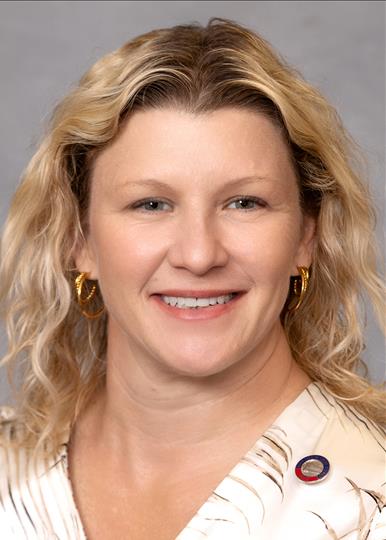
Rep. Laura Budd
Sponsored bills
Maddy summaryHB 840 modifies North Carolina's school grading system to provide separate "achievement" and "growth" scores for all public schools, replacing a single combined score. Achievement grades reflect current student performance (based on test scores, graduation rates, and proficiency), while growth grades measure how much students improved over time using the EVAAS system. Schools earn an overall performance grade combining 80% achievement and 20% growth scores, displayed on school websites and report cards. This affects all North Carolina public schools (K-12), their administrators, and parents, who will receive detailed grade breakdowns for each school annually. The bill does not create new funding rewards but changes how school performance is measured and reported.
Maddy summaryHB 266 designates June 12th of each year as Women Veterans Day in North Carolina. The bill directly affects North Carolinians by establishing an annual state observance to recognize women veterans' service. It adds this date to North Carolina's official calendar through a simple statutory change in Chapter 103 of the General Statutes, requiring no new funding or administrative implementation. The bill creates a ceremonial recognition without altering existing veteran benefits or programs.
Maddy summaryHB 786, the "Working Families Act," reduces child care costs for low-income families by lowering parent copayments from 10% to 7% of income (effective 2025), reinstates a refundable state child tax credit with income-based payments (effective 2025), and phases up North Carolina’s minimum wage to $15/hour by 2030 with annual inflation adjustments. It also increases income limits for property tax relief, creates a homebuyers’ assistance program for public servants (like firefighters and EMTs) as first-time buyers, and establishes a paid family leave insurance program funded through an employer grant program. The bill directly affects working families, hourly workers, public-sector employees, and households using subsidized child care or property tax relief. Key mechanisms include phased wage increases, income-tiered tax credits, and targeted housing support, all designed to reduce financial strain on low-to-moderate-income households.
Maddy summaryHB 725, the "MOMnibus 3.0," establishes a state grant program to address preventable maternal health disparities affecting Black birthing people in North Carolina. The bill directs the Department of Health and Human Services to award competitive grants ($10,000-$50,000 per recipient) to community-based organizations focused on improving maternal health outcomes for Black women. Key provisions require grantees to address social barriers (like housing, transportation, and nutrition), provide culturally respectful care training for health workers, and offer services including mental health support, doula care, and evidence-based education. The program specifically prioritizes Black-led organizations serving communities with high maternal health disparities, aiming to reduce preventable deaths and complications through targeted community support.
Maddy summaryHB 732 requires permits and a 72-hour waiting period for purchasing assault weapons or long guns, prohibits sales to those under 21 for semi-automatic firearms, and bans bump stocks, ghost guns, and certain high-capacity magazines. It mandates safe firearm storage, repeals "stand your ground" laws, and requires firearm liability insurance for owners. The bill also prohibits leaving firearms unattended in vehicles, mandates reporting lost/stolen guns, and directs the state pension fund to divest from gun manufacturers. These provisions directly affect all firearm purchasers and owners in North Carolina.
Maddy summaryHB 735 amends North Carolina's transportation funding rules to clarify state support for rail projects. It sets a 10% cap on state funds for commuter and light rail projects - limiting spending to either 10% of a regional funding allocation or 10% of the project's estimated cost. The bill also creates a new eligibility category for public transit services spanning four or more counties and serving over three municipalities. Additionally, it specifies that the state will not cover costs exceeding these funding limits, requiring project agreements to include these restrictions. The changes apply directly to regional transit authorities and developers seeking state funding for rail infrastructure.
Maddy summaryHB 426 establishes the Workforce Diploma Program to help North Carolina adults aged 21+ without high school diplomas earn diplomas while gaining job skills. The program requires approved providers to offer courses combining diploma requirements with career training, including employability certifications and industry credentials. Participants receive milestone-based funding up to $7,500 per person, with payments tied to completing half-credits, certifications, or diplomas. The program mandates annual reports tracking participant outcomes like diplomas earned, credits, and workforce credentials. It appropriates $5 million for implementation starting July 2025.
Maddy summaryHB 522 prohibits crisis pregnancy centers (CPCs) in North Carolina from falsely advertising that they provide abortion or emergency contraceptive services when they do not. It defines this as a deceptive practice, requiring CPCs to clearly disclose staff qualifications and service offerings (like abortion care) on-site or via corrective advertising. The bill establishes a complaint process for the Attorney General to enforce violations, with civil penalties up to $5,000 per violation, and mandates a state health department evaluation of CPCs’ impact on reproductive healthcare access by 2026. This directly affects CPCs operating in the state, particularly those receiving public funds and targeting marginalized communities.
Maddy summaryHB 501 amends North Carolina law to ensure domestic violence protective orders cover same-sex couples in dating relationships. It removes the requirement that dating relationships must involve "opposite-sex" partners, explicitly including same-sex couples under the definition of "dating relationship" in protective order law. This change directly affects same-sex partners who experience domestic violence and seek protection through the dating relationship provision. The bill takes effect for orders issued after it becomes law, making the legal standard for dating relationships gender-neutral.