

Maddy summaryHB 335 expands eligibility for emergency judges in North Carolina by allowing retired judges who previously served in both Superior Court and District Court to qualify for emergency judge roles on either court. Currently, retired judges could only serve as emergency judges on the specific court they retired from, but this bill removes that restriction for judges with dual court experience. The change directly affects retired judges who held positions in both court systems before retiring, making them eligible to be assigned to emergency duties in either court. This adjustment streamlines the pool of available judges for temporary court needs without altering compensation or other existing rules.
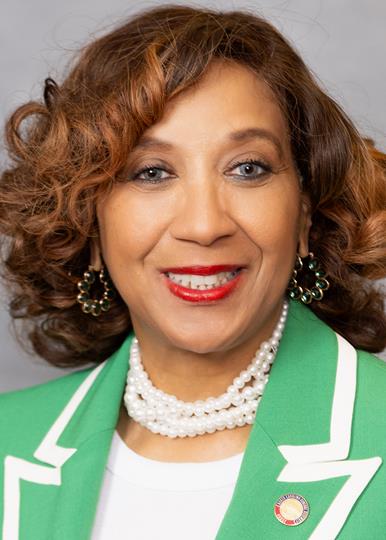
Rep. Carolyn Logan
Sponsored bills
Maddy summaryHB 264, the Wire Fraud Prevention Act, requires banks to verify payment orders through specific security procedures (like verbal checks with customers and beneficiaries) before processing transfers. It mandates that banks refund full amounts for unauthorized payments within 90 days of notification, or 25% within 30 days for certain cases, while customers must report issues promptly to avoid losing interest. The law also obligates beneficiary banks to pay recipients within specific timeframes (including delaying full payment for new accounts over $100,000) and notify recipients of payment receipts by midnight the next business day. This directly affects banks handling wire transfers and their customers, with changes taking effect October 1, 2025.
Maddy summaryHB 807 raises teacher salaries for the 2025-2026 school year with new pay scales based on experience and adds supplements for certified teachers, school nurses, counselors, and specialists. It allocates $89.4 million annually and $109.2 million as a one-time fund to provide weighted, per-child funding for children with disabilities based on the cost of services provided. The bill also mandates free breakfast and lunch for all public school students, funded through state appropriations tied to school food authority evaluations, and includes funding for a one-to-one device refresh in public schools.
Maddy summaryHB 790 prohibits the sale of tobacco, vape, and alternative nicotine products within 1,000 feet of any public or nonpublic school building. It directly affects vape and tobacco shops located near schools, banning sales in those zones while excluding home schools and colleges. The law includes an exception for incidental sales tied to a business's primary operations but classifies violations as Class 2 misdemeanors. The bill takes effect December 1, 2025, and applies to offenses occurring on or after that date.
Maddy summaryHB 788 ("Fix Our Democracy") proposes amending the North Carolina Constitution to establish a nonpartisan redistricting process for state legislative and U.S. House districts. It would require a constitutional amendment (voting required in 2026) to remove the General Assembly's role in drawing districts, mandating that districts be contiguous, avoid dividing counties where possible, and remain unchanged until the next census. The bill also includes related provisions like online voter registration, automatic registration, banning voter roll purging, and campaign finance transparency changes. This constitutional change would directly affect how electoral districts are created for state legislators and U.S. representatives in North Carolina.
Maddy summaryHB 787 establishes a matching program for North Carolina residents contributing to the Parental Savings Trust Fund (a 529 program) and creates a tax deduction for such contributions. It provides a 2:1 state match (up to $1,500 per student annually) for eligible contributors - North Carolina residents with household income under 250% of the federal poverty level who open accounts for children aged 14 or younger. The bill also allows a state tax deduction of up to $2,000 per individual ($4,000 for joint filers) for contributions to the fund, with rules to adjust income if funds are withdrawn for non-education purposes. These changes aim to boost college savings for lower-income families, with the matching program starting July 1, 2025, and the tax deduction effective January 1, 2026.
Maddy summaryHB 798 appropriates $1.72 million annually from the General Fund to create a Cold Weather Shelters Grant Program, administered by the Department of Health and Human Services, Division of Aging. The program provides grants to municipalities and nonprofits to establish or expand temporary emergency shelters for people experiencing homelessness during severe weather events. Grants are limited to $215,000 per recipient annually, with selection considering poverty rates in the service area and existing funding availability. Recipients must report annually on shelter usage, funds spent, and the number of people served, starting in 2027.
Maddy summaryHB 764 creates new criminal offenses for causing death or serious injury through reckless boating in North Carolina. It defines "Death by Reckless Boating" and "Serious Injury by Reckless Boating" as unintentionally harming others while operating a vessel recklessly (but not impaired), with "Aggravated" versions applying to those with prior reckless boating convictions within seven years. Penalties range from a Class A1 misdemeanor for basic death cases to a Class F felony for aggravated death incidents. The bill also prevents double prosecution for the same incident under both this law and manslaughter statutes. This directly affects boat operators whose reckless actions cause harm, establishing specific legal consequences for those offenses.
Maddy summaryHB 784 prohibits the manufacture, transfer, and possession of semiautomatic assault weapons (like AR-15s) and large-capacity ammunition magazines holding more than 10 rounds in North Carolina, effective December 1, 2025. The bill defines specific firearms and features (e.g., folding stocks, pistol grips) that classify weapons as "assault weapons," while setting a 10-round limit for magazines. Exceptions include existing owners of such weapons before the law’s effective date, law enforcement, antique firearms, and weapons that cannot accept large magazines. Violations are punishable as a Class E felony.
Maddy summaryHB 786, the "Working Families Act," reduces child care costs for low-income families by lowering parent copayments from 10% to 7% of income (effective 2025), reinstates a refundable state child tax credit with income-based payments (effective 2025), and phases up North Carolina’s minimum wage to $15/hour by 2030 with annual inflation adjustments. It also increases income limits for property tax relief, creates a homebuyers’ assistance program for public servants (like firefighters and EMTs) as first-time buyers, and establishes a paid family leave insurance program funded through an employer grant program. The bill directly affects working families, hourly workers, public-sector employees, and households using subsidized child care or property tax relief. Key mechanisms include phased wage increases, income-tiered tax credits, and targeted housing support, all designed to reduce financial strain on low-to-moderate-income households.