

Maddy summaryHB 931 limits towing fees to reasonable and clearly disclosed amounts, prohibits charging storage fees when towing companies are closed, and bans towing to locations without 24-hour vehicle recovery access. It requires towing companies to accept debit/credit/cash payments without processing fees exceeding 2% of the total. The Utilities Commission enforces these rules, imposing up to $5,000 penalties per violation for noncompliance. This bill directly affects towing companies and vehicle owners in North Carolina by regulating fee practices and payment options.
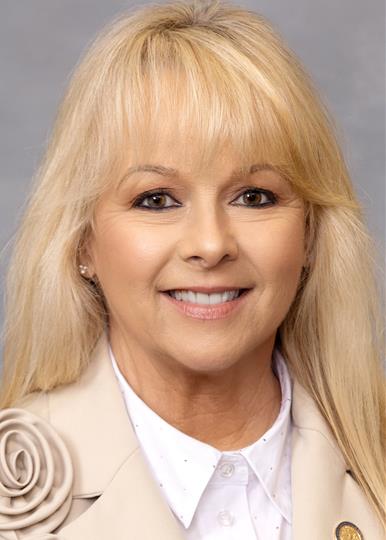
Rep. Julia Greenfield
Sponsored bills
Maddy summaryHB 933 increases Medicaid rates to ensure direct care workers for people with intellectual or developmental disabilities earn at least $18 per hour, affecting home/community providers, group homes, and waiver programs like NC Innovations. It adds 1,000 slots to the NC Innovations waiver program (with $36 million in annual state funding) and requires a 10-year plan to address unmet service needs. The bill also removes income and resource limits for Medicaid eligibility under the Health Coverage for Workers with Disabilities program. These changes take effect July 1, 2025, with $183 million in annual state funding supporting the wage increases and $36 million for new waiver slots.
Maddy summaryHB 890 requires North Carolina's Department of Public Instruction to create an Emergency Internet Service Plan (EISP) ensuring public schools can access temporary internet during state emergencies, like natural disasters. The bill establishes a dedicated Emergency Internet Service Fund with $3.9 million in initial funding for equipment and service contracts, which schools cannot be charged to activate. Key provisions include requiring the plan to cover activation conditions, equipment needs, data protection, and third-party partnerships, while ensuring the fund is nonreverting (unused money carries over). This directly affects all public school units by guaranteeing emergency internet access without requiring school-level funding. The plan must be updated annually and reported to the legislature.
Maddy summaryThis bill increases law enforcement and judicial resources in Mecklenburg County by funding 12 additional State Trooper positions and five new magistrates, effective July 1, 2025. It also raises minimum fines for drivers who fail to stop for school buses and establishes vehicle registration records as preliminary evidence of who was driving during such violations. Additionally, the bill expands the operating hours of the Metrolina Transportation Management Center and creates new rules for accessing highway camera footage, limiting public disclosure to specific individuals directly involved in incidents captured by the cameras.
Maddy summaryHB 922 revises definitions in North Carolina's public utility law to protect ratepayers from unreasonable fees charged by utilities. It specifically clarifies terms like "advertising" (excluding safety messages or mandated public notices), "clean energy facility," and "energy efficiency measure" to ensure utilities cannot charge customers for non-essential promotional activities or misrepresent energy sources. The bill directly affects all electricity, gas, and water utilities operating in North Carolina and their customers, requiring them to comply with these updated definitions when calculating rates. Key provisions include banning utilities from including certain marketing costs in rate base calculations and defining measurable energy efficiency improvements. This focuses on transparency in billing rather than creating new fee structures.
Maddy summaryHB 932 establishes a permanent 10% base salary increase for teachers and first responders in North Carolina, effective July 1, 2025. The bill appropriates $700 million annually for first responders (including law enforcement, firefighters, EMTs, dispatchers, and certain nurses) and $900 million annually for teachers (classroom staff, principals, and instructional support) from the General Fund. Funds must be used solely for the pay increase, added to base salary, and included in future salary calculations - no administrative costs are permitted. Employing authorities and school entities must certify costs and verify implementation by deadlines, with unspent funds reverting to the General Fund annually.
Maddy summaryHB 930 creates two separate $1,500 one-time bonus programs for eligible public employees in North Carolina: first responders (including police, firefighters, emergency medical staff, dispatchers, and public hospital nurses) and teachers (classroom staff, principals, and support personnel). The bill allocates $130 million annually for first responders and $165 million for teachers from the General Fund during the 2025-2027 fiscal biennium, with funds distributed to local governments and school districts by November 1 each year. To qualify, recipients must be employed on October 1 of the fiscal year, and bonuses must be paid by December 31 (prorated for part-time workers). Funds cannot cover administrative costs, must be paid in addition to base salary, and will revert to the General Fund if unspent by year-end. The program takes effect July 1, 2025.
Maddy summaryHB 940 prohibits employment discrimination based on pregnancy, childbirth, or pregnancy-related conditions in North Carolina. It requires employers to treat pregnant employees the same as others with similar abilities to work, provide reasonable accommodations (like modified schedules or breastfeeding breaks), and grant leave for pregnancy-related disability on par with other medical leave. The bill also mandates that employers allow return to the same or equivalent position after leave and clarifies that discrimination claims must be filed within three years. It directly affects employers with 15+ employees and pregnant or postpartum workers in North Carolina.
Maddy summaryHB 943 appropriates $100,000 annually from 2025-2027 to expand North Carolina's Teacher Cadet Program (NCTCP), which targets high-achieving high school students - particularly those from underrepresented groups like people of color (42% of cadets vs. 21% of current teachers) and males (25% of cadets) - to enter teaching careers. The funds will support statewide teacher training workshops (in-person and online), prioritize expansion in counties with high teacher turnover (especially rural and low-performing schools), and develop training for underrepresented cadets using current teachers and students. This directly affects high school students in NCTCP participating in the program and their future schools, aiming to strengthen the teacher pipeline in underserved communities. The bill focuses on concrete funding for program growth, not policy changes to teaching standards or school operations.
Maddy summaryHB 941 expands North Carolina's Teaching Fellows Program to address teacher shortages by providing forgivable loans to students pursuing teaching careers in high-need areas like special education, STEM, elementary education (K-6), and specific secondary subjects. The bill establishes a Trust Fund to cover loan amounts (up to $12,000 annually for up to four years), administrative costs, mentorship, and extracurricular programs like summer initiatives and alumni engagement. It requires selected colleges to meet strict standards, including high graduate effectiveness rates, alignment with "Science of Reading" training for elementary programs, and diverse school practicum opportunities. The program directly affects prospective teachers enrolled at up to 14 approved institutions of higher education who commit to teaching in qualifying licensure areas across North Carolina public schools.