

Maddy summaryHB 59 would increase the income eligibility limit for North Carolina's elderly or disabled property tax homestead exclusion from $25,000 to $48,000 for taxable years beginning July 1, 2026. This change would directly affect homeowners aged 65 or older, or those who are totally and permanently disabled, who meet other criteria (like being a North Carolina resident and owning their home as a permanent residence). The bill modifies the existing rule that currently limits eligibility to those with incomes under $25,000, raising the threshold to $48,000 while maintaining the exclusion amount as the greater of $25,000 or 50% of the home's appraised value. The change aims to expand access to this property tax relief for qualifying low-to-moderate income homeowners. (Note: The bill was withdrawn in June 2025 and has not become law.)
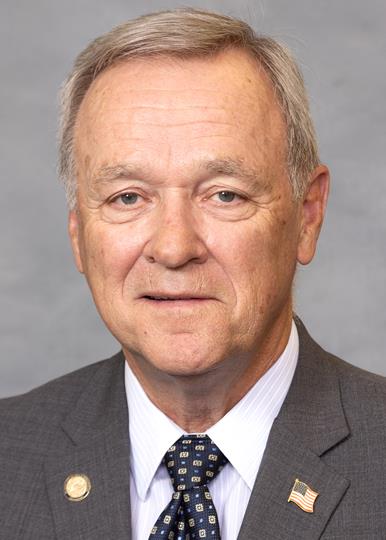
Rep. Ed Goodwin
Sponsored bills
Maddy summaryHB 14 allows North Carolina taxpayers who itemize deductions to claim a state income tax deduction for gambling losses, aligning with federal tax treatment. It directly affects individual taxpayers who itemize deductions on their North Carolina state tax returns and have wagering losses exceeding winnings. The bill amends state tax code to explicitly permit deducting gambling losses under Section 165(d) of the federal tax code, subject to federal rules. This change takes effect for taxable years beginning January 1, 2024. The bill does not alter federal tax rules or affect taxpayers using the standard deduction.
Maddy summaryHB 615 helps military families enroll children in North Carolina public schools before establishing local residency. It allows students to register remotely (e.g., online) if a parent is on active duty and either transferring to a North Carolina military base or separating within 12 months, requiring only a copy of the military order or separation document. Families have one year from the parent's duty start or separation date (or until the end of the school year) to provide proof of residency, with high school juniors/seniors getting until graduation. The law takes effect for the 2025-2026 school year.
Maddy summaryHB 572 authorizes the Department of Military and Veterans Affairs to establish a statewide pilot program providing Electroencephalogram combined Transcranial Magnetic Stimulation (eTMS) treatment. This program is for veterans, first responders, and their immediate family members experiencing conditions such as substance use disorders, mental illness, sleep disorders, traumatic brain injuries, and PTSD. The Department will select a provider to create a network for in-person and off-site care, aiming for statewide access. Participants in the program will also receive neurophysiological monitoring, counseling, wellness programming, and access to a peer-to-peer support network. The selected provider must collect and report treatment outcomes and expenditures to the Department and legislative committees by September 15, 2026.
Maddy summaryHB 94 allows disabled veterans and their unremarried surviving spouses to prequalify for the disabled veteran property tax homestead exclusion. This means individuals can apply to determine their eligibility for the tax benefit before they purchase a permanent residence. Applicants submit a prequalification form with their disability certification, and the county assessor must notify them of their eligibility within 30 days. The bill aims to help taxpayers and lenders account for this tax relief when making home purchase decisions. After prequalification, a separate application for the exclusion is still required once a permanent residence is acquired.
Maddy summaryHouse Bill 741 authorizes the North Carolina Division of Motor Vehicles to issue "Military Veteran" special registration plates with a personalized background. The bill modifies the plate's design to specify that the name and insignia of the veteran's branch of service will appear on the left side. This change directly affects U.S. Military Veterans in North Carolina who are eligible for this special license plate. These personalized veteran plates will also be exempt from minimum application requirements typically needed for other special plates.
Maddy summaryHB 57 officially designates the Veterans History Museum of the Carolinas, located in Transylvania County, as the State's Veterans History Museum. This bill amends Chapter 145 of the General Statutes to formalize this adoption.
Maddy summaryHB 140 authorizes the addition of the Gullah Geechee Greenway/Blueway Heritage Trail to North Carolina's State Trails System. This bill adds a 21-mile multiuse trail in Brunswick County, designed for pedestrian and bicycle use, which connects various historical sites significant to Gullah Geechee culture. It directs the Department of Natural and Cultural Resources to support and promote the trail's establishment and allows the State to acquire necessary land through donations or existing funds, waiving the usual appropriation requirement for new additions.
Maddy summaryHB 512 creates an exemption to the practice of veterinary medicine for emergency medical services (EMS) personnel. This allows EMS personnel, excluding dispatchers, to provide emergency medical transport and services to injured K-9 police animals or certified search and rescue dogs at an emergency scene. The bill also grants limited immunity from prosecution for EMS personnel who act in good faith when providing such care. However, this immunity does not extend to gross negligence, wanton conduct, or intentional wrongdoing.
Maddy summaryHouse Bill 146 amends North Carolina's driver's license renewal process. It allows active duty members of the U.S. Armed Forces, or reserve components serving on active duty and stationed outside North Carolina, to renew their driver's licenses remotely multiple times in a row. Currently, a remote renewal requires the previous renewal to have been done in person, but this bill removes that restriction for eligible military personnel. This change aims to make it easier for these individuals to maintain their licenses while serving away from the state. The act becomes effective October 1, 2025, applying to licenses renewed on or after that date.