Issue · Budget & Taxes

Budget & Taxes

Every budget & taxes bill, vote, and legislator stance in North Carolina, automatically classified by Maddy, our AI policy reader.

Total bills
687
2025-2026 Session
Top supporter
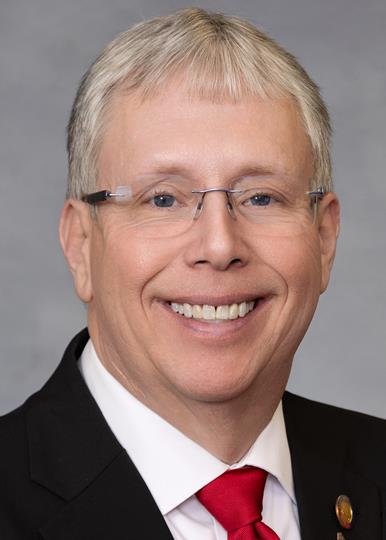
Mitchell Setzer
100% support rate
Top opponent
Amanda Cook
0% support rate
Ranked legislators
10
5 support · 5 oppose
Key legislators

Who's moving budget & taxes in North Carolina

Legislators moving budget & taxes in North Carolina
Legislator Party Stance Support rate Votes
Mitchell Setzer
Mitchell Setzer House · District 89
R
Strong +
100% 52
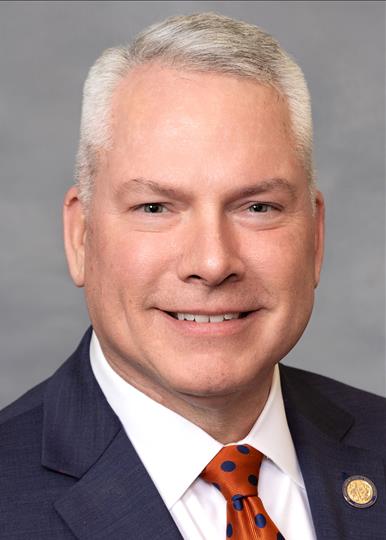
Grant Campbell
Grant Campbell House · District 83
R
Strong +
100% 50
Anna Ferguson
Anna Ferguson House · District 119
R
Strong +
100% 20
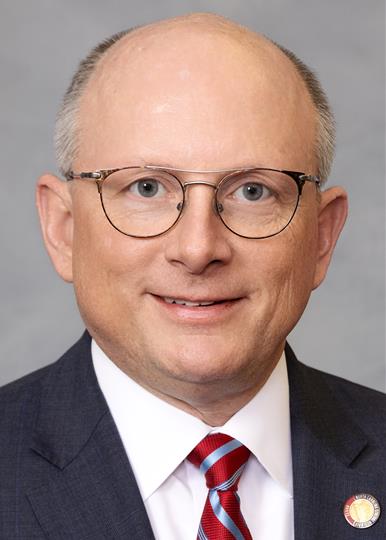
Tim Reeder
Tim Reeder House · District 9
R
Strong +
100% 51
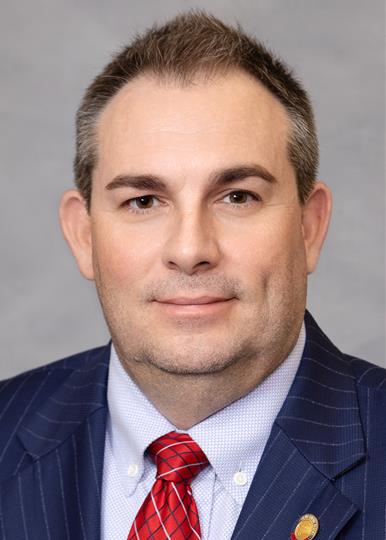
John Bell
John Bell House · District 10
R
Strong +
100% 50
Amanda Cook
Amanda Cook House · District 60
D
Strong −
0% 20
Monika Johnson-Hostler
Monika Johnson-Hostler House · District 33
D
Strong −
8% 52
Marcia Morey
Marcia Morey House · District 30
D
Strong −
8% 52
Phil Rubin
Phil Rubin House · District 40
D
Strong −
8% 51
Deb Butler
Deb Butler House · District 18
D
Strong −
8% 50
Showing 571–580 of 687 bills

All budget & taxes bills

in committee · North Carolina · House Mar 19, 2025

HB 436: Counties/Semiannual Assessments.

HB 436 allows North Carolina counties to let property owners pay property assessments in semiannual or annual installments instead of one lump sum. Counties can choose between two payment schedules: either tied to annual property tax due dates or starting 60 days after assessment confirmation, with up to 10 semiannual or 20 annual payments allowed. This directly affects property owners in counties that adopt the option, providing more flexible payment timing. The bill amends existing law to give counties this authority and applies to assessments confirmed after it becomes law.
Sub-Topics Property Tax
in committee · North Carolina · Senate Mar 20, 2025

SB 334: Repeal the NC Drug Tax.

SB 334 repeals North Carolina's drug tax, which was levied on certain pharmaceutical products. It directly affects taxpayers who paid this tax on medications subject to the levy. The bill removes the tax provision from state law but does not change existing tax liabilities or refund claims for taxes paid before the repeal took effect. This is a straightforward repeal with no new provisions or mechanisms.
Sub-Topics Sales Tax
in committee · North Carolina · House Mar 20, 2025

HB 457: Increase Small County Funding.

HB 457 increases state funding for small county school systems in North Carolina by revising their base allotment schedule. It directly affects counties with student enrollments between 0-3,300 students per school administrative unit, raising their annual funding amounts - such as increasing the base allotment from $1,820,000 to $2,548,000 for counties with 0-1,300 students. The bill appropriates $20,961,180 in recurring funds from the General Fund for the 2025-2026 fiscal year to implement these changes. The new funding schedule takes effect on July 1, 2025, providing higher per-student support for eligible small counties.
in committee · North Carolina · House Mar 20, 2025

HB 459: Income Tax Rate Reduction Trigger Modifications.

HB 459 modifies North Carolina's income tax rate reduction trigger to lower the revenue threshold that could lead to future tax cuts. It adjusts the required General Fund revenue levels (e.g., $34.76 billion for FY 2027-2028) that would trigger a tax rate decrease below 4.25% starting in 2029. This change affects all individual taxpayers in North Carolina by making it easier for tax rates to decrease if state revenue meets the new lower thresholds. The bill does not change current tax rates but alters the conditions under which future reductions might occur. The modification follows the state's recovery needs after major hurricanes, though the summary focuses solely on the policy mechanism.
died · North Carolina · Senate Mar 24, 2025

SB 342: Funds for New Siler City Fire Station.

SB 342 allocates $5 million in one-time state funds to Siler City for constructing a new fire station. The bill directs the Office of State Budget and Management to provide a grant to Siler City for this purpose, effective July 1, 2025. It directly affects Siler City residents and its fire department by funding the new facility's construction. This is a straightforward appropriations bill with no substantive policy changes beyond the funding allocation.
Sub-Topics State Budget
in committee · North Carolina · Senate Mar 20, 2025

SB 343: Secure Home, Secure Future Act.

SB 343, the "Secure Home, Secure Future Act," creates a new property tax relief program for qualifying North Carolina homeowners. It allows owners who have lived in and owned their primary residence for 15 consecutive years to cap annual property tax increases at 2% of the prior year’s tax amount (or the prior year’s tax, whichever is higher), deferring the difference as a lien on the property. To qualify, owners must be North Carolina residents, occupy the home as their permanent residence, and notify tax assessors of property improvements. The relief ends if the owner sells the home (unless transferred to a spouse/co-owner who continues living there), dies (if passed to a spouse/co-owner), or stops using it as a primary residence.
Sub-Topics Property Tax
died · North Carolina · Senate Mar 24, 2025

SB 341: Funds for Siler City Streetscape Project.

SB 341 appropriates $2.45 million from the state General Fund to Siler City for its downtown streetscape project, directly affecting residents and businesses in Siler City's downtown area. The funds will be used in two phases: $2 million for underground power lines and wider sidewalks along Chatham Avenue (Phase 1), and $450,000 for design work and hiring a main street coordinator (Phase 2). The bill specifies these funds are nonrecurring and must be used for the stated project components, with the project starting in the 2025-2026 fiscal year. The act becomes effective July 1, 2025.
Sub-Topics State Budget
in committee · North Carolina · Senate Mar 20, 2025

SB 354: NC Breakthrough Act.

SB 354 reenacts North Carolina’s Research and Development (R&D) tax credit with updated eligibility rules, primarily affecting small businesses conducting qualified research in the state. To qualify, businesses must meet specific wage standards (e.g., paying at least 90% of county average wages in certain areas), provide health insurance covering 50% of premiums for full-time employees, maintain environmental and safety compliance, and have no overdue tax debts. The credit applies to expenses for research performed in North Carolina, including costs paid to state universities for research. This bill modifies existing rules to tighten eligibility while maintaining the credit for qualifying small businesses through 2040.
Sub-Topics Business Taxes Tax Credits Tax Incentives Tags Small Business
in committee · North Carolina · Senate Mar 20, 2025

SB 351: Right to Start Act.

SB 351, the Right to Start Act, allows new businesses (corporations, S corporations, LLCs, partnerships, and other entities) less than five years old with under $5,000 in net income to defer their state income tax payment for one year. It also requires state agencies to prioritize contracting with businesses operating under five years and mandates the Department of Administration to collect and report annual data on these contracts, including demographic and geographic breakdowns. The bill directly affects small, newly formed businesses seeking tax relief and state procurement decisions. Key provisions include the tax deferral eligibility criteria and the data collection/reporting requirements for state contracts.
Sub-Topics Business Taxes Sales Tax Tax Incentives Tags Small Business
died · North Carolina · Senate Mar 24, 2025

SB 376: Increase Funding to State Auditor.

SB 376 increases funding for North Carolina's State Auditor's Office to enhance oversight of state government finances. The bill allocates $95,000 one-time for recruitment, $3 million for audit infrastructure, and $1 million for office space in 2025-2026, plus $6.7 million annually for 70 new staff, $500,000 for salary increases, and $5 million yearly for technology upgrades. These funds aim to expand audit capacity, improve fraud detection, and modernize systems for better accountability of taxpayer funds. The State Auditor must report on fund usage, including audit results and efficiency gains, by December 2025.
Showing 571 to 580 of 687 bills
Previous 1 57 58 59 69 Next