

Enacts the climate and community investment act; prioritizes the allocation of public investments in disadvantaged communities; addresses climate change challenges through the expansion and growth of clean and renewable energy sources; adopts best value requirements for the solicitation, evaluation and award of renewable energy projects; establishes a community just transition program; establishes a climate pollution fee and a household and small business energy rebate; creates the climate and community investment authority.
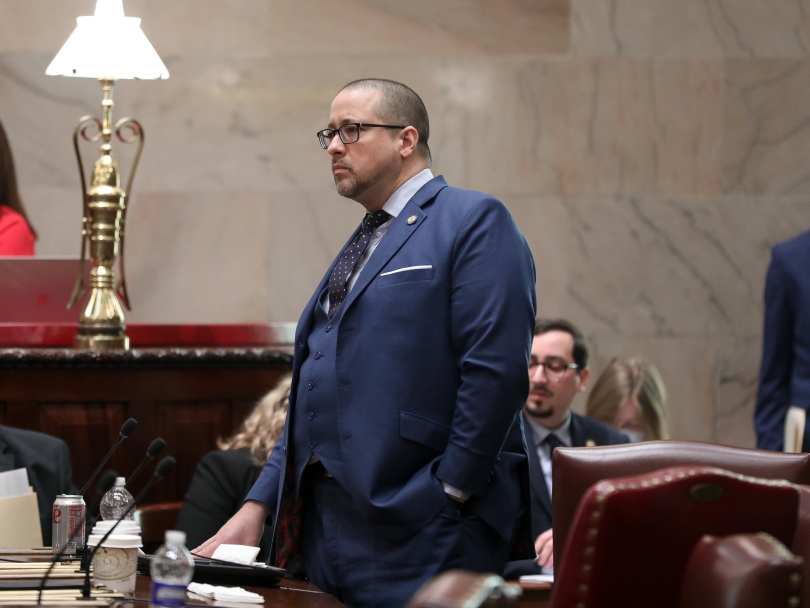
Sen. Gustavo Rivera
Sponsored bills
Repeals the rebates for stock transfer tax paid; dedicates funds of the stock transfer tax fund and stock transfer incentive fund to various funds; establishes the safe water and infrastructure action program.
Maddy summaryThis bill, known as "the prison wage act," mandates compensation for incarcerated individuals performing labor in state and local correctional facilities. It requires that these individuals be paid at least one-half of the state's minimum wage for any work performed or for which a wage would typically be due. This compensation applies to various types of labor, including general facility work, tasks for nonprofit organizations, and participation in work release programs. Additionally, hourly incentive allowances for educational and training programs must also meet this minimum wage standard.
Maddy summaryBill S 1189 establishes new licensure requirements for entities providing fiscal intermediary services for personal assistance programs. Beginning April 1, 2027, these fiscal intermediaries must obtain a license from the commissioner, a process that includes an application fee and an assessment of their character, competence, and compliance. The bill also broadens the definition of fiscal intermediaries, modifies their annual reporting obligations, and creates a confidential state registry for personal assistants that these intermediaries must maintain. This legislation directly affects fiscal intermediaries, personal assistants, and consumers utilizing these services.
Maddy summaryThis bill establishes a new progressive income tax structure for high earners in New York, replacing current tax brackets. It directly affects New York residents with significant taxable income, particularly those earning above $17,000 annually for single filers (with higher thresholds for married couples). The key mechanism uses tiered tax rates that increase as income rises - starting at 4% for lower incomes and reaching up to 24% for earnings over $20 million. The bill amends existing tax law to implement these rates, which apply to taxable years beginning in 2023 through 2027 and will be adjusted for 2028 onward.
Relates to unlawful strikes by public employees; provides for the settlement of certain disputes relating to terms and conditions of employment of certain transit and transportation authorities.
Maddy summaryThis bill (S 3823) creates a pre-approved list system for appointing receivers and managing agents in New York City foreclosure cases involving residential properties. It requires the city’s housing agency to submit a list of qualified professionals to the court, after which judges can only appoint individuals from that list. The law applies specifically to New York City (population over 1 million) and removes the notice requirement for motions seeking receiver appointments under certain mortgages. This changes how courts select managers for properties during foreclosure proceedings, ensuring only pre-vetted individuals handle these cases. The bill takes effect immediately upon enactment.
Establishes that providers of adult day health care and managed long term care plans may elect to use transportation management brokers; provides that programs of all-inclusive care for the elderly (PACE) are not required to use transportation management brokers.
Establishes a special needs assisted living program to serve residents of certified assisted living residences with neurodegenerative diseases, such as dementia or Parkinson's disease, who are experiencing behavior disturbances.
Directs the commissioner of health to contract with an independent entity to conduct a comprehensive assessment of the existing methodology used to determine payment for early intervention screenings, evaluations, services and service coordination; directs recommendations on reimbursement methodology as well as needs under the program.