

Relates to an increase in punishment for certain actions against on-duty auxiliary police officers such as criminally negligent homicide, assault or menacing of such officer.
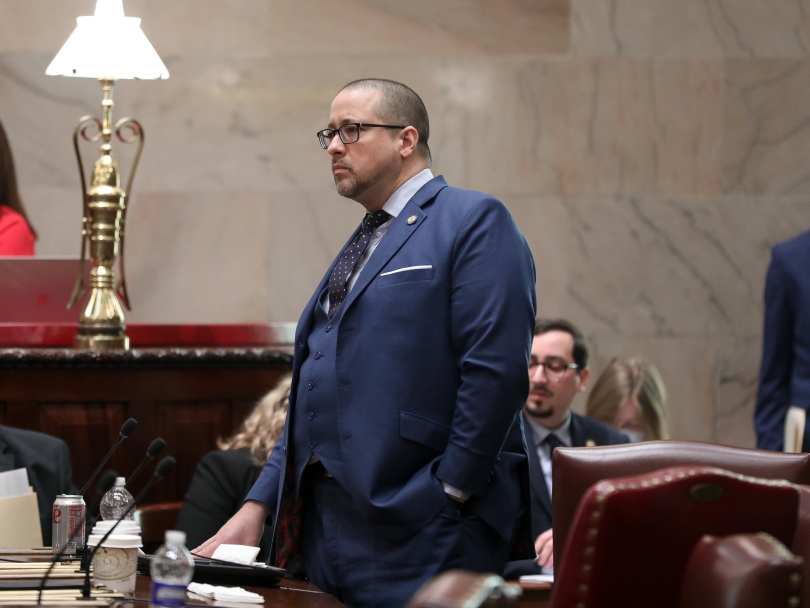
Sen. Gustavo Rivera
Sponsored bills
Enacts the "faith-based affordable housing act" for development on residential land; defines terms; provides that each village, town, and city shall allow the construction and occupation of residential buildings on any covered site up to the specified densities; provides that all residential buildings constructed pursuant to this section in a town, village, or city with fewer than one million inhabitants shall set aside twenty percent of the residential floor area for households earning an average of eighty percent of area median income; outlines the densities for New York city; makes related provisions.
Maddy summaryS 1915 amends New York State law to update definitions of tobacco products, increase minimum pack sizes, and establish new tax rates. It requires cigarette packs to contain at least 20 cigarettes, loose tobacco packages to hold a minimum of 0.65 ounces, and sets specific tax rates for single-unit products (like nicotine pouches) and moist snuff. The bill explicitly includes products such as nicotine water and oral tobacco in its definitions while excluding FDA-approved cessation products. These changes directly affect tobacco manufacturers, retailers, and distributors operating within New York State.
Relates to school climate and codes of conduct on school property and disciplinary action following violation of such codes of conduct; makes conforming amendments.
Enacts the "Livable New York act" to fight back against climate change, provide additional affordable housing and provide employment opportunities for formerly incarcerated individuals; makes a three billion dollar appropriation therefor.
Maddy summaryThis bill prohibits hospitals and health insurance plans from unfairly denying medical staff privileges or network participation to healthcare providers. Specifically, it bans hospitals from refusing applications or denying privileges without valid reasons tied to patient care, and bars denying privileges based solely on a provider's licensure category or lack of current board certification (if they were previously board-certified). It also requires health plans and insurers to disclose application procedures, complete reviews within 60 days (with a 21-day extension for missing documents), and not reject previously board-certified physicians solely due to loss of certification. The law directly affects physicians, dentists, podiatrists, optometrists, and midwives seeking hospital staff roles or health plan network inclusion.
Maddy summaryBill S 7617, known as the "Safer Consumption Services Act," allows the Department of Health to approve entities to establish overdose prevention center programs. These programs provide hygienic spaces for individuals to consume preobtained drugs, staffed by healthcare professionals or trained personnel. They offer sterile supplies, overdose prevention education, administer first aid, and provide referrals to substance use disorder treatment and other services. The bill grants immunity from criminal, civil, or administrative penalties to participants, program staff, and property owners solely for their good faith involvement in an approved program.
Directs the New York state energy research and development authority to establish a ride clean rebate program for electric assist bicycles and electric scooters; defines terms; provides a fifty percent rebate for eligible purchases.
Relates to the Chisholm Chance Act; creates centers of pregnant and birthing persons and childcare services in Kings county and Bronx county to coordinate community-based organizations and community health workers to combat the pregnant and birthing persons health crisis.
Eliminates criminal and civil penalties for possession of controlled substances; establishes the drug decriminalization task force to develop recommendations for reforming state laws, regulations and practices so that they align with the stated goal of treating substance use disorder as a disease, rather than a criminal behavior.