

Provides the amount of compensation an attorney shall receive from representing a client which was assigned to the attorney through the bar association; makes related provisions.
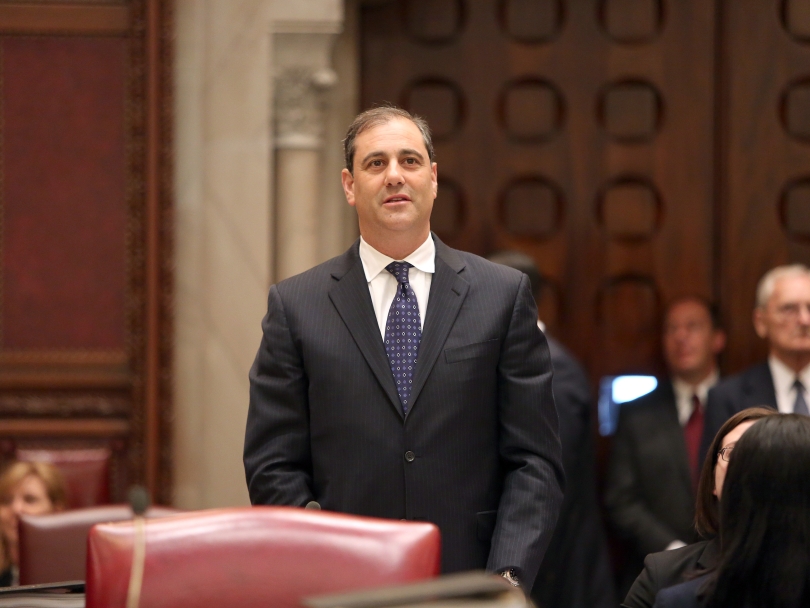
Sen. Andrew Lanza
Sponsored bills
Relates to requiring notice to neighboring landowners within one thousand feet of intention to develop in wetland areas; requires a public hearing on a wetland application.
Maddy summaryThis bill modifies New York's vehicle and traffic law to clarify conditional license rules for drivers suspended due to impaired driving. It states that after a 30-day suspension period, a conditional license may be issued with court consent, provided the driver meets all other eligibility requirements. The conditional license cannot be used for operating commercial vehicles, and specific procedures for issuance will be established through department regulations. The bill does not create new penalties but adjusts the process for regaining limited driving privileges following an impaired driving suspension.
Redesignates certain sex, prostitution, obscenity and sexual performance offenses committed against a child as class A-I felonies with a sentence of life imprisonment without parole.
Maddy summaryThis bill creates a new class E felony offense for public servants who intentionally disrupt transportation systems. It specifically targets actions like unauthorized use of official powers or willful failure to perform duties that interfere with travel on roads, highways, bridges, railways, waterways, or airways. Public servants, including police or transit workers, could face felony charges if they knowingly cause delays or block movement. The law defines two clear scenarios for the offense and sets a specific criminal penalty.
Maddy summaryThis bill directs New York City's education commissioner to create guidelines for school bus transportation during field trips for schools located in the five boroughs (Bronx, Brooklyn, Manhattan, Queens, Staten Island). The guidelines must cover transportation during and outside school hours, and field trips must be limited to locations within 20 miles outside these boroughs or within the same county. It applies specifically to school buses owned or leased by districts in these boroughs. This is a procedural step to establish standardized transportation rules, not a direct policy change or funding measure.
Requires a course of instruction on the provisions of the federalist papers and the United States constitution to be provided to high school students.
Maddy summaryThis bill establishes the John J. Marchi government studies scholarship program to support CUNY students pursuing degrees in government or government-related fields. It provides financial aid covering tuition, fees, and non-tuition costs (up to the total cost of attendance for federal aid purposes, minus other aid received), with a maximum annual award of $20,000 per student and a total program cap of $2 million yearly. To qualify, students must be New York residents enrolled in a CUNY government degree program and agree to complete at least 12 credit hours per year for four years after graduation. Failure to meet this requirement converts the scholarship into a repayable loan with interest.
Maddy summaryThis bill (S 7095) amends New York's vehicle and traffic law to allow vehicles displaying Purple Heart plates or disabled veteran plates to park in designated handicapped parking spaces. It directly affects veterans who hold these specific license plates, including those wounded in service (Purple Heart) or with service-connected disabilities (disabled veteran plate). The key provision adds these plate types to the list of authorized vehicles under existing handicapped parking rules, explicitly extending access to the same parking spaces. The change takes effect immediately upon enactment.
Maddy summaryThis bill amends New York's penal law to classify assault against social workers as a felony when the assault prevents them from performing their lawful duties. It directly affects social workers who face physical harm while on the job, such as during home visits or client interactions. The key change elevates these assaults from a lower-level offense to a class C felony, aligning social workers with protections previously extended to police, firefighters, and emergency medical personnel. This creates a stronger legal penalty for attacks targeting social workers during their professional duties.