Provides penalties for arson and enhancing penalties for criminal mischief against motor vehicle dealerships and motor vehicle manufacturing facilities.
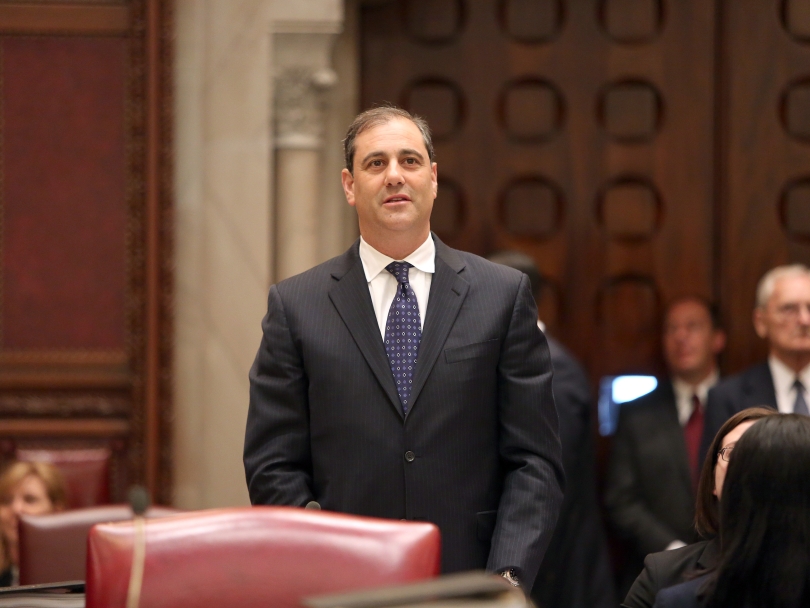
Sen. Andrew Lanza
Sponsored bills
Relates to accessibility requirements in certain procurement contracts; requires contracts that include information and communication technologies (ICTs) are accessible to people with disabilities; requires that the ability of a prospective contractor to meet such requirement be considered in making the contract award.
Maddy summaryThis bill requires funeral businesses and providers of preneed funeral services to hold customer payments in interest-bearing trust accounts within New York, rather than using the funds for general business operations. It mandates that money paid for future funeral merchandise or services must earn interest at least equal to other local deposits and be kept separate from the business's other funds until services are delivered. The bill also clarifies definitions for "preneed life insurance," restricts how benefits can be paid (prohibiting direct payment to funeral providers without consent), and requires clear disclosures to consumers about the insurance relationship before payment. These changes directly affect funeral homes, cemetery operators, insurance companies, and consumers who prepay for funeral arrangements.

Requires the reinstatement of certain officers and employees of the city of New York who were dismissed from employment due to a COVID-19 vaccine requirement including retirees, vested members and members terminated without a one-year limit on return.
Creates a college preparation expense tax credit for up to three years per child/individual for up to $500 per year for qualified college preparation expenses.
Maddy summaryThis bill reclassifies uniformed court officers and specific court clerks (in the first and second departments of the unified court system) as "police officers" under New York's criminal procedure law. It adds these roles to the legal definition of "police officer" while repealing two existing paragraphs that previously defined court personnel differently. The change directly affects these court staff members by altering their legal classification, which could impact their authority, training requirements, and eligibility for certain law enforcement benefits or protections. The bill makes no new policy obligations but changes how these positions are categorized within state law.
Maddy summaryThis bill prohibits placing any incarcerated individual under 18 years old in segregated confinement under any circumstances. It directly affects minors in correctional facilities by banning this practice, which involves isolating individuals in separate cells. The key provision amends the correction law to explicitly state that "incarcerated individuals under the age of eighteen shall not be placed in segregated confinement for any reason," with limited exceptions referenced in the text. The policy change updates facility procedures to protect minors from this form of confinement.
Allows for paratransit eligible for paratransit eligible individuals who are at least eighty years old, to be required only to present correspondence from a licensed physician, dated within the preceding thirty days, indicating that the paratransit service is still necessary for the individual to make a single application for paratransit services; provides that once approved, such individuals shall be exempt from all certification requirements.
Maddy summaryS 7248 creates a personal income tax credit allowing taxpayers to deduct up to $500 from their state income tax for purchasing a gun safe. The credit is limited to once every ten years and cannot exceed $500 per taxable year. Taxpayers who claim the credit may apply any unused portion as an overpayment refund, but no interest is paid on the refund. This policy directly affects individuals buying gun safes who file state income taxes.
Maddy summaryS 6936 requires courts to hold an early meeting within 30 days for insurance claims related to property damage in counties where the governor has declared a state disaster emergency under Executive Law §28. It mandates a second settlement meeting within 14 days after a case is formally filed, and limits discovery (document sharing) to 60 days after the first meeting. The law applies specifically to property insurance claims resulting from declared disasters like hurricanes or floods, directly affecting homeowners and businesses seeking faster resolution. It does not apply to reinsurance claims or non-disaster-related cases.