

Establishes the class C felony of assault of a patient in a mental health or developmental disability facility, for the intentional causation of physical injury to a patient residing in a facility operated, licensed or certified by the office of mental health or the office for people with developmental disabilities.
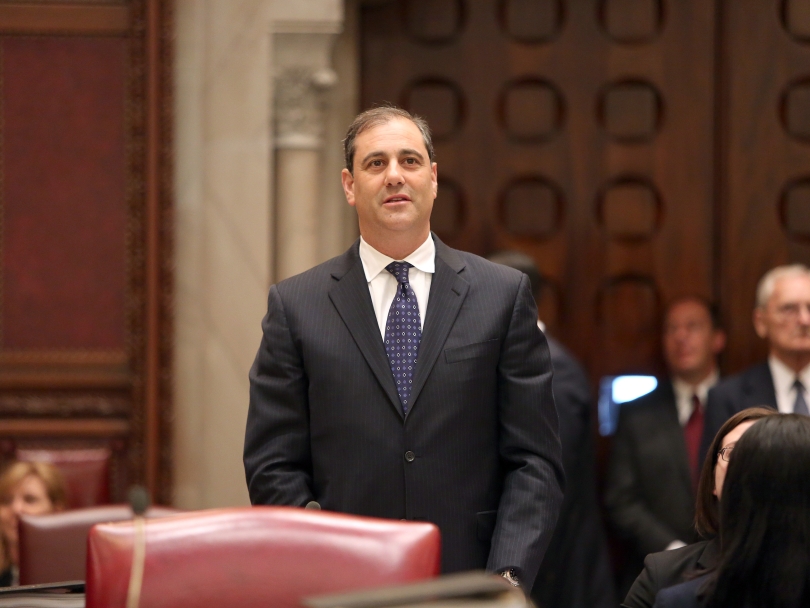
Sen. Andrew Lanza
Sponsored bills
Maddy summaryThis bill creates a new class E felony for knowingly spreading false information about a missing child. It makes it illegal to report or circulate a false claim that a child is missing (as defined by law), if that false report leads to public funds being spent on an unnecessary investigation. The law targets individuals who deliberately share untrue missing child reports, not accidental errors. It directly affects people who make such false reports, imposing criminal penalties for wasting public resources on non-existent cases.
Maddy summaryThis bill exempts lifeguard services from New York's sales and compensating use taxes when provided by qualified lifeguards or aquatic supervisory staff, as defined in existing state regulations. It directly affects lifeguard service providers (such as pools, beaches, or aquatic facilities) and their customers who pay for these services. The key mechanism adds a specific tax exemption to the tax law, removing the sales tax burden on these services. This change applies immediately upon the bill's enactment.
Provides a tax credit for certain durable medical equipment equal to fifty percent of the cost to purchase and install durable medical equipment in a residence.
Maddy summaryThis bill amends New York State and New York City tax laws to adjust tax rates for small business income. It establishes tiered rates for businesses with "business income base" under $500,000, reducing rates from 6.5% (2026) to 4% (2027) and further to 2.5% (2028) for the base amount, with higher marginal rates for income above $400,000. It defines "small business" as sole proprietors with under $550,000 net income, or entities like LLCs/partnerships/S-corps with under $550,000 for farm businesses or $1.5 million for non-farm businesses. The changes apply to taxable years beginning on or after January 1, 2027, and would affect sole proprietors, small partnerships, LLCs, and S-corporations meeting the income thresholds.
Requires the port authority of New York and New Jersey to acquire an economic impact statement by an independent contractor at least 30 days prior to increasing bridge and tunnel tolls.
Establishes the crime of failure to retreat when a person who is within twenty-five feet of a police officer or peace officer engaged in the performance of their duties and the police officer or peace officer orders such person to halt or retreat and the person fails to do so immediately; requires the posting of bail.
Maddy summaryThis bill amends New York's criminal procedure law to remove an exception that previously allowed certain drug-related class A felonies to qualify for pre-trial detention. Specifically, it eliminates the exclusion for controlled substances offenses in class A felony cases, meaning all class A felonies (including drug-related ones) now meet the standard for pre-trial detention eligibility. The change directly affects individuals charged with class A felonies involving controlled substances, who may now face pre-trial detention under the same criteria as other serious felony cases. The bill modifies Section 510.10 of the criminal procedure law and takes effect immediately upon enactment.
Elevates promoting an obscene sexual performance by a child and promoting a sexual performance by a child to be class B felonies; prohibits pleading to a lesser offense after indictment for either such offense.
Maddy summaryBill S 5579 increases the amount of money public retirement system retirees can earn while holding a position of public service. The bill raises the annual earnings limitation for these retirees from the current $35,000 (effective through 2025) to $65,000. This new earning limit will apply starting in the year 2026 and thereafter. The change directly affects retirees who wish to work in public service without impacting their retirement benefits.