

Directs the board of standards and appeals and the city planning commission in the city of New York to mail a copy of each application for and appeal of a variance to the city council member, borough president and state legislators for the affected land.
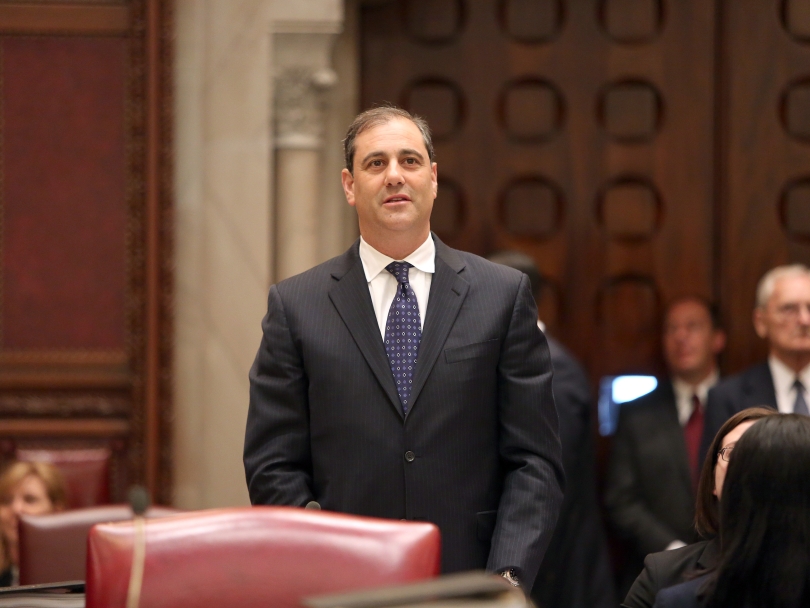
Sen. Andrew Lanza
Sponsored bills
Directs a city with a population of one million or more to reduce its real property tax levy for the 2026 fiscal year by an amount not less than the real property tax increase authorized pursuant to local law 40 of the city of New York for the year 2002.
Maddy summaryThis bill creates a pilot program to establish county-level multi-disciplinary teams (MDTs) for handling complex cases of adult abuse, neglect, or financial exploitation. The program requires counties to form teams with professionals from health, law enforcement, banking, legal services, aging programs, and other relevant fields, plus a full-time coordinator to manage cases, coordinate services, and use a secure database. It directly affects counties implementing the program, victims of abuse/neglect, and the agencies participating in the teams. The MDTs will operate on a fee-for-service basis and require specific funding to launch, as the bill states it is subject to appropriation. This is a demonstration program, not a permanent mandate, and is currently referred to the Children and Families committee.
Prohibits a mandatory immunization against the novel coronavirus/COVID-19 for children, incapacitated persons, or students or staff of employment institutions or day care facilities; prohibits requiring people to carry or present evidence of having received the COVID-19 vaccine.
Authorizes cities to request that railroad corporations perform railroad crossing, bridge and right of ways maintenance and to perform such maintenance if the corporation fails to do so.
Maddy summaryBill S 5872 requires New York's sex offender registry website to include the zip code of a registrant's employment address and make this information searchable by that zip code. It directly affects the public accessing the registry (e.g., neighbors, employers) and the Department of Corrections, which must update its website to include employment zip codes and enable searches by both residence and employment zip codes. Key provisions mandate that the registry subdirectory must list employment zip codes and allow internet searches using them, alongside existing features like residence-based searches. The bill also adds free email alerts for users to monitor new registrations in specific zip codes or counties. This changes how the public can locate employment-related information about registered sex offenders online.
Prohibits the comptroller from using environment, social, and governance criteria as a screening method for selecting companies and funds to invest the state pension fund in.
Prohibits the use of SUNY dormitories for the purposes of providing permanent or temporary housing for migrant populations; requests the board of trustees adopt a policy stating such.
Establishes the offense of aggravated reckless endangerment; includes aggravated reckless endangerment as a qualified offense the court must consider and take into account for securing an order.
Maddy summaryThis bill repeals New York's Driver's License Access and Privacy Act, removing restrictions on how driver's license information may be handled. It eliminates privacy protections that previously limited access to license data, while adding new requirements for applicants: providing a Social Security number (or affidavit for non-compliant IDs), registering for organ donation via a "skip" option, and confirming Selective Service registration compliance for applicants aged 18-26. These changes apply directly to all individuals applying for or renewing a New York driver's license, learner's permit, or non-driver ID. The repeal specifically targets the privacy act's provisions, not the new requirements added in its place.