Relates to the registration and regulation of animal breeders; requires each to be licensed; creates a breeder licensing fund; exempts not-for-profit organizations.
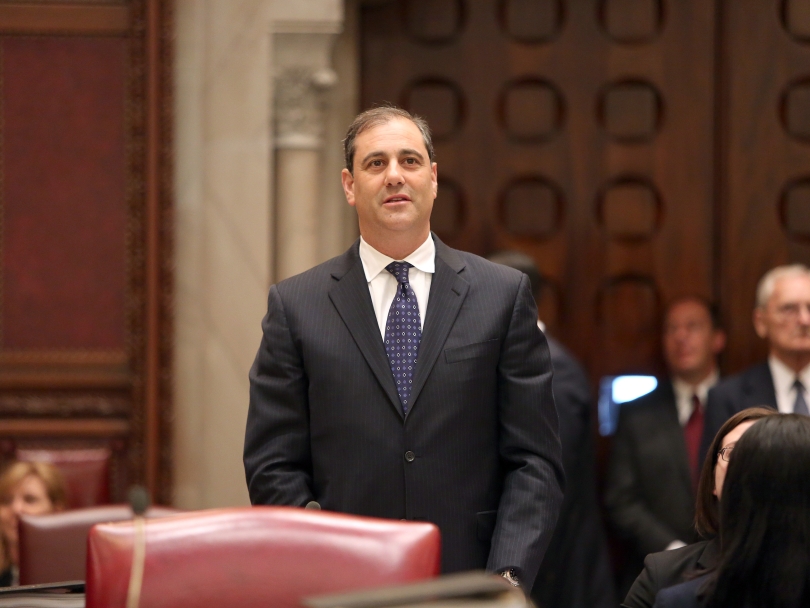
Sen. Andrew Lanza
Sponsored bills
Maddy summaryThis bill amends New York City's administrative code to declare signs larger than 200 square feet (19 square meters) that violate zoning, building, or signage rules as public nuisances. It directly affects property owners or businesses displaying such signs that don't comply with city regulations. The commissioner of buildings must order removal after providing notice and a hearing, and must immediately remove any previously deemed illegal signs. The law takes effect immediately upon passage.
Maddy summaryThis bill limits annual increases in property taxes for New York City (the only city in New York State with over 1 million residents). It sets a cap on how much the city can raise property taxes each year, based on either the inflation rate or a fixed 1.02% growth factor, whichever is lower. The cap allows cities to carry over unused tax room from previous years (up to 1.5% of the limit) and excludes certain capital projects and legal settlements from the calculation. The law takes effect for the 2026 fiscal year, requiring the state comptroller to calculate and notify the city of the annual tax levy limit.
Maddy summaryS 5899, "Cesar's law," requires the state board of parole to immediately issue a warrant and notify law enforcement when a parolee flees supervision. It directly affects parolees who abscond and the parole board, mandating they take specific action instead of allowing delays. The law specifies the board must declare the person "delinquent," issue a retaking warrant, and inform local police without delay upon reasonable belief of absconding. This policy change adds a concrete procedural step for parole supervision compliance, ensuring prompt action on absconders while preserving the parolee's right to a hearing after being recaptured.
Exempts clothing and footwear sold in New York city from all state and local sales taxes including items used or consumed to make or repair such clothing and which becomes a physical component part of such clothing.
Relates to collective employment negotiations, notice of the issuance of debt and capital plans and projects of the port authority of New York and New Jersey.
Enacts the "construction insurance transparency act" to require insurers providing coverage for liability under the scaffold law to report, on an annual basis, to the superintendent of financial services relating to its finances and claims paid thereunder.
Maddy summaryS 5413 requires public and private high schools (grades 9-12) to implement random testing for performance-enhancing steroids among student athletes participating in interscholastic sports, including cheerleading. It mandates that 30% of schools (selected by the commissioner) test at least 3% of athletes annually through a random selection process, with parental consent required. Schools must adopt written policies covering testing procedures, privacy safeguards, educational programs, and disciplinary actions for violations. The bill appropriates $1,000,000 for implementation and prohibits schools from charging students for tests. It aims to prevent steroid abuse, ensure athlete safety, and maintain fair competition.

Maddy summaryS 6559 would allow local governments (counties, cities, towns, villages, or school districts) to provide a 100% property tax exemption for veterans who served in combat zones and are 100% permanently disabled due to military service, or their unmarried surviving spouses. This exemption would apply directly to the property tax bill for eligible veterans, bypassing any local limits on standard property tax exemptions. Localities would choose whether to implement this option, and the exemption would apply to properties assessed on or after January 1, 2025. The bill does not require localities to adopt this exemption but provides a new option for those that choose to do so.
Maddy summaryS 3728 allows owners of pickup trucks used exclusively for personal, non-business purposes to register them as passenger vehicles instead of commercial trucks. This applies to all pickup trucks with a cargo bed and side walls (regardless of weight or cab seating capacity), and clarifies that commuting to work does not disqualify a vehicle from this option. The bill changes registration rules to better match actual vehicle use, giving owners a choice between passenger or commercial classification. It does not require changes to existing vehicle use but simplifies registration for eligible owners. The law takes effect 60 days after enactment.