

Maddy summaryThis bill allows property and casualty insurance companies to deliver certain notices electronically instead of by mail. It specifically applies to notices related to insurance contracts under vehicle and traffic law, such as policy changes or coverage evidence. The law requires electronic notices to meet state technology law standards and permits delivery to an electronic address not listed in the policy. This change directly affects insurance policyholders and companies by expanding how they receive legally required notifications. The bill makes electronic delivery legally valid for these specific notices, replacing the previous requirement for physical mailing.
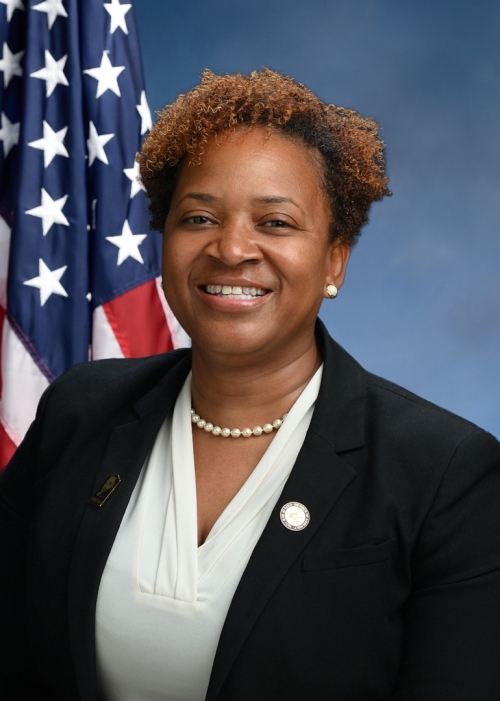
Asm. Nikki Lucas
Sponsored bills
Maddy summaryThis bill establishes a multi-state agreement (compact) where participating states would create a commission to award prizes for medical treatments that successfully cure diseases. The commission would review submissions, set prices for cures based on manufacturing costs and estimated public health savings, and collect limited royalties from non-participating states or countries based on those savings. It directly affects participating states (which would fund the commission), medical researchers who develop cures, and public health systems by potentially lowering future treatment costs through prize-funded solutions. The framework focuses on creating standardized prize awards and pricing mechanisms across states, without directly funding research or altering existing healthcare programs.
Maddy summaryThis bill (A 4886) creates a $2,000 refundable tax credit for New York taxpayers who experience the stillbirth of a child. It directly affects eligible parents who would have claimed the child as a dependent under federal tax law and have a stillbirth certificate issued under public health law. The credit is refundable (meaning it can result in a payment even if no tax is owed) and applies to taxable years beginning January 1, 2025. The bill requires a certificate of stillbirth from the public health law to qualify, but does not change dependency rules.
Maddy summaryThis bill (A 106) increases monthly financial standards for public assistance eligibility and home energy grants in New York State. It doubles the current monthly need standards for households (e.g., a single-person household jumps from $158 to $316) and home energy grants (e.g., from $14.10 to $28.20) starting July 1, 2025, for all public assistance recipients. The bill also establishes annual cost-of-living adjustments based on federal Social Security data. These changes directly affect low-income individuals and families receiving state public assistance benefits.
Provides for emergency evacuation plans for vulnerable occupants in all residential occupancies; requires designated safe spaces equipped with emergency medical supplies in buildings greater than 125 feet (38 100 mm) in height; provides for a voluntary registry to meet the special needs of occupants who require assistance during evacuations or other emergency situations.
Provides for the regulation of indoor and outdoor worksites with temperature protection standards and education, training and reporting requirements to ensure that employers provide safe conditions for their employees.
Maddy summaryThis bill removes a lifetime ban preventing people convicted of felonies from serving on juries. It amends state law to no longer disqualify individuals based on past felony convictions, meaning former felons could be summoned for jury duty. However, it maintains that people currently incarcerated for felonies remain excused from service while in prison. The law would take effect 180 days after enactment.
Maddy summaryThis bill establishes two key protections for railroad employees working for state-run railroads: (1) requiring employers to provide light duty assignments during pregnancy (with full pay and benefits maintained), and (2) creating paid parental leave benefits (67% of average weekly wage, up to 12 weeks annually) for bonding with newborns or adopted children within the first year. Eligibility begins after 26 consecutive weeks of employment (or 175 days for part-time workers), with benefits payable starting on the 14th day of leave. The law applies to all railroad employees covered under state authority operations and explicitly preserves existing collective bargaining agreements. It takes effect January 1, 2026.
Provides for the creation and maintenance of digital records for each incarcerated individual which includes all medical records, including but not limited to mental health records and results of drug or alcohol tests, work records and evaluations, conduct records and programming records.
Maddy summaryBill A 7308 establishes a tax credit for producers of sustainable aviation fuel (SAF) sold in the state for flights departing within the state. Starting January 1, 2025, producers can claim $1 per gallon, increasing by two cents for each additional one percent reduction in carbon dioxide emissions above 50%, up to a maximum of $2 per gallon. To be eligible, producers must obtain a certificate from the New York State Energy Research and Development Authority (NYSERDA). The bill defines SAF as liquid fuel derived from renewable or waste sources, excluding palm or petroleum, that achieves at least a 50% lifecycle greenhouse gas emission reduction. The total amount of tax credits issued annually is capped at $30 million, and any credit exceeding a taxpayer's liability will be refunded.