

Requires employers publicly advertising a job posting to include in the posting a statement disclosing whether such posting is for an existing vacancy or not; authorizes the commissioner of labor to issue an order to employers in violation of such requirement to pay a fine, cease and desist from such violation, or both.
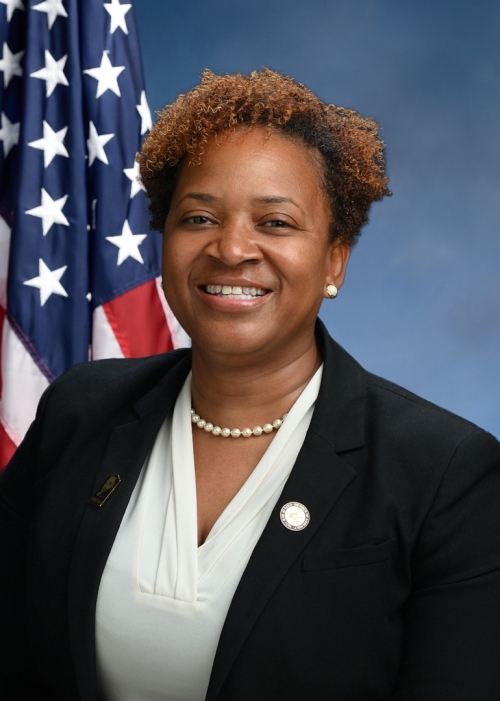
Asm. Nikki Lucas
Sponsored bills
Maddy summaryThis bill updates the definitions and requirements for organizations that provide fiscal intermediary services within the consumer directed personal assistance program. It establishes a new category of "Fiscal intermediary" alongside the existing "Statewide fiscal intermediary," allowing certain entities, like those with Department of Health contracts or independent living centers, to operate in this role. These new fiscal intermediaries will have the same status as the Statewide fiscal intermediary and can directly contract with managed care plans and other programs. The bill also removes the procurement process requirement for the Statewide fiscal intermediary and streamlines registration rules for these service providers.
Provides for insurance coverage of comprehensive annual medical examinations for firefighters due to their increased risk for cancer and cancer-related diseases.
Maddy summaryThis bill increases the minimum hourly pay for home care aides in upstate New York counties (excluding New York City boroughs and Nassau/Suffolk counties) by adding $3.22 per hour to their cash compensation. It directly affects home care workers employed in these regions, raising their base pay rate. The change takes effect October 1, 2025, and applies to the "cash portion" of their total compensation as defined by existing law. The bill does not alter regional pay rates but adds a fixed hourly amount to the existing minimum for eligible counties.
Maddy summaryThis bill updates rules for when construction projects must pay local prevailing wages. It applies to projects using at least 20% public funds (or $3 million/$5 million in public funds) for construction costs. Exemptions include single-family homes, small nonprofits, and certain affordable housing developments meeting specific affordability requirements. This affects contractors and developers working on qualifying projects funded in part by public money.
Relates to authorizing voting by incarcerated individuals in correctional facilities; requires the department of corrections and community supervision, in collaboration with the state and county boards of election, to establish a program to facilitate incarcerated individuals voter registration and voting.
Establishes the green affordable pre-electrification program to assist owners and tenants in residential properties in curing structural and building code defects which render the properties ineligible for improvements or projects relating to energy savings, green-house gas emissions reductions, climate change adaptation and resiliency project grants; establishes the energy efficiency and electrification interagency coordination group to coordinate between certain energy efficiency programs.
Maddy summaryThis bill prohibits individuals convicted under federal law of rebellion or insurrection (specifically 18 U.S.C. § 2386) from working in state or municipal government jobs. It amends New York's civil service law by adding a new disqualification clause (subdivision 1(d)) to bar such individuals from employment. The law directly affects applicants and current employees with federal convictions for advocating or participating in efforts to overthrow government by force. This creates a clear, objective employment restriction based on specific federal criminal convictions.
Enacts "Penny's law" to create the offenses of negligent handling of a dog and reckless handling of a dog; codifies the requirement that dogs be restrained in New York city; requires signage in parks that all dogs must be restrained.
Provides that the weekly benefit which the disabled employee is entitled to receive for disability commencing: on or after January first, two thousand twenty-eight shall be fifty percent of the employee's average weekly wage but shall not exceed fifty percent of the state average weekly wage; on or after January first, two thousand twenty-nine shall be fifty-five percent of the employee's average weekly wage but shall not exceed fifty-five percent of the state average weekly wage; on or after January first, two thousand thirty shall be sixty percent of the employee's weekly average wage but shall not exceed sixty percent of the state average weekly wage; and on or after January first of each succeeding year, shall be sixty-seven percent of the employee's average weekly wage but shall not exceed sixty-seven percent of the state average weekly wage.