

Maddy summaryHB 231 would expand New Mexico's Crime Victims Reparation Act to include assault, battery, criminal sexual contact, and armed robbery as offenses eligible for financial reparation to victims. This change directly affects victims of these specific crimes by adding them to the list of qualifying offenses under the existing law. The bill amends Section 31-22-8 of the state code to explicitly include these crimes as enumerated offenses for which reparation may be awarded. The bill was introduced in the 2025 legislative session but was postponed indefinitely on June 3, 2025, and remains pending.
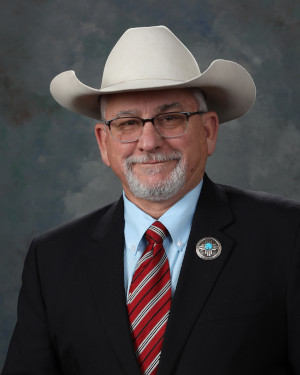
Rep. Randy Pettigrew
Sponsored bills
Maddy summaryHB 309 creates a streamlined process for property owners to remove individuals unlawfully occupying their residential properties. To use this process, owners or agents must submit a verified complaint form to local law enforcement confirming the occupant entered without permission, isn't a tenant or family member, and has been asked to leave. Law enforcement must then serve a notice to vacate (via hand delivery or posting) and may assist with securing the property while owners change locks. The bill also allows wrongly removed occupants to sue for damages and specifies that the process applies only to trespassers, not to tenants under lease agreements or family members.
Maddy summaryHB 273 amends New Mexico's Renewable Energy Act and Rural Electric Cooperative Act to redefine "renewable energy resource" to include natural gas used in combined cycle technology. This change would allow rural electric cooperatives and public utilities to count natural gas power generation toward their renewable energy requirements. The bill adds natural gas to the list of qualifying resources alongside solar, wind, and geothermal, without requiring additional emissions criteria for this category. The bill passed committee but was postponed indefinitely on June 3, 2025. It does not alter the existing "zero carbon" standards for other resources like biomass or hydropower.
Maddy summaryHB 83 would allow adults aged 18 or older who are not prohibited by law from possessing firearms to carry loaded handguns on their person - either concealed or openly - without needing a permit. It repeals current permit requirements and modifies existing laws to clarify that carrying unloaded firearms remains permitted. The bill does not change restrictions on carrying firearms on buses (requiring company approval) or apply to individuals prohibited by federal/state law or court orders. This directly affects all eligible New Mexico adults seeking to carry firearms in public without a permit.
Maddy summaryHB 248 creates a new third-degree felony offense for carrying a firearm while trafficking controlled substances, directly affecting individuals convicted of drug trafficking who possess a firearm. The bill defines the crime as carrying a firearm during any violation of New Mexico's controlled substance trafficking laws (Section 30-31-20 NMSA). Penalties include sentencing as a third-degree felony under existing law, with no specific sentencing enhancements beyond standard felony penalties. The law takes effect July 1, 2025, and applies to all firearm possession during drug trafficking activities.
Maddy summarySB 139 prohibits New Mexico state and local agencies from adopting or enforcing rules that restrict vehicle sales or purchases based on energy source (like banning electric or gas vehicles) or mandate specific percentages of zero-emission vehicles. It directly affects state environmental agencies, local boards, and municipalities responsible for air quality regulations under the Air Quality Control Act. The bill blocks three key rule types: (1) rules limiting vehicles by energy source, (2) rules banning internal combustion engine vehicles, and (3) rules requiring a minimum percentage of zero-emission vehicles. This prevents regulatory actions that would favor or restrict certain vehicle types, focusing solely on prohibiting those specific policy mechanisms.
Maddy summarySB 131 prohibits the state board from adopting rules requiring vehicle manufacturers to produce or deliver a certain percentage of zero-emission vehicles for sale. It directly affects automakers and the state environmental agency by blocking a specific regulatory mandate that was part of earlier clean transportation legislation. The bill amends Section 74-1-18 to explicitly state the board "shall not adopt or continue in effect a rule that requires a manufacturer to produce or deliver for sale a certain percentage of zero-emission vehicles." The bill was introduced in 2025 but was postponed indefinitely by the Senate committees on June 3, 2025.
Maddy summaryHB 328, introduced by Representatives Pettigrew and Murphy, would repeal New Mexico’s Clean Transportation Fuel Standard Program. The bill removes legal requirements for the Environmental Improvement Department to enforce rules on carbon intensity for transportation fuels and prohibits future adoption of such standards. This directly affects fuel producers and distributors who previously had to comply with clean fuel regulations, and it eliminates the department’s authority to manage carbon intensity metrics under environmental law. The bill is procedural, focusing solely on repealing existing requirements without creating new obligations. It was postponed indefinitely by the legislature in June 2025.
Maddy summarySB 114 would change how New Mexico's State Game Commission acquires land or water rights for conservation purposes. The bill requires the commission to obtain approval from acequia associations, land grant communities, county commissioners, and the legislature before purchasing land or water rights. This adds multiple new approval steps to the existing process, directly affecting the commission's ability to expand game refuges, hatcheries, or public hunting grounds. The bill also includes new reporting requirements for these acquisitions. (Note: The bill was postponed indefinitely in June 2025 and remains pending.)
Maddy summaryHB 162 would repeal New Mexico's current seven-day waiting period for firearm purchases, directly affecting firearm sellers and buyers in the state. The bill removes Section 30-7-7.3 NMSA 1978, which required a mandatory seven-day delay between a buyer's application and firearm transfer. This change would allow immediate firearm sales without the waiting period, altering the standard purchasing process. The bill was introduced in the 2025 legislative session but was postponed indefinitely on June 3, 2025.