

Maddy summaryHJR 19 proposes a constitutional amendment to create a permanent 12-member Interim Administrative Rule Oversight Committee in New Mexico. The committee, appointed by legislative leaders, would review agency rules before public hearings and recommend overturning rules that don't comply with authorizing laws during legislative sessions. It would operate during legislative breaks, with recommendations requiring legislative action to overturn rules. The amendment requires voter approval at the next general election to take effect. The bill was referred to committees but was postponed indefinitely on June 3, 2025.
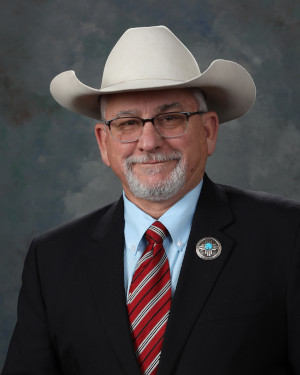
Rep. Randy Pettigrew
Sponsored bills
Maddy summaryHB 580 creates a special elk-themed license plate for New Mexico vehicles, allowing owners to pay a $25 initial fee (plus $10 annually) to support wildlife conservation. The revenue splits: $10 covers plate production costs, while $15 (plus all renewal fees) funds the state's "Share with Wildlife" program in the Game Protection Fund. The bill requires the Department of Game and Fish to design the elk logo and mandates that plate issuance may stop after 2031 if annual sales fall below 50% of the 2026-2031 average. This affects vehicle owners who choose the plate, with no personalized designs permitted.
Maddy summaryHB 509, the "Transparency in Government Contracting Act," requires all New Mexico state agencies and local governments (including school districts and municipalities) to publicly post contract details online. It mandates that agencies make contract solicitations available within one week of issuance, maintain a searchable online database updated monthly, and include specific information like recipient names, contract purposes, and amounts (for contracts over $20,000). Violations could render contracts invalid, with enforcement handled by the attorney general or courts. The bill directly affects government agencies by requiring proactive disclosure of contract information to the public, aiming to increase accountability in public spending.
Maddy summaryHB 360 requires state agencies to provide the Legislative Council Service with an email address for their rulemaking records contact. The Legislative Council Service would then maintain this list and distribute it to legislators. This procedural bill aims to streamline how lawmakers access agency rulemaking information, directly affecting state agencies and legislators. It does not change substantive laws or policies.
Maddy summaryHB 567 adds saliva (oral fluid) as an acceptable test method for determining if a driver was under the influence of alcohol or drugs in New Mexico. It amends laws to explicitly include oral fluid testing alongside breath and blood, clarifying that law enforcement must cover costs for additional tests requested by drivers. The bill updates evidentiary standards to allow saliva test results to establish impairment, including presumptions for alcohol levels (e.g., 0.04% or higher) and drug presence. This directly affects drivers arrested for DWI/DUI, changing how impairment is measured and documented.
Maddy summaryHB 508 would require New Mexico state agencies to provide an additional 21-day public comment period whenever they make a "substantial change" to a proposed rule. This change, defined as altering a rule's meaning or effect, would apply to all agencies except the judicial and legislative branches. Agencies must publish a notice in the New Mexico Register detailing the changes, how to comment, and where to access the full rule text, but it does not require an additional public hearing. The bill aims to give the public more opportunity to review and comment on significant revisions to draft regulations before they are finalized. The bill was introduced in 2025 but was postponed indefinitely in June 2025.
Maddy summaryThis House Memorial (HM 7) declares February 10, 2025, as "Law Enforcement Appreciation Day" within the New Mexico House of Representatives. It directly affects New Mexico's law enforcement agencies, including state police, county sheriffs, municipal police, tribal departments, and tribal law enforcement entities. The bill's key mechanism is a symbolic declaration to honor officers, accompanied by a directive to distribute copies to relevant agencies. It does not create new laws, allocate funding, or mandate actions - only recognizing law enforcement service. The bill was referred to committee but was postponed indefinitely on June 3, 2025.
Maddy summaryThis New Mexico House Memorial requests the Public Education Department to study whether teachers could earn master's degree credit for completing specialized training programs (microcredentials) required to advance their teaching licenses. Currently, teachers must earn five microcredentials with 85% scores to move from Level 1 to Level 2 license (or Level 2 to Level 3), but colleges do not grant degree credit for this work. The study will examine potential pathways and barriers, including accreditation requirements, to determine if credit could be offered. The department must report findings to lawmakers by December 2025.
Maddy summaryThis bill clarifies exemptions from engineering licensure requirements in New Mexico. It allows licensed architects to perform limited engineering work incidentally (without claiming engineering expertise), provided they don't represent themselves as engineers and only handle work within their qualifications. It also exempts engineers employed by a business from licensure when their work is limited to the employer's own property and not offered to the public. The law, signed in April 2025, updates existing rules to define these exemptions more precisely.
Maddy summaryHouse Memorial 19, introduced in New Mexico's 2025 legislative session, declares February 10, 2025, as "Law Enforcement Appreciation Day" in the House of Representatives. This symbolic resolution formally recognizes the work of law enforcement officers across New Mexico, including those serving municipalities, counties, tribes, and state agencies. It directs copies to be sent to the New Mexico State Police, sheriffs' associations, municipal leagues, tribal departments, and the Bureau of Indian Affairs. The bill does not create new policies, allocate funds, or change existing laws - it is a ceremonial acknowledgment with no binding requirements. The resolution passed the House but was tabled and withdrawn before becoming law.