

Maddy summaryHB 209 requires the Sunshine Portal website to include direct links to the exact state law that created each government fund, making it easier for the public to find the legal basis for state spending. This amendment modifies Section 10-16D-3 of New Mexico law, specifically adding a requirement in subsection D(22) for the portal to link users directly to statutory provisions establishing funds. The bill affects state agencies responsible for maintaining the portal and the public seeking transparency about how taxpayer dollars are allocated. It does not change fund creation or operations but improves access to the legal foundation of state financial accounts.
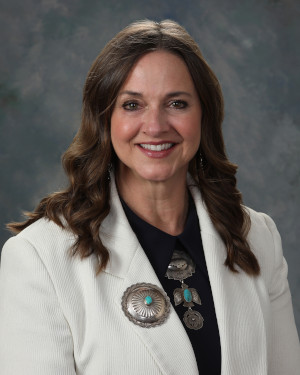
Rep. Rebecca Dow
Sponsored bills
Maddy summaryHB 269 requires New Mexico's Health Care Authority to implement an open electronic visit verification system for Medicaid home health and personal care services. This system allows providers to choose any compliant electronic tool (meeting federal 21st Century Cures Act standards) while using a central aggregator to collect standardized data - including service type, recipient, date, location, provider, and timing - for federal reporting. It directly affects Medicaid recipients and licensed healthcare providers by mandating specific data collection and privacy protections. The bill was passed by both chambers in March 2025 but vetoed by the governor on April 11, 2025.
Maddy summaryThis bill designates August each year as "New Mexico Red and Green Chile Month" to recognize chile's cultural significance and economic impact. It highlights chile's role in blending New Mexico's indigenous and Spanish heritage and acknowledges its importance to the state's agricultural economy, supporting thousands of jobs. The bill is purely commemorative and does not create new laws or obligations. It directly affects New Mexicans by formally celebrating a symbol central to the state's identity and livelihood.
Maddy summaryHB 398 extends the required examination timeline for Health Maintenance Organizations (HMOs) and their contracted healthcare providers in New Mexico from every three years to every five years. This change directly affects HMOs and the healthcare providers they contract with, reducing the frequency of regulatory reviews they must undergo. The key provision modifies Section 59A-46-19 of the New Mexico Insurance Code to update the examination schedule while maintaining the requirement for HMOs to submit records and cooperate with exams. The bill aims to reduce administrative burden on these entities while still requiring regular oversight for consumer protection.
Maddy summaryHB 468 establishes clear procedures for retiring New Mexico state flags no longer in use. It requires flags to be destroyed (preferably by burning) in a dignified ceremony, either publicly with military or patriotic groups or privately. This applies directly to all government entities, schools, and private organizations that display the New Mexico state flag, ensuring its retirement honors its significance as a state emblem.
Maddy summaryHB 431 replaces the election process for watershed district boards with an appointment system. Instead of voters electing board members at local elections, soil and water conservation district supervisors will appoint five board members (including one current/former watershed director when available), with initial terms of two and four years. Minority jurisdiction districts (those with less than half the land in a watershed) gain the right to appoint three additional directors, following similar term structures. The bill directly affects watershed districts' governance structure by shifting authority from public elections to supervisor appointments, effective July 1, 2025.
Maddy summaryHB 65 clarifies that local school boards and charter school governing bodies, not the state, determine the exact number of instructional days per year and per week for New Mexico public schools. It maintains a statewide minimum of 1,140 instructional hours per year for students (550 for half-day kindergarten) but allows local entities to set the specific schedule within that framework. The bill also specifies that time during breakfast programs and certain professional development hours count toward the required instructional time. This directly affects all public school districts and charter schools in New Mexico starting with the 2025-2026 school year.
Maddy summaryHB 161 provides New Mexico resident veterans who served in the U.S. armed forces, reserves, or public health service (with minimum service requirements) with free state park access. It grants one annual day-use pass for unlimited entry into state parks and recreation areas, plus one annual camping pass for unlimited use of state park camping facilities. The law, now signed into effect, requires veterans to provide proof of service to the state parks division but does not mandate disability verification. This policy directly benefits eligible veterans by removing entry and camping fees at New Mexico's state parks.
Maddy summaryHB 175 amends New Mexico's Forest and Watershed Restoration Act to make projects creating or maintaining "buffers" (treated areas reducing wildfire fuel) in wildland-urban interfaces eligible for funding. These buffers act as barriers between homes and forests to limit wildfire spread and create safer zones for firefighters. The bill specifically adds this type of project to the list of eligible uses for the Forest Land Protection Revolving Fund, which previously supported broader restoration efforts. It directly affects communities in fire-prone areas where homes meet undeveloped land, providing a new funding pathway for wildfire prevention infrastructure.
Maddy summaryHouse Memorial 22, titled "FAMILY DAY," designates February 12, 2025, as "Family Day" in the New Mexico House of Representatives. It recognizes families in all forms - including diverse cultural traditions - and encourages New Mexicans to reflect on family's role in emotional well-being, community strength, and personal growth. The memorial urges support for family-friendly policies like accessible healthcare, education, and housing, but does not create new laws or funding. It is a symbolic gesture, sending copies to state agencies but having no binding effect on state actions.