

Maddy summaryHB 425 requires New Mexico state agencies to provide written responses to every public comment received during the rulemaking process before finalizing a proposed rule. These responses must specifically address each comment's concerns and be published in the New Mexico Register alongside the adopted rule. The bill applies to all state agencies creating or modifying regulations and aims to increase transparency by making agency reasoning publicly accessible. This change does not alter existing timelines for rule adoption but mandates documented engagement with public input.
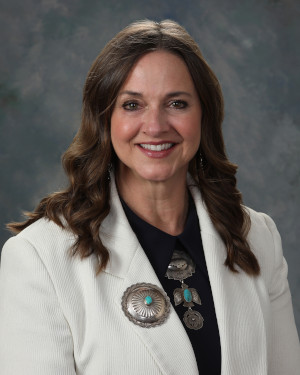
Rep. Rebecca Dow
Sponsored bills
Maddy summarySB 335 creates a New Mexico income tax credit of $500 per month for foster parents and court-appointed guardians caring for a child under 18. To qualify, a taxpayer must be a New Mexico resident, not a dependent, and provide care for a child for over 50% of the month. The maximum annual credit is $6,000, and eligibility requires certification from the Children, Youth and Families Department. The credit reduces tax liability, with any excess refunded to the taxpayer, and applies to taxable years beginning January 1, 2025.
Maddy summaryHB 261 requires Regional Spaceport Districts in New Mexico to use the State Investment Council or State Treasurer to manage their funds, directing them to invest in a designated local government investment pool. This bill directly affects spaceport districts that manage public funds related to regional spaceport operations. The key provision mandates that district boards must employ state investment services for managing their assets, including paying reasonable management fees from the funds themselves, while maintaining required investment records. The change applies to existing district funds and takes effect July 1, 2025. The bill was referred to committees but was postponed indefinitely in June 2025.
Maddy summaryHB 559 prohibits New Mexico courts from considering a parent's gender affirmation of their child's gender identity or a parent's decision regarding gender-affirming care when making child custody decisions. The bill specifically bans courts from treating a parent's refusal to provide gender-affirming health care (like hormone therapy or counseling) as harmful to the child, abusive, or evidence of inadequate parenting. It directly affects parents and judges in custody cases involving minors whose gender identity differs from their sex assigned at birth. The law amends existing custody standards to exclude these factors, defining key terms like "gender affirmation" and "gender-affirming health care" in the process. The bill was introduced in 2025 but was postponed indefinitely in June 2025.
Maddy summaryHB 325 creates two new tax deductions for businesses building or selling new residential housing in New Mexico. It allows a deduction for labor costs incurred during construction (Section 2) and deductions of up to $125,000 per year for sales of new residential housing (single-family homes, townhouses, condos, or apartment buildings) or $75,000 for housing intended for lease (Section 3). The bill also includes a "hold harmless" provision (Section 1) requiring state distributions to municipalities and counties to offset potential revenue losses from these deductions. The bill, which would take effect July 1, 2025, directly affects developers, contractors, and real estate sellers of qualifying new housing.
Maddy summaryHB 464 prohibits New Mexico public schools from denying enrollment to school-age students based on race, ethnicity, sex, religion, disability, socioeconomic status, or residential address. It requires school districts to determine and publicly post school capacity by grade level every 12 weeks, enroll applicants on a first-come, first-served basis when space is available, and report enrollment data annually to the public education department. The bill limits school boards' ability to create enrollment preferences beyond existing categories (like military families) and mandates transparency through online vacancy postings. The bill was referred to committees but was postponed indefinitely on June 3, 2025.
Maddy summaryHB 225 creates a $100 weekly tax credit for each child a foster parent cares for in New Mexico, directly benefiting licensed foster parents who are state residents and not dependents of another person. To claim the credit, foster parents must obtain certification from the Children, Youth and Families Department, which will issue a certificate specifying the credit amount and eligible taxable years. Any credit exceeding a taxpayer's income tax liability will be refunded, and the credit must be claimed within three years of certification. This policy applies to taxable years beginning January 1, 2025, and will be tracked in the state's tax expenditure budget.
Maddy summaryThis memorial declares March 5, 2025, as "Soil and Water Conservation District Day" in the New Mexico House of Representatives to recognize the work of New Mexico's 47 soil and water conservation districts. It highlights their role in voluntary programs supporting forest thinning, wildfire recovery, water management, and habitat restoration, primarily benefiting landowners and local communities. As a ceremonial resolution, it does not create new laws or funding but formally acknowledges these districts' contributions to natural resource conservation.
Maddy summaryHouse Memorial 52 requests New Mexico's Economic Development, Tourism, and Taxation departments to create a work group studying short-term rentals' economic impact, taxation, and regulations. The work group must include industry and local government representatives and report findings by December 2025. The memorial also directs county assessors to temporarily halt reclassifying short-term rental properties from residential to nonresidential tax status until the study concludes. This directly affects homeowners and rental operators who rely on short-term rentals for supplemental income and face potential tax changes. The bill does not create new law but mandates a data-driven review before policy changes.
Maddy summaryHB 571, the "Building Housing Communities Act," creates a program to recognize New Mexico municipalities that adopt zoning and land-use strategies increasing housing options. Municipalities meeting department-approved criteria would earn a "Building New Mexico Community" designation, with the Department of Finance and Administration developing specific strategies to reduce regulatory barriers. Key provisions include addressing urban/rural differences, simplifying development reviews, lowering construction costs, and expanding permitted housing types. The bill aims to directly support local governments in boosting housing availability through targeted zoning reforms.