

Maddy summaryHB 168 requires New Mexico's Construction Industries Commission and Division to conduct cost studies for proposed rules or trade bureau recommendations that may impact commercial or residential construction costs. These studies must estimate the financial effect on construction projects and be submitted with proposals before approval. The bill mandates that such studies be made public for review under the State Rules Act, effective July 1, 2025. The bill was referred to multiple committees but was postponed indefinitely on June 3, 2025, and has not advanced.
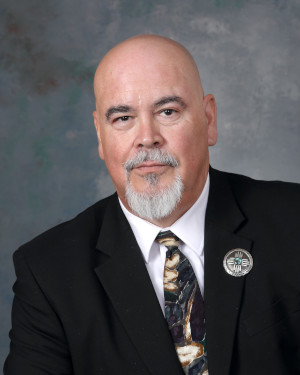
Rep. Alan Martinez
Sponsored bills
Maddy summaryHB 512 creates a program to help New Mexico medical residents and fellows repay student loans by providing direct payments to their lenders. It requires recipients to complete medical training in New Mexico and agree to practice medicine in the state for five consecutive years. The program excludes loans from state service programs, personal loans, and loans already covered by other repayment initiatives. Funds for the program will come from state appropriations and repayments, managed by the Higher Education Department through a new "Medical Residency Loan Repayment Fund."
Maddy summaryHB 202 creates a one-time $750 income tax credit for New Mexico taxpayers who purchase certified secure gun storage (like safes or lock boxes) after July 1, 2025. The credit, limited to $1 million total annually, requires proof of purchase and safety certification from the Department of Public Safety, with applications due within 12 months of purchase. Taxpayers may claim the credit against their tax liability, and any excess credit is refundable. The bill is currently stalled, having been postponed indefinitely on June 3, 2025, after passing committee review.
Maddy summaryBased solely on the provided context, HB 597 has no substantive policy details available in the text or summary. The bill's title ("PUBLIC PEACE, HEALTH, SAFETY & WELFARE") is generic and does not specify any concrete provisions. It was introduced by Rep. Alan T. Martinez but was postponed indefinitely on June 3, 2025, with no further action documented. No specific mechanisms, affected groups, or policy changes are described in the provided materials.
Maddy summaryHJR 4 proposes amending New Mexico's constitution to replace the Public Education Commission with an elected State Board of Education. The new board would consist of ten locally elected members who would set education policy, manage school funding, and appoint a superintendent to lead public schools. It also requires the legislature to create an independent state authority for charter schools. This constitutional change requires voter approval at the next general election and would take effect in 2029, transitioning governance from the current commission.
Maddy summaryHJR 7 proposes amending New Mexico's constitution to remove term limits for county sheriffs, allowing them to serve unlimited consecutive four-year terms. Currently, sheriffs are barred from holding office for more than two consecutive terms (with a two-year break required before re-election), but this amendment would eliminate that restriction. The change would directly affect county sheriffs across New Mexico and requires voter approval at the next general election to take effect. This is a constitutional amendment, not a regular law, so it would not change current sheriffs' terms but would apply to future elections.
Maddy summaryHB 226 increases New Mexico's rural health care practitioner tax credit, raising the maximum credit from $5,000 to $15,000 for physicians, dentists, and similar providers (working 1,584+ hours in rural underserved areas), and from $3,000 to $9,000 for nurses, therapists, and other health professionals (also requiring 1,584+ hours). Practitioners must work at least 792 hours to qualify for half the credit amount. To claim the credit, providers must apply to the Department of Health for certification, which is then submitted with their tax return; excess credits can be carried forward for up to three years. The bill applies to taxable years beginning January 1, 2025, and requires the credit to be included in the state's tax expenditure budget.
Maddy summaryHB 500 establishes a formal system for citizens to file and review grievances about substitute care (foster care) placements under New Mexico's Children, Youth and Families Department (CYFD). It creates a Substitute Care Advisory Council to handle complaints regarding actions affecting a child's health, safety, or rights, or CYFD's compliance with laws. The bill updates confidentiality rules to clarify who may access sensitive child welfare records (e.g., foster parents, social workers, court personnel) while protecting privacy. It also defines key terms like "grievance" and "identified child" to standardize the review process. The bill directly affects CYFD, foster care providers, and children in substitute care placements.
Maddy summaryHB 225 creates a $100 weekly tax credit for each child a foster parent cares for in New Mexico, directly benefiting licensed foster parents who are state residents and not dependents of another person. To claim the credit, foster parents must obtain certification from the Children, Youth and Families Department, which will issue a certificate specifying the credit amount and eligible taxable years. Any credit exceeding a taxpayer's income tax liability will be refunded, and the credit must be claimed within three years of certification. This policy applies to taxable years beginning January 1, 2025, and will be tracked in the state's tax expenditure budget.
Maddy summaryHB 494 would have automated property tax exemptions for veterans in New Mexico, allowing veterans to maintain their exemption without reapplying each year if their eligibility and property ownership remain unchanged. The bill required the Veterans' Services Department to issue eligibility certificates (with a $5 fee for duplicates) and established verification procedures to prevent duplicate claims across counties or properties. It directly affected veterans, veterans' organizations, and county assessors by streamlining exemption processes and clarifying eligibility rules. The bill passed the Senate in March 2025 but was vetoed by the governor on April 11, 2025, so it did not become law.