

Maddy summaryThe provided context does not include the actual provisions, mechanisms, or policy details of HB 350. The bill's title ("PUBLIC PEACE, HEALTH, SAFETY & WELFARE") and introduction by Representative Alan T. Martinez are noted, but no substantive text or summary of its content is provided. The only procedural detail is that it was referred to the House Rules and Order of Business Committee on February 4, 2026, and was "not printed." Without specific bill language or a summary describing its content, a factual policy description cannot be generated.
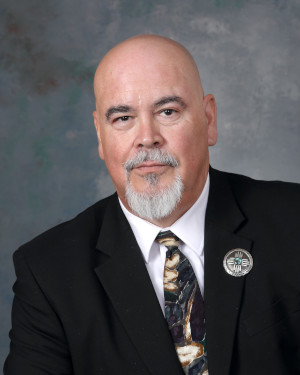
Rep. Alan Martinez
Sponsored bills
Maddy summaryBased solely on the provided context, a substantive summary of HB 348 cannot be generated. The bill's title ("PUBLIC PEACE, HEALTH, SAFETY & WELFARE") is broadly descriptive but does not specify any concrete provisions. The context includes only the bill's introduction date, sponsor (Alan T. Martinez), and a procedural referral to the House Rules Committee on February 4, 2026. No actual policy language, mechanisms, or affected parties are detailed in the provided text. Without specific bill text or a substantive summary, describing its content or impact would be speculative.
Maddy summaryBased solely on the provided context, a summary of HB 349 cannot be generated. The bill text, key provisions, and specific policy changes are not included in the information provided. Only the title ("PUBLIC PEACE, HEALTH, SAFETY & WELFARE"), the sponsor (Alan T. Martinez), and a procedural committee referral date (February 4, 2026) are listed. Without substantive bill language or a summary describing its content, no factual summary meeting your requirements can be created. The bill appears to be in early committee review with no additional details available.
Maddy summaryHB 334 requires courts to obtain specific competency evaluations for children facing delinquency charges, detailing whether a child can understand proceedings and assist in their defense. If a child is deemed incompetent, the evaluation must also assess if they meet criteria for involuntary placement, with courts mandating community-based competency restoration for non-dangerous children. The bill adds a 90-day review hearing requirement after involuntary placement and specifies that competency evaluations must include a qualified professional's opinion on three key criteria: understanding proceedings, ability to consult with a lawyer, and capacity to assist in their defense. This applies to all children in New Mexico delinquency cases, directly affecting youth accused of crimes who may have developmental or intellectual disabilities.
Maddy summaryHB 143 expands tax credits for healthcare providers working in New Mexico's rural underserved areas. It increases the rural health care practitioner tax credit to $15,000 annually for physicians/dentists/optometrists (requiring 1,584+ hours of service) and $9,000 for other providers like nurses, pharmacists, and therapists. The bill also creates a new Medical Residency Loan Repayment Act to award loan repayment assistance to qualifying medical residents and fellows. These provisions directly target healthcare professionals in rural communities to improve provider recruitment and retention.
Maddy summaryHB 176 creates a new "Zero Interest Down Payment Loan Fund" in New Mexico to provide first-time homebuyers with zero-interest loans covering up to 20% of a home's purchase price. The fund will be financed by redirecting specific state revenues - excess oil and gas tax receipts and federal Mineral Leasing Act funds - that would previously have gone to the Early Childhood Education and Behavioral Health funds. Starting in 2026, these redirected funds will instead support the loan program, with the first-time homebuyer loans secured by a 30-year mortgage lien (requiring repayment if the property sells before 30 years). The bill modifies existing distribution rules for these revenue streams to prioritize housing affordability for qualifying New Mexico residents.
Maddy summaryHB 181 requires New Mexico's Children, Youth and Families Department (CYFD) to report on children in their custody who stay overnight in CYFD offices. The bill appropriates $100,000 to fund weekly reports to the Office of Child Advocate and monthly reports to three legislative committees, detailing the number of children, reasons for overnight stays, duration, and current status. It does not change placement policies but mandates regular data collection on this specific practice. The reporting obligation applies to fiscal years 2027-2028, with unspent funds reverting to the general fund.
Maddy summaryHB 198 appropriates $2 million from the general fund to the New Mexico Department of Health for fiscal year 2027 to provide behavioral health treatment and training specifically to first responders (such as police, firefighters, and EMTs). The bill directly affects first responders by funding mental health resources and specialized training, with unspent funds reverting to the general fund by year-end. This is a funding measure, not a policy change, focusing solely on allocating state resources for existing training programs.
Maddy summarySB 169 provides a temporary cost-of-living adjustment (COLA) of 1.68% annually for certain retired New Mexico public employees starting July 1, 2026, covering fiscal years 2027 and 2028. This applies to normal retirees over age 65 with at least two years of retirement, disability retirees, and eligible survivor beneficiaries. Additionally, the bill includes a higher 2.5% COLA for specific subgroups: retirees with 25+ years of service and pensions under $25,000, disability retirees in that pension bracket, and retirees who turned 75 before 2020. The $10 million appropriation from the state general fund covers these adjustments, with unspent funds remaining in the retirement system.
Maddy summaryHB 56 appropriates $1 million from the general fund to New Mexico's Veterans' Services Department for fiscal year 2027. The funding directly assists veterans and their families in identifying and accessing existing behavioral health care services. Key provisions include a one-time allocation with any unspent balance reverting to the general fund by the end of 2027. This bill does not create new services but provides resources to help veterans navigate available care options. It is a funding measure, not a policy change affecting service delivery.