

Maddy summarySB 30 provides a two percent annual cost-of-living adjustment (COLA) for certain retired New Mexico state employees. It directly affects normal retired members over age 65 who retired from state government before July 1, 2025, by increasing their pension payments by 2% each July 1. The bill appropriates $10 million from the general fund for fiscal year 2026 and beyond to fund this adjustment, with unspent funds not reverting to the general fund. This replaces a previous reduction in COLA rates for this specific group of retirees.
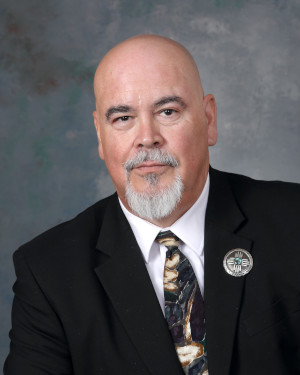
Rep. Alan Martinez
Sponsored bills
Maddy summaryHB 303 defines exposure of a child to Schedule I or II controlled substances (like opioids or methamphetamine) as child abuse under New Mexico law. It directly affects parents or caregivers who knowingly allow children to be exposed to these drugs, including newborns testing positive due to prenatal drug exposure. The bill creates specific provisions allowing hospital staff to temporarily place affected newborns (under 72 hours old) into protective custody without a court order if they show withdrawal symptoms or are in drug-manufacturing environments. This amends existing child abuse statutes to clarify that drug exposure constitutes abuse, with penalties ranging from third-degree felony for first offenses to first-degree felony if harm occurs.
Maddy summaryHB 501 requires New Mexico public school employees to immediately report to a school administrator if a student expresses gender incongruence (a difference between biological sex and perceived gender) or requests social affirmation or transition support at school. The school administrator must then notify the student's parent and obtain their written permission to develop a response plan, which may include counseling and parental involvement. The bill defines key terms and mandates parental consent before schools implement any formal response for students with gender incongruence. It does not restrict student gender expression but establishes a reporting and parental notification process. The bill is currently pending in committee as of June 3, 2025.
Maddy summaryHB 228 limits local government restrictions on battery-powered security fences with alarm systems outside exclusively residential zones. It prohibits counties and municipalities from banning these fences, imposing extra safety requirements beyond national standards, or requiring additional permits beyond standard alarm permits. The bill specifies technical requirements, including a maximum 12-volt battery, 5-foot non-electric perimeter fencing, 30-foot warning signs reading "WARNING: ELECTRIC FENCE," and height limits. This directly affects property owners (e.g., businesses, mixed-use properties) seeking to install such security systems in non-residential areas, while leaving residential zoning rules unchanged.
Maddy summaryHB 274 amends New Mexico law to classify trafficking fentanyl as a first-degree felony, mandating a life prison sentence. It directly affects individuals who traffic fentanyl - defined as distributing, selling, or possessing with intent to distribute - by elevating the offense from potentially lower felony classifications. The bill modifies sentencing statutes to explicitly list "first degree felony for trafficking fentanyl" with a mandatory life term, removing judicial discretion for this specific crime. This change applies to all offenses involving fentanyl trafficking, regardless of prior convictions, and excludes drug-free school zones from additional sentencing enhancements.
Maddy summaryHB 312, the "Litigation Financing Transparency Act," requires legal counsel to disclose litigation financing agreements to all represented clients within 30 days of entering such an agreement. It directly affects litigation financiers (who provide funding for lawsuits), legal counsel, and "funded consumers" (clients whose cases are financed). Key provisions prohibit financiers from controlling case strategy, paying referral fees, or assigning agreements, while mandating full transparency about funding terms. The bill is pending in New Mexico and has not yet become law, as its most recent action (June 3, 2025) postponed it indefinitely.
Maddy summaryHB 511 creates a tax credit for businesses renovating qualifying retail centers in New Mexico, offering a 10% credit on renovation costs (up to $1.5 million per project). It applies to projects renovating at least 50% of a retail center's square footage, including construction, energy efficiency upgrades, and accessibility improvements, provided the center has three or more retail businesses and meets zoning requirements. The credit is capped at $15 million total per year across all claims, with businesses required to apply for certification within one year of project completion. This policy directly supports retail property owners and developers seeking to revitalize commercial spaces through tax incentives.
Maddy summarySB 131 prohibits the state board from adopting rules requiring vehicle manufacturers to produce or deliver a certain percentage of zero-emission vehicles for sale. It directly affects automakers and the state environmental agency by blocking a specific regulatory mandate that was part of earlier clean transportation legislation. The bill amends Section 74-1-18 to explicitly state the board "shall not adopt or continue in effect a rule that requires a manufacturer to produce or deliver for sale a certain percentage of zero-emission vehicles." The bill was introduced in 2025 but was postponed indefinitely by the Senate committees on June 3, 2025.
Maddy summaryHB 245 prohibits most individuals from charging fees for assisting veterans with benefit claims, except for accredited representatives under federal law. It requires written agreements before services begin and bans guaranteeing specific benefit amounts or charging excessive fees. The bill directly affects non-accredited advocates, attorneys, and third parties who help veterans navigate VA benefit applications. Key provisions include banning upfront fees before formal claims are filed and aligning fee limits with federal standards (38 C.F.R. Part 14.636). This amendment to New Mexico’s Unfair Practices Act aims to prevent deceptive or exploitative practices in veterans' benefits assistance.
Maddy summaryHB 596, titled "PUBLIC PEACE, HEALTH, SAFETY & WELFARE," was introduced by Representative Alan T. Martinez in the 2025 New Mexico Legislature. The bill was referred to the House Rules and Order of Business Committee but was postponed indefinitely on June 3, 2025, preventing further progress. The provided context does not include the bill's specific provisions or content. Without the actual text of the bill, a detailed summary of its policy changes or affected parties cannot be generated.