

Maddy summaryThis bill (S 4592) imposes a 30% surtax on electric public utilities in New Jersey that earn "windfall profits" - defined as taxable income exceeding 20% above their five-year average. The surtax applies to utilities subject to New Jersey's Corporation Business Tax and is calculated on the excess income amount. All revenue collected from this surtax must be distributed back to the utility's ratepayers (customers) proportionally, with no credits allowed against the surtax except for specific payment adjustments. This policy directly affects electric utilities and returns funds to their customers, rather than adding to state general revenue.
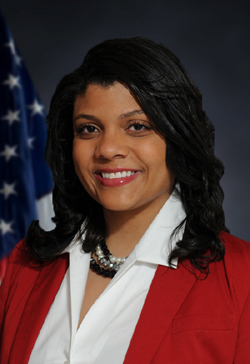
Sen. Britnee Timberlake
Sponsored bills
Maddy summaryThis bill requires electric utilities in New Jersey to obtain BPU approval (a "certificate of public convenience and necessity") before starting new transmission lines or modifying existing ones. Utilities must submit applications including necessary information and pay a fee, with the BPU required to rule within 150 days (extendable by 75 days). The BPU must approve only if the project is necessary for reliable service at lowest cost, the utility can manage construction well, and financing won’t harm customers. It excludes projects already approved by PJM Interconnection through their standard process. The bill directly affects electric utilities planning grid upgrades.
Maddy summaryThis bill requires New Jersey's Board of Public Utilities (BPU) to study how data centers impact electricity rates for consumers. The study will examine whether non-data center customers unfairly subsidize data centers, if new infrastructure for data centers causes unreasonable rate increases, and project the future cost burden on residential electricity rates over the next 20 years. The BPU must complete the study within one year and submit a report with findings and policy recommendations to the Governor and Legislature within 15 months. The bill does not change current rates or policies but mandates this review to inform future decisions about electricity cost allocation.
Maddy summaryThis bill requires New Jersey municipalities to allow accessory dwelling units (ADUs) - secondary housing units on the same lot as a primary home - as a permitted use, rather than restricting them. It sets specific rules: ADUs must be at least 300 square feet, located at least five feet from property lines, not exceed the primary home’s height, and cannot be used for short-term rentals (less than 30 days). Homeowners seeking to build ADUs for personal use (e.g., family members) or as a rental for long-term stays would be directly affected, alongside municipalities required to update zoning ordinances within 90 days of the law’s effective date. The bill aims to expand housing options by leveraging existing residential lots without altering neighborhood character.
Maddy summaryThis bill requires New Jersey state agencies (like the Department of Community Affairs and Board of Public Utilities) to review and potentially raise income limits for residential customers to qualify for utility bill assistance or energy efficiency programs. Within one year of a specific energy affordability proceeding, agencies must assess factors like aligning thresholds across programs and costs, and seek public input before increasing limits. The goal is to expand access for low- and moderate-income households, ensuring they aren't eligible for multiple energy efficiency programs while potentially broadening participation. It directly affects residents seeking help with utility costs or energy-saving home upgrades.
Maddy summaryThis bill provides New Jersey businesses with tax credits for hiring and retaining neurodiverse individuals in qualifying STEM or AI roles. Businesses receive credits of up to $7,000 (full-time) or $4,500 (part-time) in the first year, increasing to $8,000 or $4,500 in the second year, and $9,000 or $4,500 for each subsequent year of employment. To claim credits, businesses must get certification from the Division of Vocational Rehabilitation Services confirming an employee meets the definition of a "qualified neurodiverse employee" (working in STEM/AI fields at minimum wage, with neurodiversity verified via director guidelines). The credits apply against corporate business tax and individual gross income tax, with unused credits potentially carried forward for up to seven years.
Maddy summaryThis bill requires health insurers, the State Health Benefits Program (SHBP), and the School Employees' Health Benefits Program (SEHBP) to cover mammograms for women starting at age 35, rather than the current age of 40. It also mandates coverage for women under 35 who have a family history of breast cancer or other risk factors, as determined by their healthcare provider. The bill requires coverage for additional breast cancer screening tests like ultrasounds or MRIs if a mammogram shows dense breast tissue, abnormalities, or if other risk factors are present. This applies to all health insurance plans in New Jersey, including individual and group policies, health maintenance organizations, and health benefits plans. The policy change will take effect immediately for all health benefits plans currently in effect or issued after the bill's effective date.
Maddy summaryThis bill revises New Jersey's Community Wealth Preservation Program to help homeowners and tenants retain housing during foreclosure. It requires nonprofit community development corporations that purchase foreclosed properties to follow a 30-year deed restriction, mandating they sell or rent to households earning no more than 120% of area median income and spending no more than 35% of income on housing costs, with an exception for nonprofits that have written agreements with homeowners to sell properties back to them. The bill also creates a new list of approved nonprofits that must be vetted by the Department of Community Affairs before bidding, extends the homeowner's right of redemption from 10 to 90 days after a sale, and sets new requirements for lease agreements between nonprofits and tenants.
Maddy summaryThis bill imposes a 10% surtax on electric public utilities with allocated taxable net income exceeding $10 million annually. The surtax applies in addition to existing corporation business taxes and must be paid by qualifying utilities. All revenue collected, except for constitutionally dedicated funds, is required to be annually appropriated to the Board of Public Utilities to fund existing utility assistance programs like the Winter Termination Program and Lifeline Credit Program. The bill explicitly prohibits utilities from passing the cost of this surtax to ratepayers through future rate increases.
Maddy summaryThis bill (S 4481) requires New Jersey's electric and gas public utilities to reset their rates to levels from any point in 2020 for a five-year period. Utilities must file new rate schedules reflecting those 2020 rates with the Board of Public Utilities (BPU), which must approve them within 30 days. The approved rates would then remain in effect until 2030, preventing further increases during that time. This directly affects all households and businesses that pay for electricity and gas in New Jersey by stabilizing their utility costs at pre-2020 levels.