

Maddy summaryACR 126 is a New Jersey legislative resolution urging the U.S. President and Congress to amend the Civil Rights Act of 1964. It specifically requests adding protections against employer retaliation for union organizing, such as firing or demoting workers. This would allow workers to seek stronger civil rights remedies - including punitive damages - in federal court, rather than relying on current weak penalties under the National Labor Relations Act. The resolution has no legal effect but expresses New Jersey’s support for strengthening union rights.
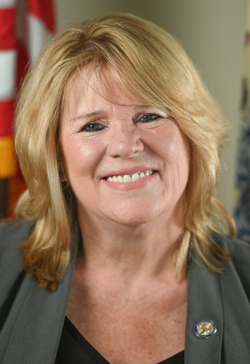
Asm. Carol Murphy
Sponsored bills
Maddy summaryThis bill prohibits motor vehicle liability insurance policies from restricting recovery amounts below the policy's maximum limits for specific covered individuals. It directly affects named insureds, listed drivers, and household residents by requiring insurers to pay the full policy limits for bodily injury or death claims, rather than capping payments at lower amounts. The law specifies that coverage limits for these individuals must align with the vehicle used at the time of the loss and mandates clear disclosure if any restrictions exist on the policy declaration page. This change ensures policyholders and their covered family members receive the full policy coverage amount they are entitled to under the terms of their insurance.
Maddy summaryThis bill prohibits pharmacies and businesses with on-site pharmacies in New Jersey from selling tobacco products (including cigarettes, smokeless tobacco, and tobacco paper) or electronic smoking devices (like e-cigarettes, vapes, and their components). It directly affects pharmacies and retail businesses operating with on-site pharmacies, such as grocery stores or drugstores. The bill allows sales of FDA-approved smoking cessation products and medical cannabis (for registered patients) under specific permits. Violations carry escalating civil penalties ($250 for first offense, $500 for second, $1,000 for third+), with potential disciplinary action from the Board of Pharmacy or other agencies.
Maddy summaryThis bill updates New Jersey's guardianship laws to better protect individuals under guardianship (wards) and those who may need guardianship (proposed wards). It requires courts to appoint legal counsel for all wards throughout proceedings, mandates that counsel personally interview wards, and requires courts to establish the least restrictive guardianship arrangements possible. The bill also requires guardians to undergo background screenings including fingerprinting, mandates annual reporting on ward conditions and estate management, and requires courts to review these reports annually to ensure guardians act in the ward's best interests. These changes aim to strengthen oversight and ensure guardianship arrangements respect the rights and preferences of those under guardianship.
Maddy summaryThis bill requires New Jersey's Commissioner of Health to create a public awareness campaign focused on improving maternal and child health outcomes. The campaign will provide accessible information through a dedicated state website, including hospital data on cesarean births and breastfeeding rates to help people choose care providers, promote birth plan documentation in medical records, and share guidance on avoiding unnecessary interventions. It also details resources for high-value care options (like midwives and doulas), state Medicaid coverage for pregnant individuals, family leave rights, and breastfeeding support. The initiative directly affects pregnant people, new parents, and healthcare providers across New Jersey by standardizing and expanding access to maternal health information.
Maddy summaryThis is a symbolic resolution (not a law), passed by the New Jersey Assembly to condemn Florida Governor Ron DeSantis. It specifically references his 2022 action of chartering flights to relocate 50 asylum seekers from Texas to Martha's Vineyard without informing local authorities or aid organizations. The resolution states DeSantis' actions - using false promises to entice vulnerable migrants, holding them in hotels, and transporting them to an isolated location - mirror human trafficking tactics defined by the Department of Homeland Security. It sends copies to federal immigration committees and DeSantis to formally express New Jersey's disapproval of this political use of migrants.
Maddy summaryThis bill allows New Jersey municipalities to establish reserved parking zones on property adjacent to a disabled person's residence when direct front parking is prohibited by law or would disrupt traffic flow. It requires written consent from the adjacent property owner using a standard form created by the New Jersey Motor Vehicle Commission, which expires after two years or if the adjacent property is sold. Property owners can renew the consent every two years to maintain the reserved parking. The bill also updates existing law to replace the term "handicapped" with "person with a disability" for consistency and respect.
Maddy summaryThis bill appropriates $2.5 million from New Jersey's General Fund to the Department of Banking and Insurance (DOBI) to reimburse joint insurance funds for covering the cost of COVID-19 surveillance testing. It specifically targets joint insurance funds that provided group health insurance coverage for unvaccinated, asymptomatic workers in healthcare and high-risk congregate settings during the period from August 6, 2021, to August 15, 2022. The reimbursement covers testing costs that these funds voluntarily paid despite federal guidance not requiring such coverage. The bill aims to offset expenses incurred by insurance funds during a time when New Jersey executive orders mandated testing policies for certain employers.
Maddy summaryThis bill establishes a 15-member "Nursing Home Emergency Preparedness Study Commission" to analyze how New Jersey nursing homes respond to public health emergencies. The commission will examine whether facilities maintain traditional nursing home or assisted living environments, review their emergency policies, assess staffing and funding adequacy during crises, and make recommendations for improvement. Membership includes state health officials, industry representatives, and family members of nursing home residents. The commission must submit a final report to the Governor and Legislature within 12 months of its first meeting, after which it will expire. The bill does not create new laws but directs a study to inform future policy decisions.
Maddy summaryThis New Jersey Assembly Resolution (AR 119) urges Congress to fully fund programs under the federal Elder Justice Act, which was enacted in 2010 as part of the Affordable Care Act. The resolution highlights that the Act authorizes grants for state adult protective services, long-term care ombudsman programs, forensic centers, and oversight of elder abuse in facilities, but Congress has not funded these programs at authorized levels since 2014. It does not create new law but formally requests increased federal funding for these elder protection initiatives. The resolution is a symbolic request directed at Congress, not a binding policy change.