

Maddy summaryThis bill, A5623, authorizes the New Jersey Infrastructure Bank to provide up to $53.45 million in low-interest loans for 17 specific transportation infrastructure projects across New Jersey municipalities in Fiscal Year 2026. The bill lists exact projects including bridge replacements, road improvements, and street redesigns in locations like Bayonne, Hoboken, Essex County, and Princeton. It includes a principal-forgiveness provision allowing up to $100,000 of a loan (per borrower) to be forgiven for planning and design costs on projects that complete construction with at least $250,000 in financing. The bill specifies how the bank can use loan repayments, bond proceeds, and other funds to support the program's operations while maintaining clear eligibility requirements for participating local governments.
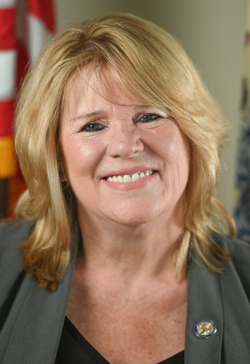
Asm. Carol Murphy
Sponsored bills
Maddy summaryThis bill revises New Jersey's Athletic Training Licensure Act to modernize the profession's regulations. It updates the definition of "athletic training" to include services for individuals generally (not just athletes), covering injury prevention, health management, evaluation, and rehabilitation. The bill removes outdated references to "athletes" throughout the law and clarifies that athletic trainers cannot diagnose medical conditions or perform services outside their scope. It also updates licensing requirements to require degrees from programs meeting CAATE standards and mandates that licensed athletic trainers display their license when providing services. The bill repeals a section restricting athletic trainers from performing physical therapy procedures for reimbursement.
Maddy summaryAJR 216 is a joint resolution directing New Jersey's Board of Public Utilities (BPU) to investigate whether PJM Interconnection's Reliability Pricing Model (capacity market) effectively provides reliable electricity at the lowest cost. The bill requires the BPU to report its findings within 12 months and directs the state to collaborate with neighboring PJM states to promote affordable energy practices, prioritize carbon-free sources, and urge PJM to implement market reforms. It specifically addresses rising capacity costs in PJM's auctions - contributing to higher electricity bills - and delays in approving new generation projects that prevent lower-cost resources from entering the market. The resolution aims to protect ratepayers, particularly low-income households, from price increases while supporting grid reliability.
Maddy summaryThis bill appropriates $107,999,000 from constitutionally dedicated corporation business tax revenues and Green Acres funds to the New Jersey Department of Environmental Protection for local government open space and park projects. The funds will support $22.4 million for land acquisition, $80.3 million for park development (including inclusive playgrounds), and $3 million for a new planning grant program. It prioritizes projects in densely populated areas (defined as municipalities with at least 5,000 people per square mile or 35,000 people total) and requires Joint Budget Oversight Committee approval for fund distribution. The bill specifies eligible projects across 30+ municipalities and counties for recreation, conservation, and park improvements. Local governments will use these funds to develop recreational spaces, conserve natural areas, and enhance existing parks.
Maddy summaryThis bill increases tax credits for investors who fund New Jersey emerging technology businesses by raising the credit rate from 20% to 60% of qualified investments (with an additional 5% available for investments in opportunity zones, low-income communities, or diverse entrepreneurs, making it 65% total). It lowers the employee threshold for qualifying businesses from 225 to 150 employees, expanding eligibility to more small technology companies. The bill also revises definitions of qualifying businesses and investments under the "New Jersey Angel Investor Tax Credit Act" while repealing the "New Jersey Ignite Act." These changes directly affect investors, emerging technology businesses, and qualified venture funds seeking tax benefits.
Maddy summaryThis bill revises the responsibilities of New Jersey's Advisory Graduate Medical Education Council, making it accountable to the Department of Health (instead of the Commission on Higher Education) and requiring annual meetings. The council must now develop a funding guide for stakeholders before each fiscal year, coordinate with federal programs like HRSA's Rural Residency Program, create workforce outcome metrics, and establish a five-year strategic plan for graduate medical education. It also mandates an annual report detailing workforce needs, funding allocation across hospitals (by specialty and location), physician placement data, and recommendations for addressing underserved areas. These changes directly affect hospitals, medical residency programs, and state healthcare policymakers managing graduate medical education funding. The bill focuses on improving transparency, strategic planning, and alignment of funding with New Jersey's healthcare workforce needs.
Maddy summaryThis bill authorizes the New Jersey Infrastructure Bank to provide up to $2.4 billion in loans for environmental infrastructure projects during fiscal year 2026. The loans would be available to local governments and public water utilities to fund projects that improve water quality, treatment systems, and drinking water infrastructure. The bill specifies eligibility for 151 clean water projects (totaling $1.28 billion in estimated loan amounts) and 59 drinking water projects (totaling $488.8 million in estimated loan amounts). Loan terms would require repayment within 30-45 years, with the bank authorized to adjust loan amounts based on actual project costs.
Maddy summaryThis bill requires contractors bidding on New Jersey public works projects (funded by public funds) to certify that each employee meets one of three minimum qualifications: a high school or GED diploma, enrollment in an equivalent apprenticeship program, or four years of verifiable work experience as a tradesperson. Contractors must provide documentation to verify these qualifications during electronic registration with the state. The law directly affects construction and labor contractors working on public projects, ensuring workers meet basic education or experience standards. It amends existing registration requirements under P.L.1999, c.238, with enforcement tied to contractor registration status.
Maddy summaryThis bill requires data center owners or operators in New Jersey to annually submit detailed water and energy usage reports to the Board of Public Utilities (BPU) starting one year after the law takes effect. The reports must include specific metrics like total energy consumption (in kilowatt hours), water usage (in cubic meters), and efficiency calculations such as "power usage effectiveness" and "renewable energy factor." Data centers must also disclose operational details (e.g., location, purpose, water sources) and notify the BPU 60 days in advance of major operational changes. The BPU will publish all submitted data online within 30 days, making it publicly accessible for transparency.
Maddy summaryThis bill establishes the "Motor Vehicle Open Recall Notice and Fair Compensation Act" to improve transparency around vehicle recalls and provide fair compensation for dealers. It requires motor vehicle dealers to check for open recalls on used vehicles using the National Highway Traffic Safety Administration website before sale, inform prospective buyers about any recalls found, and not sell vehicles subject to stop-sale or do-not-drive notices. Dealers must also provide the New Jersey Motor Vehicle Commission with lists of vehicles with long-unfixed recalls (six months or more), triggering the Commission to send official notices to vehicle owners. The bill also establishes compensation requirements for dealers when parts are unavailable for recalled vehicles, requiring 1.75 percent of the vehicle's value per month for used vehicles or the manufacturer's suggested retail price for new vehicles.