

Maddy summaryS 4476 permits New Jersey school boards to award preschool education service contracts (for licensed childcare providers or Head Start programs receiving state preschool aid) without public bidding, using a board resolution instead. It extends the maximum contract term for these services from 24 months to three years. This change applies only to preschool programs funded through state preschool education aid, simplifying the contracting process for early childhood education providers.
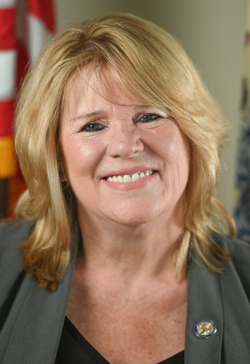
Asm. Carol Murphy
Sponsored bills
Maddy summaryThis bill establishes a 2.5% annual limit on rent increases for tenants living in modular or manufactured homes used as their primary residence. It directly affects renters in these specific housing types, excluding owner-occupied properties with three or fewer units and affordable housing units with income restrictions. Landlords cannot raise rents more than 2.5% over any 12-month period for covered units, and violations require reverting to the previous rent amount. The law supplements existing rent protections but does not override stricter local rent control ordinances.
Maddy summaryThis bill requires Rutgers University (including University Hospital) to provide resident and fellow physicians who are eligible for the State Health Benefits Program (SHBP) with immediate health insurance enrollment on their first day of employment. Current employees eligible for SHBP will gain coverage immediately upon the bill's effective date. The law applies to these physicians and their dependents, eliminating previous delays in access to health coverage for this group.
Maddy summaryThis bill (A5812) creates a New Jersey state grant program to help public schools purchase and install filtered bottle-filling stations and faucets that meet NSF standards for removing lead and contaminants. It prioritizes schools with documented water quality issues (like lead testing results) or those without existing filtered systems. The Department of Education must establish the program within 180 days, provide installation guidance, and report on grant applications and funding needs within a year. The program directly affects all public schools seeking safer drinking water infrastructure.
Maddy summaryThis bill requires employers and contractors working on projects for New Jersey public bodies (such as state agencies, local governments, schools, or publicly funded projects) to register with the Department of Labor and Workforce Development (DOLWD) and submit certified payroll records. It expands current requirements by applying to all work for public bodies - not just projects subject to prevailing wage laws - covering construction, maintenance, repairs, and other work paid for with public funds or financial assistance. Employers must provide these records within 10 days of a request; failure to comply allows DOLWD to direct public bodies to withhold up to 25% of payment (capped at $100,000) until records are submitted. The bill directly affects contractors and employers performing work for public entities, ensuring transparency in wage reporting.
Maddy summaryThis bill (A4878) ensures service members and their dependents (spouses or children) enrolled at New Jersey public colleges can choose specific grade options if unexpected military duty prevents course completion. It raises the required course completion threshold from 8 weeks to 55% of the course duration before certain options apply, and adds "temporary grade" and "transfer to equivalent online course" (if available) as choices. Dependents are now explicitly included under the same protections previously only for service members themselves. The bill clarifies that faculty must determine if sufficient work was completed to justify grades like pass/fail or letter grades, with options like incomplete grades remaining valid for one year.
Maddy summaryThe bill appropriates state and federal funds to the New Jersey Department of Environmental Protection for environmental infrastructure projects in fiscal year 2026. It authorizes the DEP to provide zero-interest and principal-forgiveness loans to local governments and public water utilities for clean water and drinking water projects, including 151 clean water projects totaling $1.7 billion and 59 drinking water projects totaling $651.7 million. The bill specifies different funding mechanisms, including full principal forgiveness for qualifying projects and blended interest rates for larger projects, with all funding expiring on July 1, 2026.
Maddy summaryThis bill requires all New Jersey public schools to follow the U.S. Department of Agriculture's 2012 nutrition standards for school meals, which limit calories, fat, and sodium while increasing whole grains, fruits, vegetables, and nonfat milk. It directly affects public schools serving federally subsidized breakfasts and lunches to roughly 32 million students nationwide. The standards aim to combat childhood obesity - New Jersey's child obesity rate is 14.8%, the 28th highest nationally - by maintaining stricter dietary requirements than USDA's recent proposed relaxations. The bill mandates compliance with these 2012 standards or any stricter future standards, effective immediately.
Maddy summaryThis bill establishes a 18-member Chronic Absenteeism Task Force to study chronic absenteeism in New Jersey public schools. The task force, composed of the Commissioner of Education, appointed public members representing education stakeholders, and legislative leaders, will analyze causes like mental health, school climate, pandemic impacts, and discipline policies. It must research state and national solutions and develop recommendations for school districts to improve attendance within six months. The task force will report to the Governor and Legislature before expiring 30 days after submitting its final findings. This procedural bill creates a study group but does not directly change attendance laws or policies.
Maddy summaryThis bill allows New Jersey school boards to award preschool education contracts directly to licensed childcare providers or Head Start programs without public bidding, through a board resolution. It extends the maximum contract term for these services from two years to three years. Boards must still document their reasons for using this exception and make contracts available for public inspection. The bill specifically applies to preschool services supported by state preschool education aid.