

Maddy summaryThis bill expands support for homeless youth in New Jersey by updating street outreach, basic shelter, and transitional living programs to provide more comprehensive services. It requires these programs to offer culturally appropriate assistance with food, shelter, medical care, financial aid applications (like FAFSA), and trauma-informed care for survivors of trafficking or exploitation. For youth under 18, shelters must notify parents or guardians within 24 hours of admission (with exceptions for abuse cases) and the child welfare division to coordinate care. The bill also adds core services like family reunification counseling, recreational activities, and educational support to basic shelters.
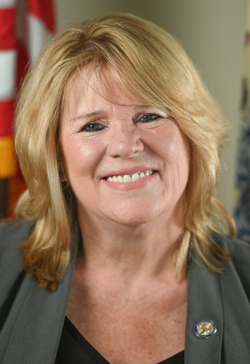
Asm. Carol Murphy
Sponsored bills
Maddy summaryThis bill creates a proportional property tax exemption for New Jersey veterans who are honorably discharged and have a service-connected permanent disability rated at 10% or higher. It directly affects qualifying veterans (and their surviving spouses) by reducing their property taxes in line with their disability rating, with a $10,000 cap for exemptions below 100% disability. Veterans deemed unemployable due to service-connected disability receive a full 100% exemption, matching current benefits for those with 100% disability ratings. The bill also requires the state to reimburse municipalities 102% of the tax costs for these exemptions, including administrative expenses, through annual reporting by local tax authorities.
Maddy summaryThis bill requires New Jersey Medicaid to cover ovulation-enhancing drugs and related medical services for individuals aged 21-44 experiencing infertility, with coverage limited to three treatment cycles per person. Infertility is defined as failure to conceive after 12 months of regular, unprotected sex for those 21-34 years old, or six months for those 35-44 years old. Covered medical services include office visits, hysterosalpingograms, pelvic ultrasounds, and blood testing, but not the drugs themselves for more than three cycles. The coverage is contingent on federal financial participation being available.
Maddy summaryThis bill requires New Jersey's Medicaid program and Plan First program to cover fertility preservation services for individuals whose fertility may be impaired by medically necessary treatments like cancer therapy. It defines "iatrogenic infertility" as fertility loss caused by medical treatments affecting reproductive organs, and specifies that covered services include storage of sperm, eggs, embryos, and cryopreserved ovarian tissue. The coverage must be provided without discrimination based on age, gender, sexual orientation, or other personal characteristics, making these often-expensive services accessible to low-to-moderate income patients who would otherwise be unable to afford them.
Maddy summaryThis bill creates Dementia-Specific Advance Directives (DSADs), allowing New Jersey residents with dementia to formally document their healthcare preferences - such as refusing artificial feeding or hospitalization - while they still have decision-making capacity. It establishes a secure electronic registry for DSADs, requires healthcare facilities to honor these directives, and defines "comfort feeding only" (hand-fed meals for comfort, without tubes or IVs). The law mandates training for healthcare staff on DSADs and requires facilities to provide comfort feeding options aligned with a patient’s DSAD. It directly affects individuals with dementia, their families, and all hospitals, nursing homes, and care facilities in New Jersey.
Maddy summaryThis bill directs New Jersey's Board of Public Utilities (BPU) to create a virtual power plant (VPP) program aimed at reducing peak electricity demand. The program will coordinate customer-owned energy resources - like home batteries, solar panels, and electric vehicles - to provide grid services, avoiding the need for costly new infrastructure. The BPU must establish a 500-megawatt peak demand reduction target by 2030, requiring electric utilities to meet specific participation goals. This directly affects utilities, customers with eligible energy resources, and aims to lower costs while improving grid reliability, especially in overburdened communities.
Maddy summaryThis bill shifts $45 million in funding from the Opioid Recovery and Remediation Fund to the General Fund to support opioid-related care. The funds will be distributed to four specific hospitals - $10 million to Hackensack, $15 million to RWJ Barnabas, $15 million to Cooper, and $5 million to Atlantic Health - to provide treatment for opioid-related health issues, as outlined in the Opioid Recovery and Remediation Advisory Council’s strategic plan. Each hospital must submit quarterly reports detailing how funds were used, the number of patients served, outcomes, remaining balances, and other required data to the Commissioner of Human Services. The bill also repeals an existing provision (Section 111 of the 2025 appropriations act) that previously handled this funding allocation.
Maddy summaryThis bill establishes a three-year pilot program in New Jersey public elementary schools to assess the academic and health benefits of using therapy dogs in wellness programs. It requires the state Department of Education (DOE) to select six school districts (two per geographic region) that apply with details about their schools, student wellness participation, and therapy dog plans. The DOE will provide participating districts with guidance on therapy dog activities, handler training, dog health checks, and insurance requirements. After three years, the DOE must submit a report evaluating whether the program improved student attendance, confidence, and academic outcomes like reading skills. The pilot directly affects public elementary schools that apply and participate.
Maddy summaryThis bill establishes the Office of Professional Corporate Guardians within the Department of Human Services to regulate business entities that serve as guardians for incapacitated or disabled individuals. The office will set licensing requirements, including background checks for owners, insurance coverage, minimum staffing standards, and disciplinary measures for non-compliance. It will maintain a public database of registered guardians and oversee the quality of services provided to vulnerable adults who need guardianship. This affects professional corporate guardians (business entities providing guardianship services) and the incapacitated individuals they serve, creating a standardized oversight system for this type of guardianship.
Maddy summaryThis bill (A6076) adds salaries and wages for emergency response personnel to New Jersey's existing exceptions for municipal budget spending limits. It directly affects all New Jersey municipalities that must follow the 2.5% annual budget growth cap (or cost-of-living adjustment, whichever is lower). The key mechanism is amending state law to explicitly include police officers, firefighters, paramedics, and ambulance/rescue team members under the "allowable exceptions" list, meaning their pay increases won't count toward the 2.5% cap. This change applies to budgets adopted after the bill's effective date.